 Ashley Kosciolek
Maybe you’re thinking of booking your first cruise, or maybe you already have. Being a newbie on a ship full of veteran cruisers is akin to being the new kid in class, but there are a few bits of wisdom we can share to help better prepare you to avoid first-timer pitfalls.
Check out these common mistakes first-time cruisers make so you can act like you’re a seasoned sea dog.
1. Not Booking Far Enough in Advance
One of the most common mistakes first-time cruisers make is waiting too long to book. The earlier you secure your sailing, the better — both for your wallet and your options.
Booking well in advance, ideally at least six to eight months out, gives you the widest selection of cabins at the best prices. The most desirable staterooms on popular ships fill up fast, and fares tend to creep up as the sailing date approaches. The “last-minute deal” narrative you might have heard is hard to come by on most mainstream cruise lines, where demand keeps prices climbing rather than dropping.
Booking early also gives you more time to pay off your cruise before the final payment due date and more runway to plan shore excursions and onboard reservations.
If you’re unsure where to start, our preferred travel advisor, MEI-Travel, can help you identify the best sailing for your needs and budget at no extra cost to you.

2. Choosing the Wrong Cruise
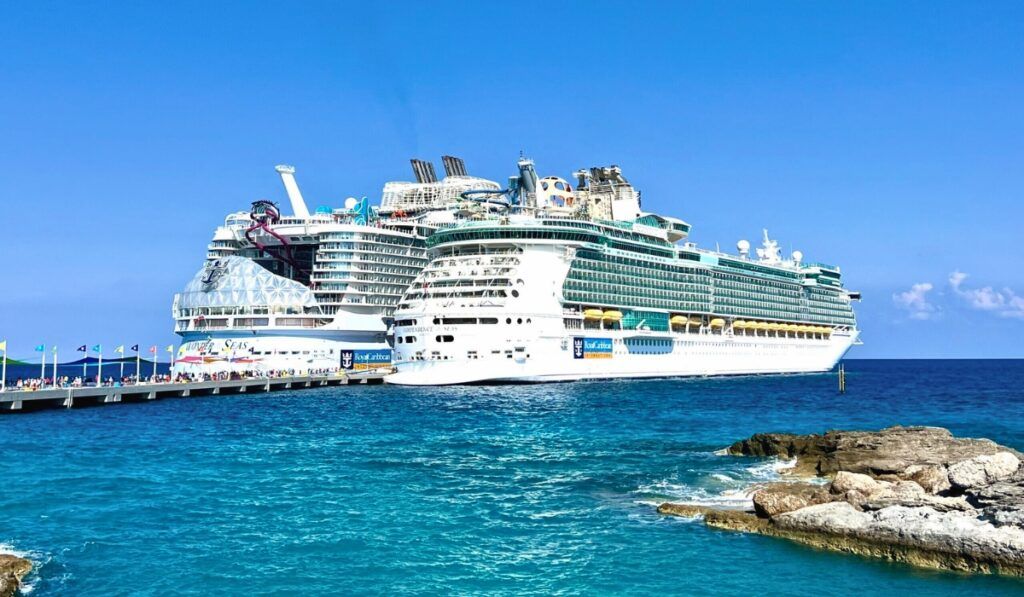
All cruises are not equal. Each cruise line has its own style, vibe and onboard offerings, which can even vary from ship to ship within the same fleet. If you don’t choose carefully, you’ll set yourself up to have a terrible time on your maiden voyage.
Before booking your first sailing, research what each cruise line does well. After you’ve narrowed it down, select a ship that fits what you’re looking for. A larger, newer one will provide more onboard amenities and usually larger crowds. A smaller vessel is likely to be less overwhelming but might not have as much to do. This is of particular note if you’re traveling with kids.
When in doubt, call on a travel advisor to assist. They’ll help you plan the perfect at-sea vacation and ensure you find the best price and the most added value without costing you a penny extra.
3. Booking the Wrong Cabin
Drilling down even further, you’ll also have to select a cabin type. Booking the wrong kind can make or break your trip as much as the cruise line and ship you choose. Check out your cruise ship’s deck plans before deciding on a room so that you don’t accidentally end up across from an elevator bank, next to the galley or underneath the kids club, all of which can be noisy locations.
If you want to save money and only plan to be in your room to sleep and shower, consider an inside cabin with no windows. For a view, you’ll want to opt for an outside or ocean-view room. For a view, fresh air and a semi-private seating area of your own, go with balcony accommodations. If money is no object or you’re traveling with a group that needs more space, consider a suite.
4. Waiting Too Long to Check In
You can check in for your cruise on the line’s mobile app or website. The booking window usually starts 30 days before the embarkation date and runs until 48 hours prior to setting sail. If you wait too long to complete the process, you’ll have to wait to check in until you arrive at the terminal. That can slow down the boarding process and cost you valuable vacation time.
5. Not Reading the Fine Print
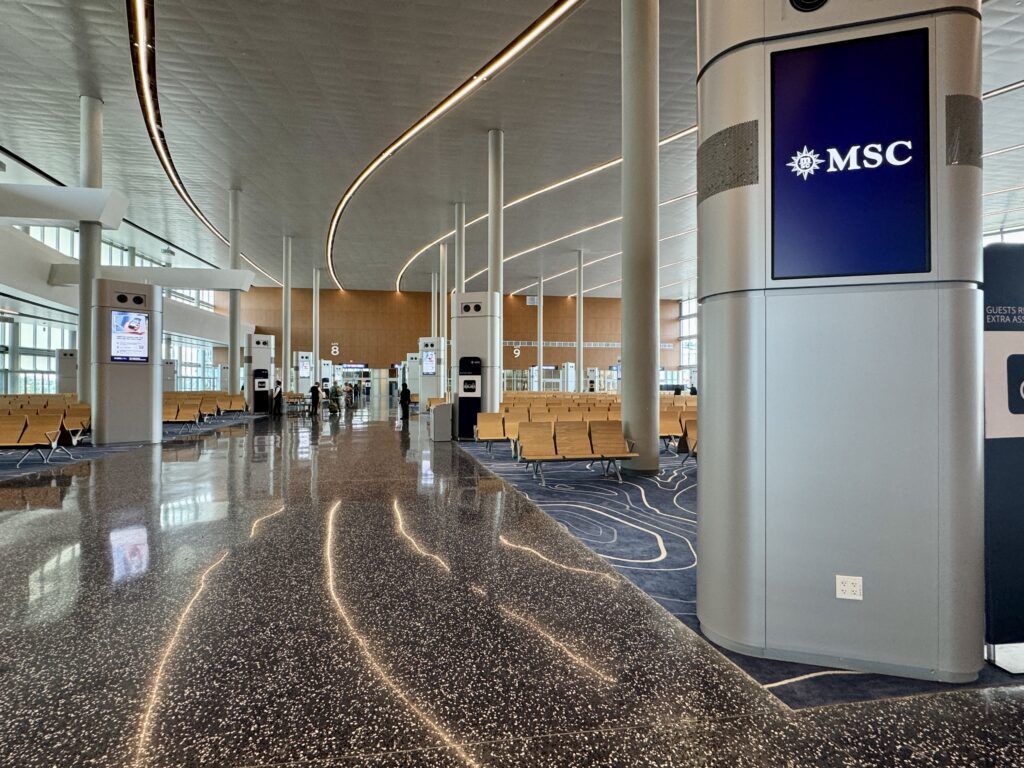
When you check in for your cruise, in addition to verifying travel document details, setting up an onboard charge account and taking a security photo, you’ll have to agree to the cruise line’s contract of carriage. It’s long, it’s tedious, and it’s a bunch of legal jargon. However, you should read it so you know what you’re entitled to if there’s a cancellation, itinerary change or other unexpected event that affects your experience.
6. Calling the Ship a Boat
Cruise ships are too large to be considered boats. The general rule for determining whether something is a boat or a ship is to ask whether it could reasonably fit on another vessel. If the answer is yes, it’s a boat. A cruise vessel couldn’t reasonably fit on another vessel, thereby making it a ship.
7. Assuming Cruises Are All-Inclusive
Cruises are floating resorts, and any resort experience can feel luxurious compared to our everyday lives at home. When you sail, crew clean your room daily and prepare all of your meals. You also have access to a pool next to which you can lie to perfect your tan. But, in fact, most cruises are not fully all-inclusive.
In industry terms, luxury cruises are all-inclusive or nearly all-inclusive. That means fares include all drinks (even soda and alcohol), Wi-Fi, crew gratuities and sometimes shore excursions. However, most mainstream cruise lines charge extra for all of those add-ons.

8. Overpacking
If you haven’t experienced a cruise before, you might alleviate some of your travel anxiety by overpacking so you feel you’re prepared for any situation. Trust us when we tell you it’s not necessary. Plan for one daytime outfit per day, plus something a bit nicer for dinner and nighttime activities or theme nights. Toss in underwear, socks, a swimsuit and cover-up, pajamas and comfy walking shoes to wear in port, and you’re set.
Still feeling the need to add everything but the kitchen sink to your cruise packing list? At least leave beach towels and hairdryers at home; the ship provides those for all passengers to use.
9. Flying in the Same Day You Board
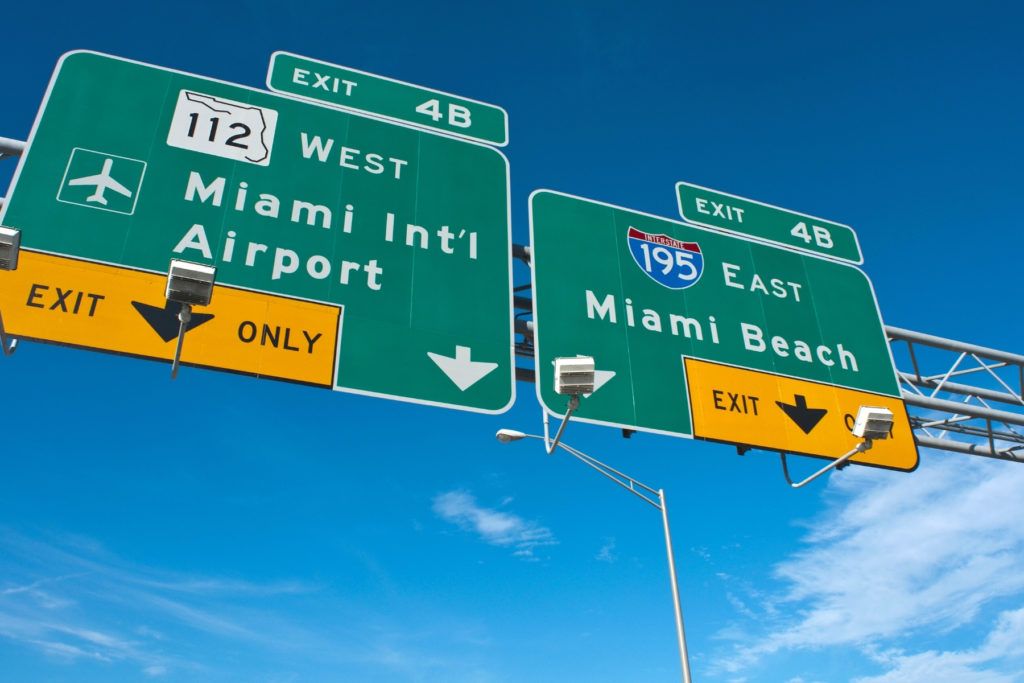
Unless you live within a reasonably short driving distance of your embarkation port, it’s always a good idea to arrive at least one day prior to embarkation. You’ll have time to make other arrangements if your flight is delayed or canceled or you have car trouble along the way.
Book a hotel near the port the night before and give yourself time to explore the embarkation city. Some of the best cruise departure ports are worth a night or two on their own.
10. Not Buying Travel Insurance
This is one case where it’s better to have it and not need it than to need it and not have it. We recommend purchasing a policy through a third-party provider, rather than your cruise line. “Travel protection” sold by the lines isn’t the same thing as travel insurance. It doesn’t cover as much, and you might have to jump through more hoops to be reimbursed if you file a claim.
Pick up a policy for a few dollars, and it will provide you with peace of mind if your flight is delayed, your luggage is lost or you fall ill before or during your trip. For even more flexibility, include a “cancel for any reason” add-on that will protect you against circumstances not usually covered under standard policies.
11. Putting Important Items in Your Portered Luggage
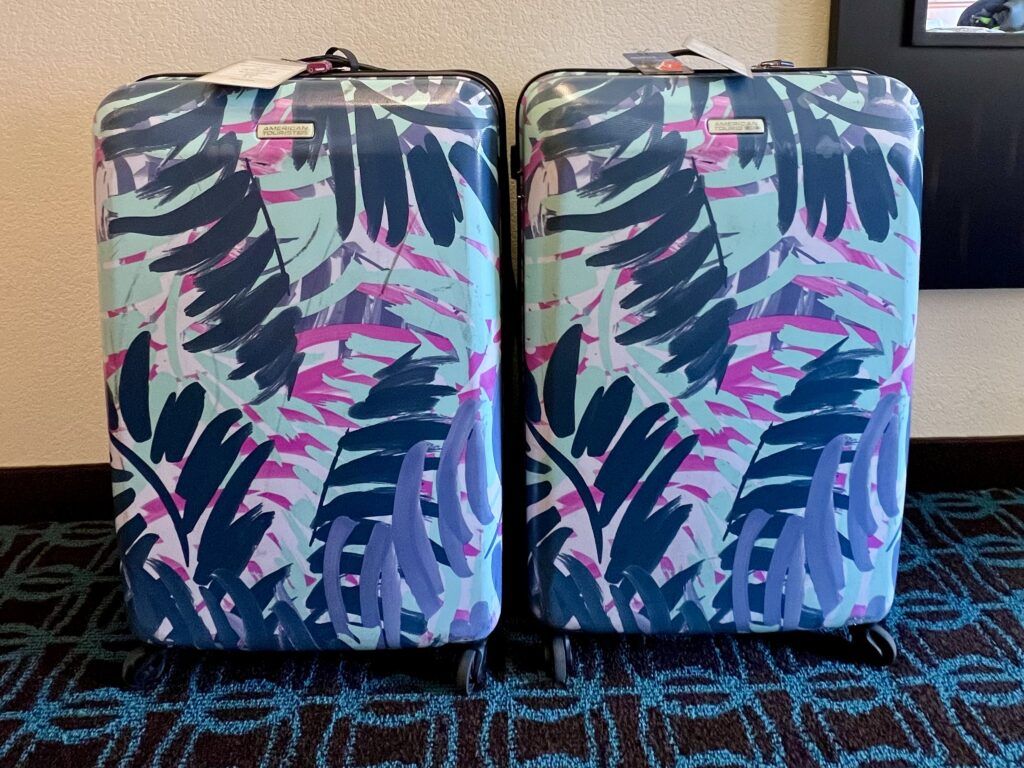
If you’re going to hand your bags off to a porter when you arrive at the cruise terminal, make sure to keep valuables, medications, a change of clothes for dinner and required boarding documents with you. That way, you’ll be prepared if your luggage isn’t delivered to your cabin until the evening.
12. Forgetting Your Travel Documents
It sounds obvious, but you’d be surprised how many first-time cruisers arrive at the terminal without the documents they need to board. Most international cruises require a valid passport, while closed-loop sailings — those that depart and return to the same U.S. port — usually accept a birth certificate and government-issued photo ID. Check your cruise line’s requirements well in advance so you know exactly what you need.
Whatever documents are required, keep them in your carry-on, not your portered luggage. Arriving without the right paperwork means you won’t be boarding that ship.
13. Bringing Alcohol or Other Contraband
All cruise lines have lists of items that aren’t permitted onboard for customer safety and revenue reasons. They include obvious ones like drugs, alcohol and weapons, as well as some – candles, kites, fishing poles, drones and power strips with surge protectors – that might surprise you.
Don’t be the person who’s caught unaware or who tries to sneak banned items onto the ship. Security will confiscate those items if it detects them. In extreme cases, you could even be denied boarding or arrested.
14. Not Preparing for Seasickness
If you’ve never been on a cruise before, you don’t yet know how your body will respond to the motion of the ship. Rather than finding out the hard way, come prepared.
Over-the-counter options like Dramamine and Bonine are widely available at drug stores and easy to toss in your carry-on. Acupressure wristbands like Sea-Bands are another popular remedy. If you’re particularly prone to motion sickness, talk to your doctor before your trip. They may be able to prescribe something stronger.
A few other factors can help: booking a cabin on a lower deck and closer to the middle of the ship minimizes motion, and staying hydrated and avoiding overindulgence in food and alcohol can make a difference too. Rough seas aren’t guaranteed, but being prepared means they won’t ruin your trip if they show up.

15. Purchasing (or Not Purchasing) a Drink Package
Many first-time cruisers don’t realize that the only drinks included when you sail are tap water, iced tea, lemonade, drip coffee and basic hot tea, as well as a handful of breakfast juices in the morning only. Soda, energy drinks, specialty coffee, milkshakes, smoothies, bottled water and alcohol generally cost extra. Cruise lines sell drink packages for a per-person, per-day fee that could save you money.
But the keyword is “could.” To determine whether or not a drink package is a smart purchase, calculate how much you’re likely to drink in a day, and estimate how much it would cost you to buy drinks a la carte versus having a package. You should also consider that if one person in your cabin purchases a package, all other passengers staying in the same room will also have to buy one. That could end up not being worth the overall cost.

16. Trying to Pay for Onboard Purchases With Cash
Cruises operate on a largely cashless system. Before you board, set up you onboard account by either registering a credit card or putting up a chunk of cash to act as an amount from which onboard spending will be debited. Passengers charge all onboard purchases to their keycards, which also serve as their room keys and identification when leaving and re-boarding the ship in port.
You won’t be able to pay for anything with cash on the ship, but you’ll still want to have some on hand to tip porters, bartenders, other crew members and shore excursion guides throughout your trip.
Although you can’t use cash for onboard purchases, cruise ships do often have ATMs onboard; beware of exorbitant service fees. Cruise ship casino cash-out desks will also pay out in cash on some vessels.
17. Deciding the Muster Drill Is Optional
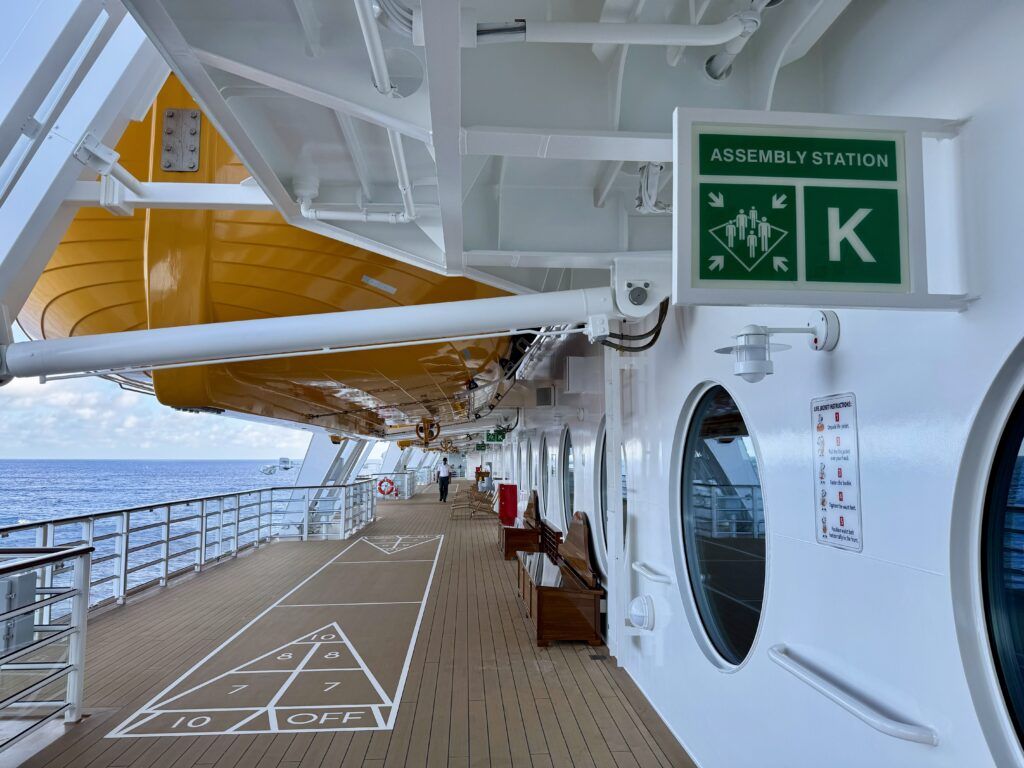
By law, all cruise passengers must complete a muster drill or safety drill onboard prior to the ship’s departure. Depending on the cruise line, that could mean attending an in-person drill, watching a video on your phone or in-cabin television or a combination of both.
During the drill, crew members will show you how to properly put on a life jacket. You’ll also learn where your muster station is – hint: it’s listed on your keycard – and the captain will make announcements about safety procedures.
If you fail to participate in the drill, you’ll have to make it up at a different time, or you can’t sail.
18. Failing to Explore the Entire Ship
Imagine this: It’s the night before your cruise ends, and you’ve just stumbled upon an activity, bar or lounge space that you thoroughly enjoy. You wish you had found it sooner – how frustrating.
Shortly after boarding, walk from front to back, deck to deck, to find all the hidden nooks and crannies early. You can maximize the time you spend at your favorite places that way, and you won’t feel like you missed out.
19. Tipping the Wrong People or Not Tipping at All
Unless you book a cruise with a luxury line that includes gratuities in its fares, expect to pay a daily per-person amount as a crew gratuity. Similar to a service charge, it will be added automatically as a daily charge to your onboard account unless you opt to prepay it. Ship officials will distribute the amount among crew members who help to make your sailing special.
Most cruise lines allow you to remove the charges if you wish, but we strongly advise against it. Feel free to tip extra to crew who go above and beyond, but when you remove auto-gratuities, it affects members of the staff who you don’t see but who are working just as hard for you – those who work behind the scenes in the galleys and laundry room for example.
As a general rule, it’s neither necessary nor appropriate to tip an officer or the captain. In fact, it’s rude to do so.

20. Keeping Your Mobile Data On
To avoid exorbitant roaming charges, keep your phone in airplane mode when you sail, even if you’ve purchased an international plan. Those plans often don’t work on cruises – only when you’re ashore in port. If you leave your data on when the ship is sailing, it will connect to the ship’s own cell tower and thereby start racking up fees.
If you need to use your phone while you’re on the ship, keep it in airplane mode, connect to the ship’s Wi-Fi network, and purchase a plan. Many lines’ mobile apps also feature internal messaging functions that allow you to stay in touch with people in your travel party while onboard, even if you don’t pay for Wi-Fi.
21. Assuming Onboard Shops Give You Deals
Nearly every cruise ship afloat offers some type of onboard shopping area. Stores might sell jewelry and watches, duty-free cigarettes and alcohol, high-end purses from big-name designers and cruise line branded apparel.
Don’t be fooled by sales (especially if you’re sailing in the Mediterranean or other areas where local authorities charge a value-added tax that will wipe out any savings), inch-of-gold (which isn’t real gold) or claims that certain art or jewelry is worth more than it is. You’ll almost always pay more to buy something on a cruise than you will to purchase it elsewhere. Even if a store labels something as duty-free, that doesn’t necessarily mean you’ve found a deal.
Shops will try to draw you in with free items, giveaway drawings and smooth-talking sales presentations or art auctions. If you truly like an item and want it as a memento from your trip, go ahead and buy it; just know that it might not be as authentic or as much of a deal as you were led to believe.

22. Skipping the Main Dining Room
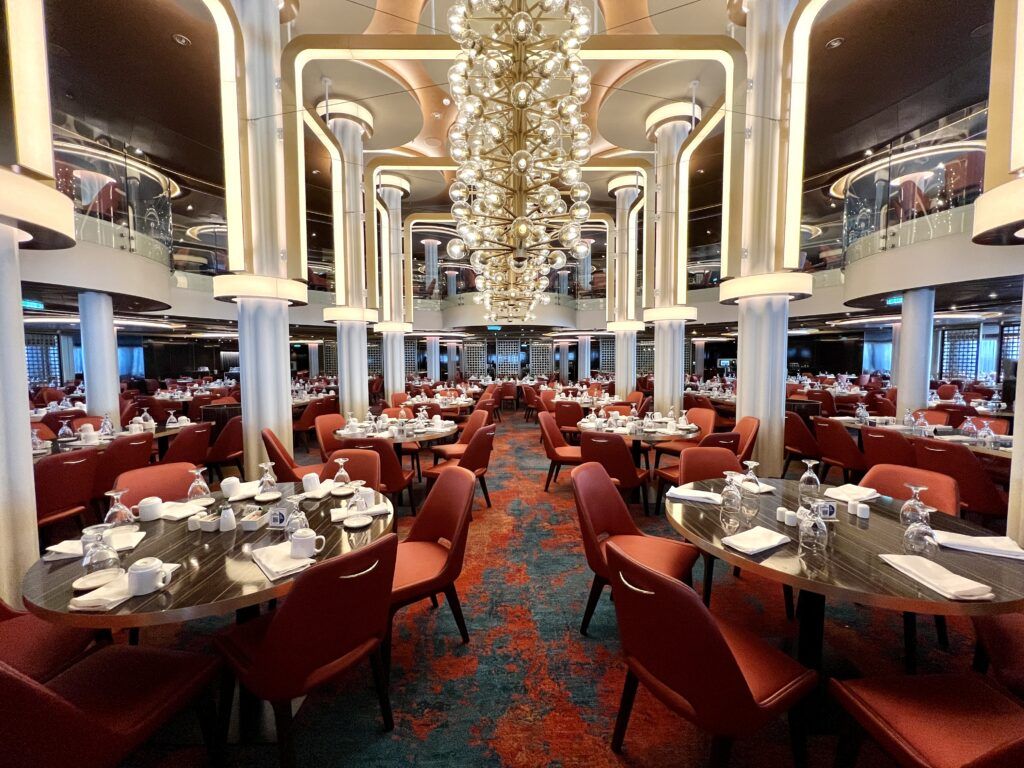
Cruise lines include dining in certain venues in the cost of your cruise. In addition to the ship’s buffet – which is often loud and crowded but great for quick bites – one of those venues is the main dining room. The MDR is a large space with many tables where you can enjoy sit-down meals from a menu that changes daily. Waiters take your order, and they’ll serve you in courses.
If you’re looking for something besides the buffet but don’t want to shell out extra money, check your keycard to see the dining room to which the cruise line has assigned you, along with a dining time if you have one.
MDRs are often open for breakfast and lunch, too. Those meals are less formal than dinner, with no set tables or times.
23. Showing Up Late for Set Seating Dinner
There are two types of dining schedules in the MDR for dinner. The first is open dining, which allows passengers who have signed up for it to show up any time they wish between set hours.
The second type of structure is set seating. Under that concept, passengers eat at the same table with the same waiters and tablemates (who might or might not be part of your travel party) at the same set time each night. There are usually two waves of set dining – an early seating and a later one.
If you’re signed up for set seating, please be on time. Showing up late to dinner means your tablemates have to wait for you. If you have the early seating, it also means your waiters will rush you through your meal so they can prepare your table for the second wave of diners. Heading to the buffet or a different eatery entirely is better than showing up to the main dining room if you’re running more than 15 minutes late.
24. Not Making Reservations in Advance
Modern cruise ships offer a lot more than the main dining room and a buffet. Most vessels have specialty restaurants — think steakhouses, sushi bars, Italian trattorias, and chef’s table experiences. The catch is that they require reservations, and the most popular ones fill up fast.
On most cruise lines, you can book specialty dining reservations before you ever step foot on the ship through the cruise line’s website or app. Do it as soon as the booking window opens. Waiting until you board means you could find your first choices are already sold out.
A similar logic applies to entertainment. Many cruise lines have unique entertainment options like escape rooms, comedy clubs, and culinary or mixology classes. Some even require advanced reservations for production shows. Booking early ensures you won’t miss out on anything.
25. Not Knowing What’s Available Onboard
Many modern cruise ships are essentially floating resorts, and first-time cruisers are often surprised by just how much there is to do. The mistake many newcomers make is not taking the time to find out what’s available. And as a result, they spend their entire cruise bouncing between the buffet, the bars, and the pool deck while missing everything else.
Before and during your sailing, take stock of what your ship offers. Beyond the obvious dining and entertainment options, most ships have enrichment lectures, trivia, game shows, sports courts, fitness classes, themed parties, and more happening throughout the day and evening.
The easiest way to stay on top of it all is your cruise line’s app. Each day, a full schedule of activities and events is published there, along with dining menus, venue hours, deck plans, and entertainment reservations. Many apps also allow you to message others in your travel party without purchasing a Wi-Fi package. Download it before you leave home and make a habit of checking it so you don’t miss out on anything.

26. Not Researching Port Activities Ahead of Time
Because cruises are in port for anywhere between 5 and 8 hours per call, the ship’s schedule will limit your time in each place. You won’t want to waste a minute trying to figure out what to do once you’re already there.
Spend a bit of time before your cruise researching points of interest, and decide whether you’d like to book a shore excursion – either through the ship or a third-party provider – or head out on your own. The latter is a great option for saving some money in ports that are walkable or that have readily available public transportation.
Check on weather ahead of time, along with whether you’ll need to purchase tickets in advance for places you want to visit.
27. Disregarding ‘All Aboard’ Time
If you book an excursion through your ship, you won’t have to worry too much about this. Heading out on your own? Check and double-check the “all aboard” time – the time by which you have to be back on the ship. It’s usually about half an hour before the vessel is due to depart.
Warning: Ship time isn’t always the same as local time. Set your watch accordingly to make sure you know when to be back. If you aren’t there by departure time, the ship won’t wait for you. It will leave you to either make your way home or meet the vessel in its next port – at your own expense.

28. Getting Sunburned
If your itinerary includes warm weather destinations like the Caribbean, Bahamas, or Mediterranean, sunscreen is a must. First-time cruisers often underestimate just how strong the sun is at sea and in tropical ports, and by day three you can spot them easily by the bright red color they’re sporting. Believe us: getting sunburned is one cruise mistake you don’t want to make.
Pack a high-SPF sunscreen and apply it before you head out, whether you’re spending the day at a beach, on a shore excursion, or simply relaxing on the pool deck. Reapply throughout the day, especially after swimming or sweating. A broad-spectrum SPF 30 or higher is a good baseline; bump it up to 50 if you’re fair-skinned or spending extended time outdoors.
29. Leaving Dishware in the Hallway or Stairwells
This isn’t just for first-timers, but it’s worth noting because it’s rude behavior. One of the best things about being on a cruise is that you don’t have to clean up your glasses, dishes or silverware after you eat or drink. But that doesn’t mean you should be inconsiderate of the crew.
If you order a drink at one of the onboard bars and take it with you as you stroll the vessel, place it on the nearest bar or public table when you’re finished. If you take food to-go from the buffet, don’t leave used plates in the stairwell or elevator for someone else to trip over. Instead of leaving your dirty room service tray in the hallway so everyone else can smell your leftovers, call the room service number to have it removed.
30. Messing Up Disembarkation Luggage Collection
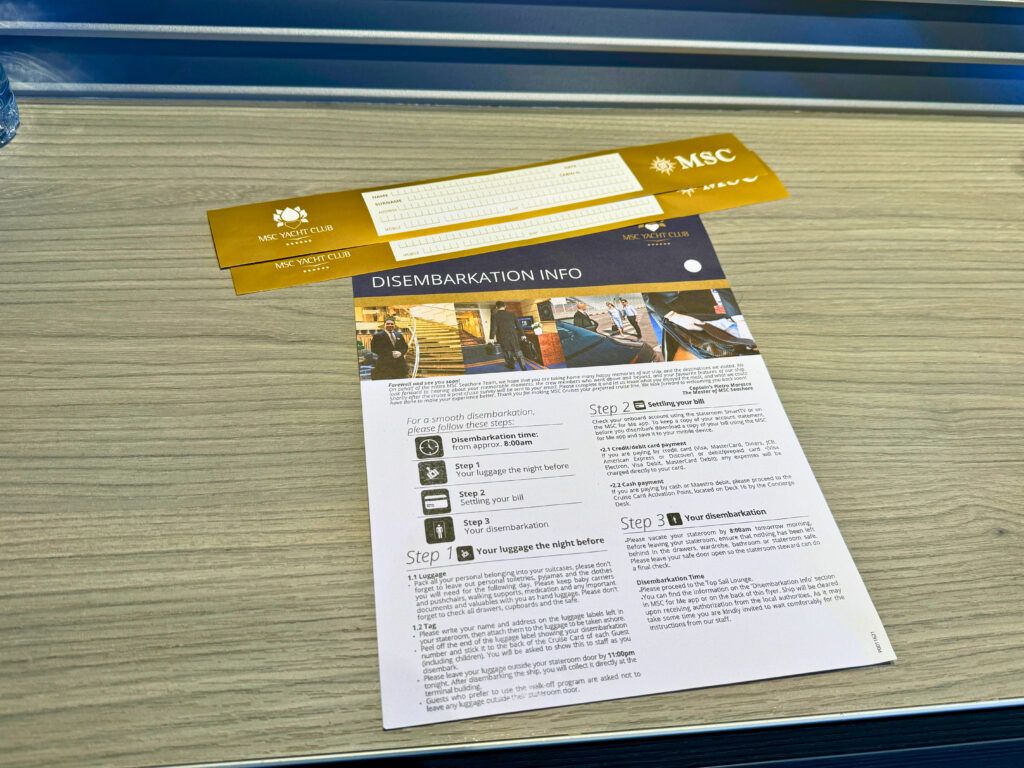
Travelers who are new to cruising might not know that smooth disembarkation requires special luggage handling. On the last night of the sailing, you’ll pack up your things and put your large bags outside of your cabin door. The crew will collect them, and you’ll pick them up at the terminal after you leave the ship the following morning.
Because you won’t see your big bags again until after you disembark, don’t forget to keep a few things – including valuables, travel documents and ID, wallets, pajamas, some toiletries and a change of clothes – with you for the next day.
Ships also offer the option for self-assist disembarkation. That allows passengers to keep all of their luggage with them and carry it off the ship themselves the next day. Crew will not provide luggage assistance on disembarkation day. If you go this route, make sure you’re physically able to wrangle your own stuff, keeping in mind that elevators will be extremely crowded.
Bottom Line
From pre-cruise planning to onboard etiquette, shore excursions to disembarkation day, first-time cruise mistakes can happen at every stage of your trip. The good news is that nearly all of them are entirely avoidable with a little advance research and preparation.
As you get ready for your first sailing, bookmark this list and work through it as your departure date approaches. The cruisers who have the best experiences aren’t necessarily the ones who’ve sailed the most. They’re the ones who showed up prepared. With these 30 tips in your back pocket, you’re well on your way to having a vacation you’ll want to repeat again and again.
Comments
Do you agree with our list of first-time cruise mistakes? What other mistakes do you often see first-time cruisers make? Drop us an anchor below to share your tips and tricks for newbies.