
 Ashley Kosciolek
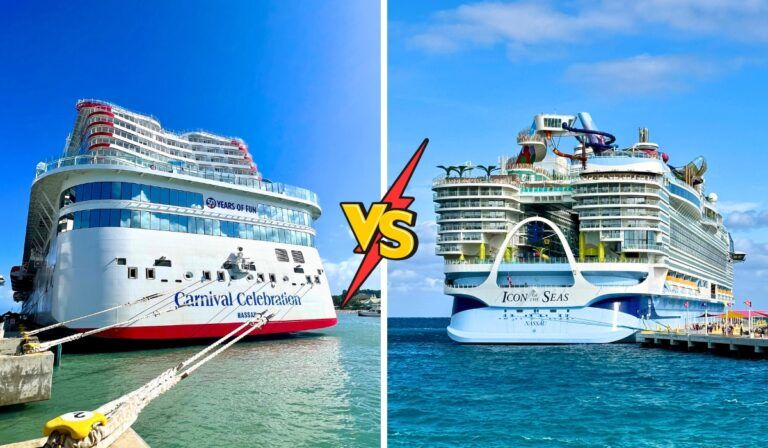
Ask the average person to name the first two cruise lines that come to mind, and they’re likely to list Royal Caribbean International and Carnival Cruise Line. These two mainstream cruise industry powerhouses are well known, even to people who have never set foot on a ship.
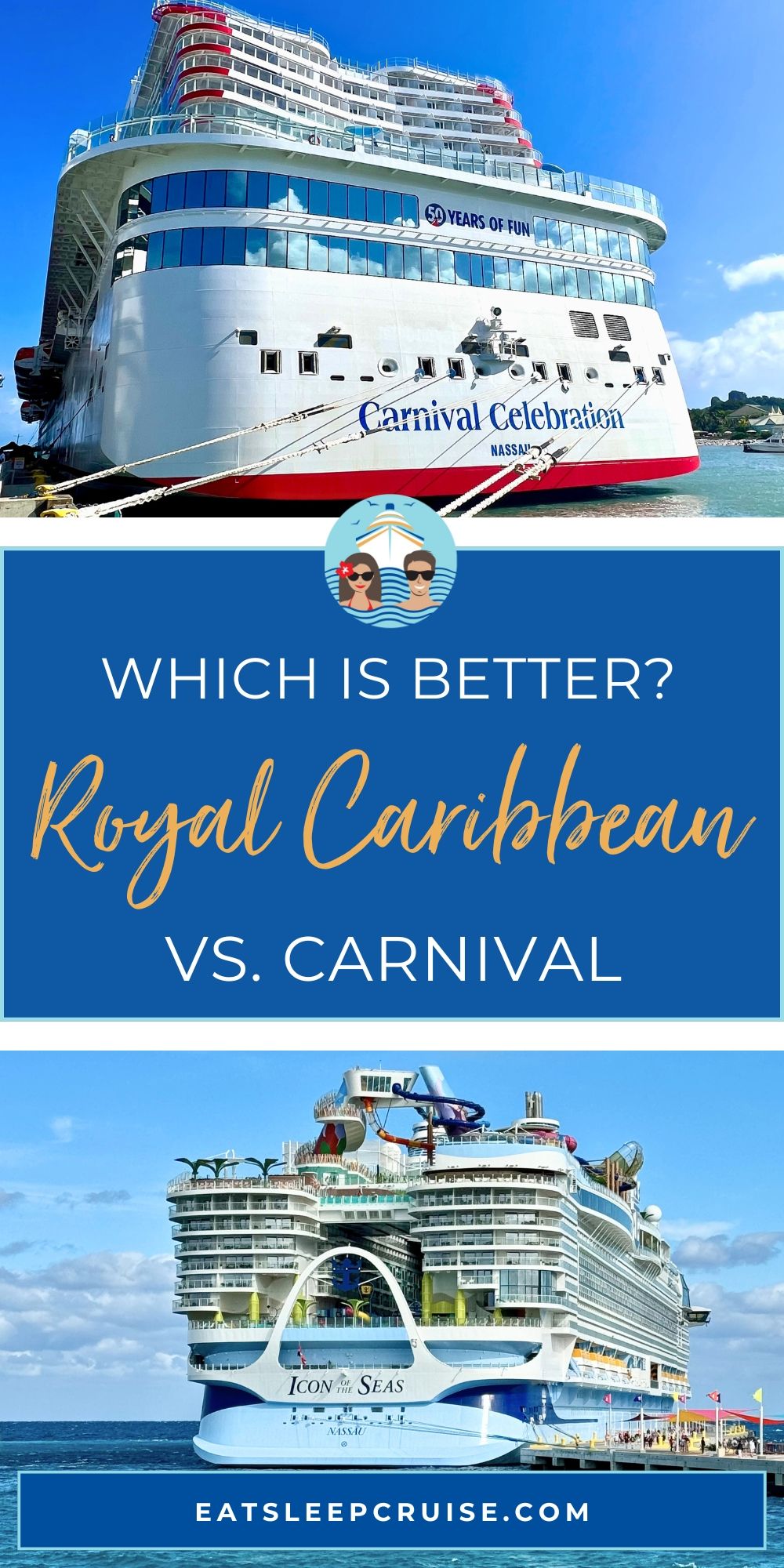
But just because they’re both familiar doesn’t mean there isn’t plenty that sets these mega-brands apart from one another. Here, we’ll take a look at everything from fleet size to itineraries and pricing so you can decide for yourself which is better – Carnival or Royal Caribbean. We’ll also talk about onboard offerings that will help you to have a great time, whether you choose a Royal Caribbean or Carnival cruise.
Royal Caribbean and Carnival Fleets: A Breakdown
There are lots of similarities between Carnival and Royal Caribbean ships. Each fleet offers a plethora of options, from smaller, older vessels to the newest and largest hardware afloat.
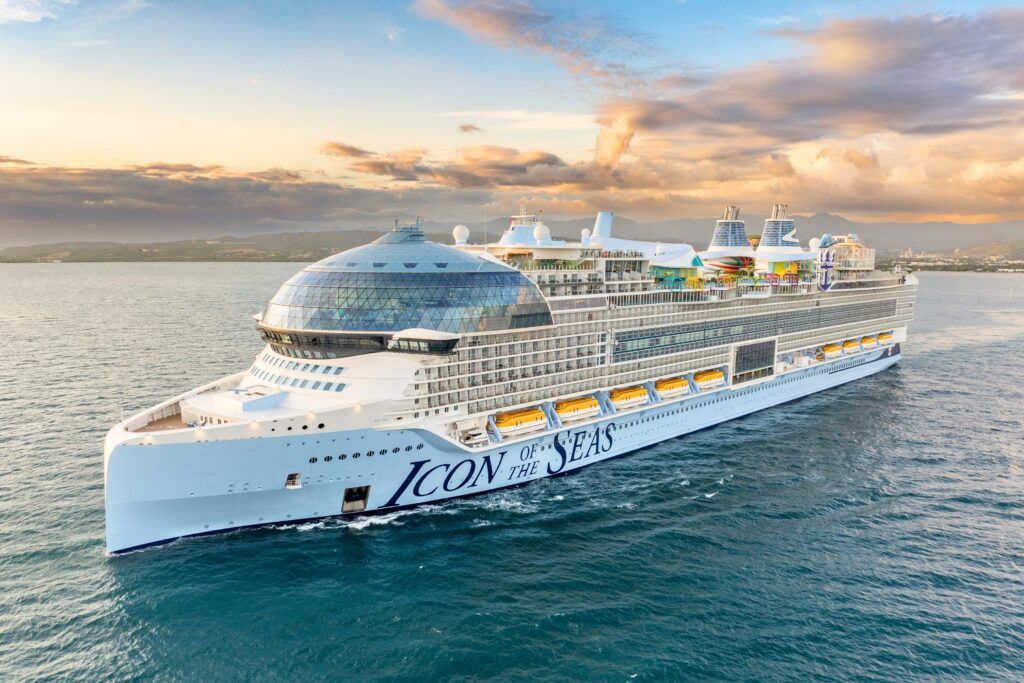
Both lines sail what the industry refers to as mega-ships, which carry, at minimum, around 2,000 people for the smallest vessels and more than 7,600 when their largest ships are at maximum capacity. In fact, some are so big they’re divided into themed areas known as “neighborhoods” on Royal Caribbean ships and “zones” on Carnival ones.
Of all of the cruise lines, these are also two of the most mainstream. That means the basics (meals in the buffet or main dining room; iced water, iced tea and lemonade; most entertainment; and accommodations) are included. Extras (Wi-Fi; beverages like soda, juice, specialty coffee, bottled water and alcohol; alternative dining; spa treatments; casino play and shore excursions) will cost you more. These lines are also lively, so they’re not the best choice for people who prefer peace and quiet or who are hoping to visit small, out-of-the-way ports.
How many ships does Carnival have?
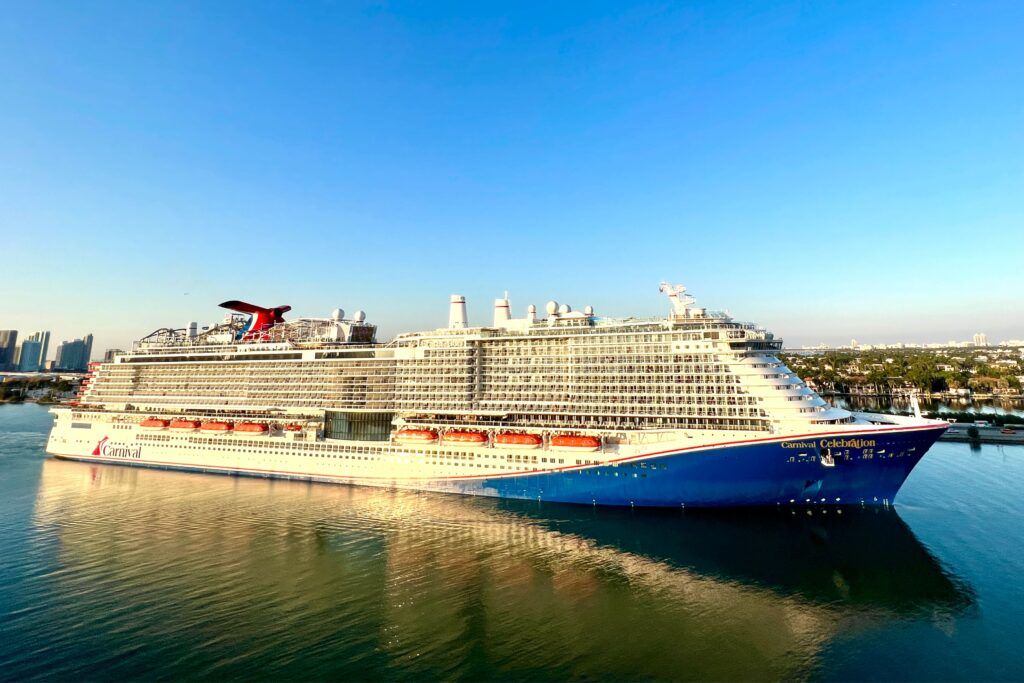
At the time of publication, the Carnival fleet size is 27 vessels with five more on the way through 2033. The line has two further Excel Class ships – Carnival Festivale and Carnival Tropicale – on order, set to begin voyages in 2027 and 2028. It has also planned a series of three currently unnamed ships, dubbed “Project Ace,” which will be ready in 2029, 2031 and 2033, respectively.
How many ships does Royal Caribbean have?
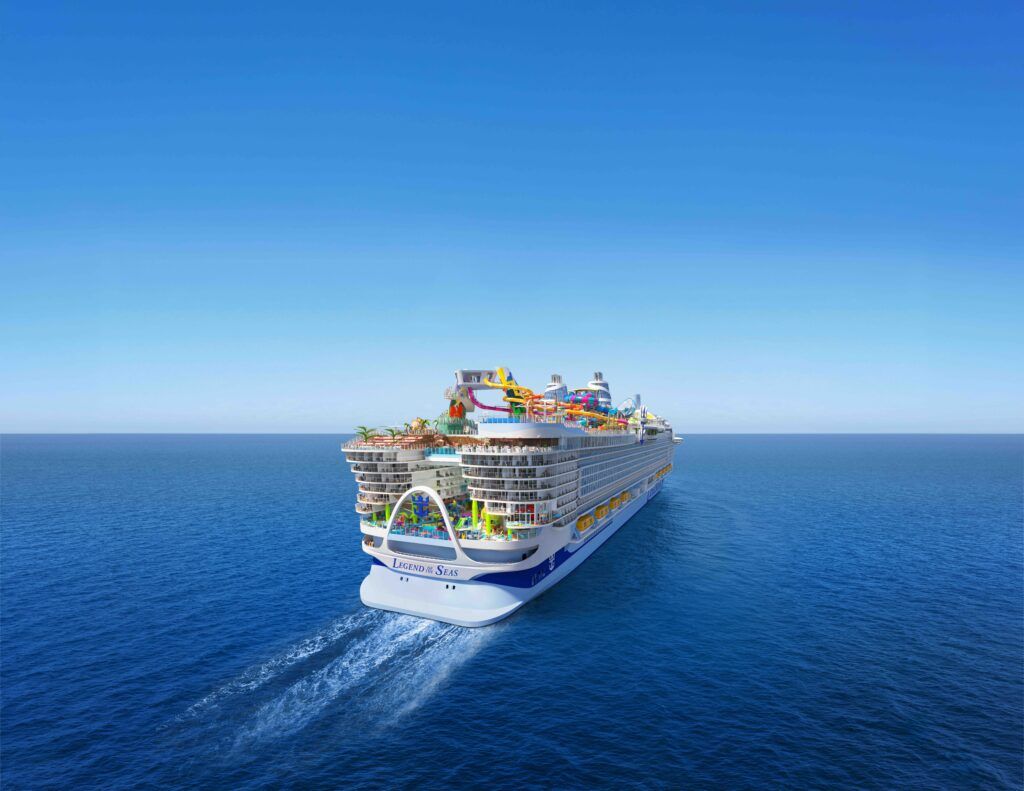
Meanwhile, the Royal Caribbean fleet size is 29 ships. At least four new ones – three more for the Icon Class (one to be called Legend of the Seas) and a seventh for the line’s Oasis Class, the second-largest class – are set to be delivered between 2026 and 2028, meaning the fleet will easily top 30 vessels within the next year. The line also has options for sixth and seventh Icon Class ships.
Additionally, there’s talk of a new class, currently referred to as the Discovery Class. Those vessels are rumored to be smaller than Royal Caribbean’s most recent ships. There’s no official word yet on how many the line is planning or when they will begin to sail.
What are the biggest, smallest, newest and oldest ships in each fleet?
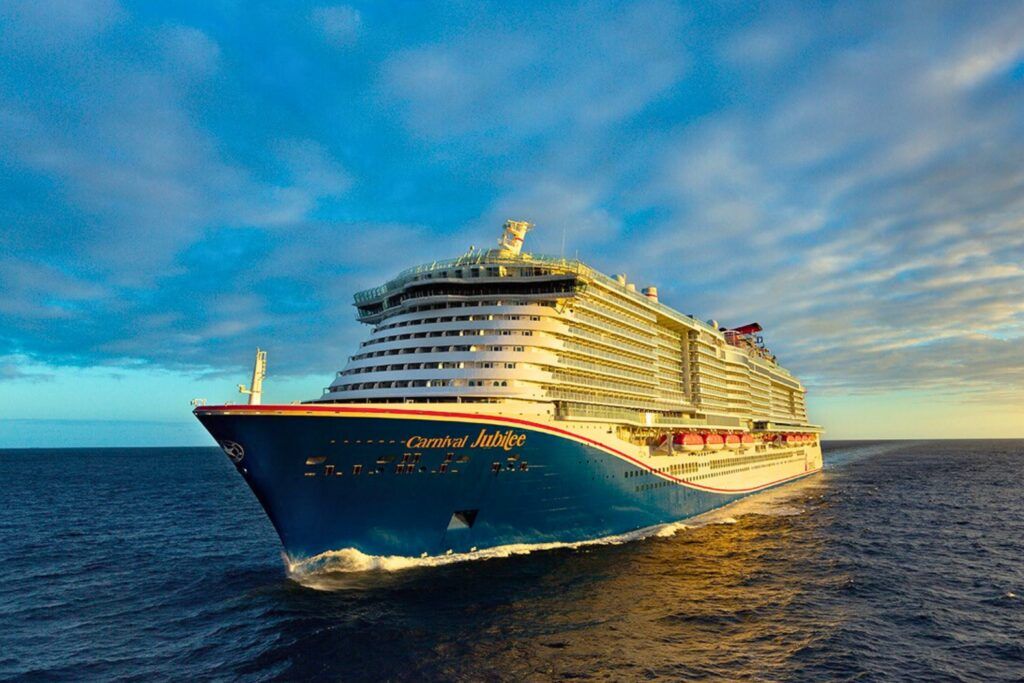
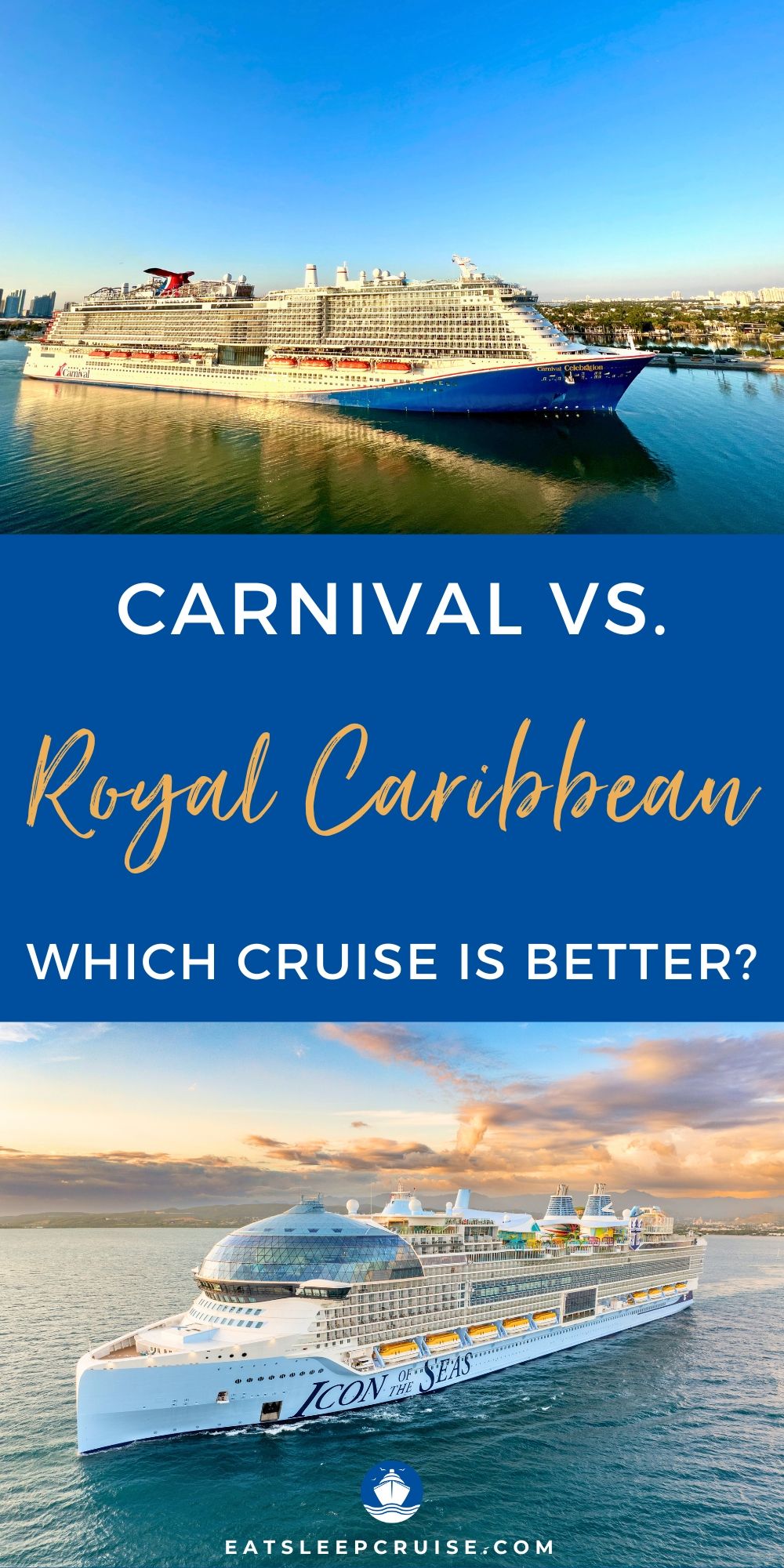
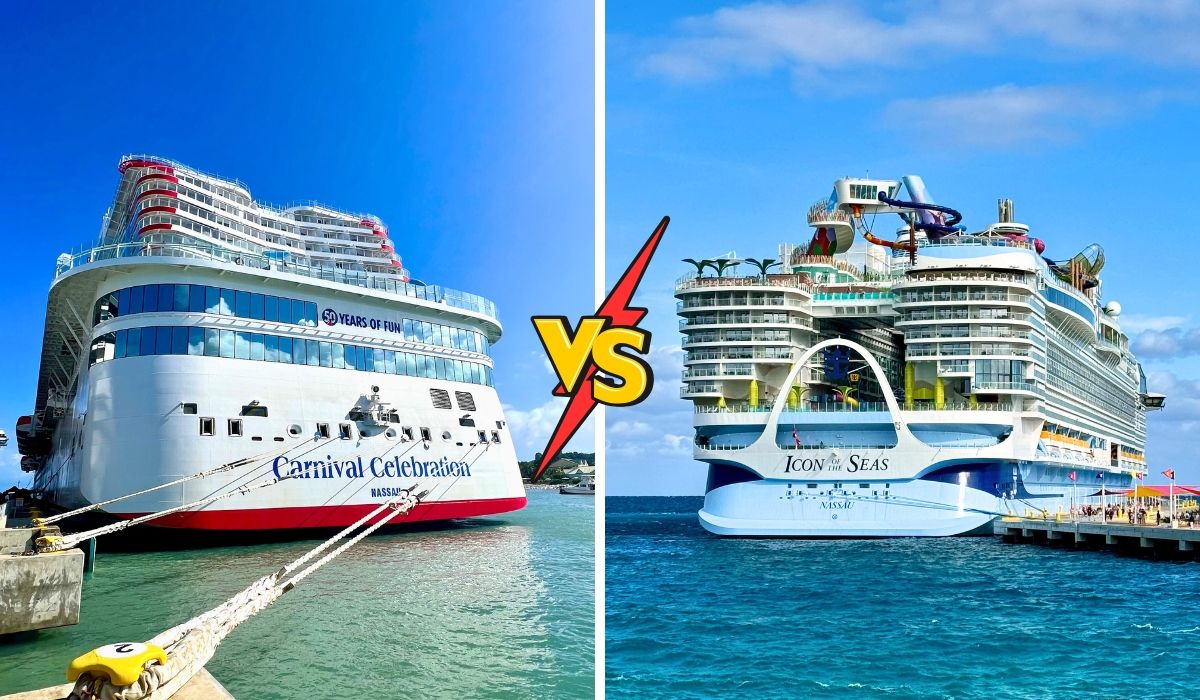
The oldest Carnival ship is 1998’s Carnival Elation, while the newest is 2023-built Carnival Jubilee, which is tied with sister ship Carnival Celebration for the title of largest in the fleet in terms of both capacity and interior volume. Each carries 5,374 passengers at double occupancy (two people per cabin) and measures 183,521 gross registered tons.
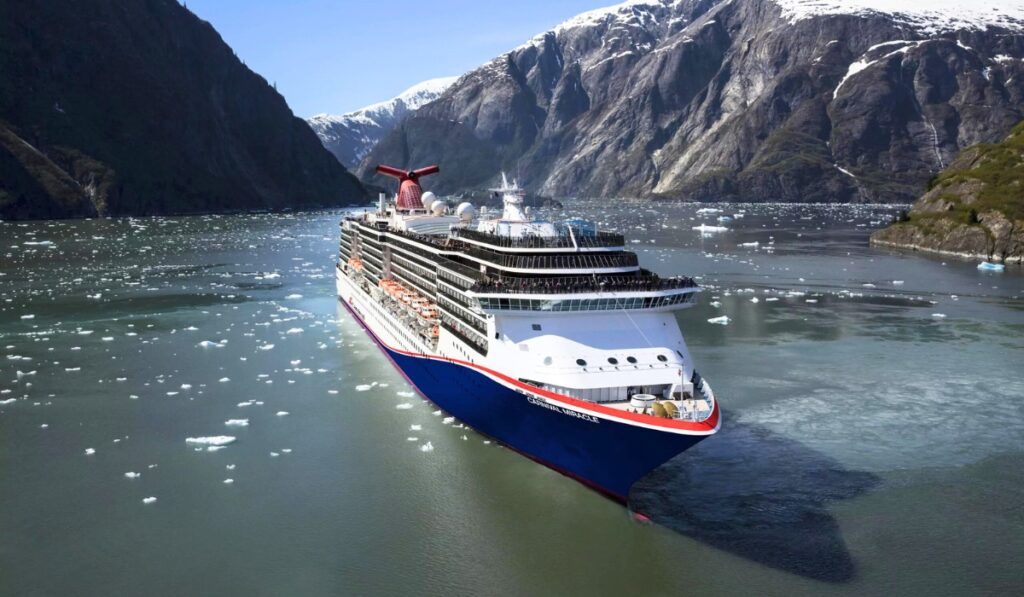
The line’s smallest ship by passenger capacity is a five-way tie between Carnival Miracle, Carnival Pride, Carnival Legend, Carnival Spirit and Carnival Paradise, each of which can hold 2,124 travelers at double occupancy. If you’re talking about tonnage, though, the tiniest vessel Carnival currently sails is Carnival Elation at 71,909 GRT.
As for Royal Caribbean, its newest and oldest ships, respectively, are Star of the Seas (2025) and Grandeur of the Seas (1996). The latter is the smallest ship in the fleet by double-occupancy cruiser count (1,992) and tonnage (73,817 GRT). The two largest ships – in the fleet and in the world – by tonnage are Icon of the Seas and Star of the Seas, which each have an interior volume of 248,663 GRT. However, the largest by passenger count is Wonder of the Seas, which holds 5,734 people with two in each room.
With all of this considered, the lines are pretty evenly matched, making this category a tie.
Who Sails Carnival and Royal Caribbean?
Although both lines’ ships are fairly casual and great for families, friend groups and couples, Carnival has a bit more of an unpretentious drink-in-hand come-as-you-are vibe. Royal Caribbean ships are where you’ll want to be if you’re active or crave adrenaline. (Think ziplines, rock-climbing walls, ice-skating rinks, and surfing and skydiving simulators.)
Both lines draw passengers from all walks of life, but generally you’ll find people who are looking for short, affordable getaways where all of the logistics are covered. With cabins running the gamut from inexpensive inside cabins to suites that are an absolute splurge, you’re likely to find all demographics onboard both cruise lines.
Who has better food: Carnival or Royal Caribbean?
Both Royal Caribbean and Carnival include casual buffet experiences and access to sit-down waiter-served main dining rooms in their fares. (In the latter, menus change daily and include options for picky eaters. Additionally, neither line has a strictly enforced formal night.) Beyond that, they serve free pizza (Sorrento’s on Royal Caribbean and variously named venues on Carnival) and poolside burgers. (Don’t miss Guy’s Burgers on Carnival, so named for the line’s partnership with Food Network personality Guy Fieri.) Ships in the fleet also offer:
Steakhouses
- Carnival: Fahrenheit 555
- Royal Caribbean: Chops Grille
Italian Restaurants
- Carnival: Cucina del Capitano
- Royal Caribbean: Giovanni’s Table and Giovanni’s Italian Kitchen
Asian Fare
- Carnival: Ji Ji Asian Cuisine, Mongolian Wok, Bonsai Sushi and Chibang
- Royal Caribbean: Izumi

Mexican Cuisine
- Carnival: Blue Iguana Cantina and Chibang
- Royal Caribbean: El Loco Fresh and Sabor
Seafood Outposts
- Carnival: Seafood Shack, Rudi’s Seagrill and Emeril’s Bistro
- Royal Caribbean: Hooked Seafood
Barbecue Joints
- Carnival: Guy’s Pig & Anchor Bar-B-Que and Guy’s Smokehouse Brewhouse
- Royal Caribbean: Portside BBQ
Southern Homestyle
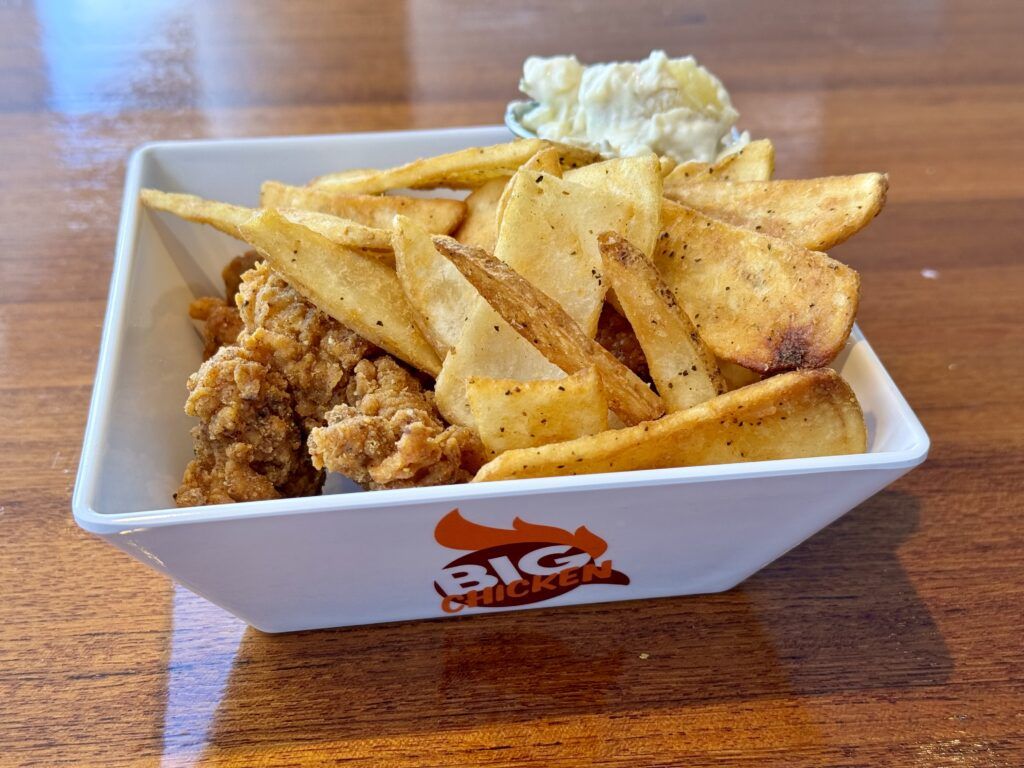
- Carnival: Shaq’s Big Chicken
- Royal Caribbean: The Mason Jar
Deli Delights
- Carnival: The Carnival Deli
- Royal Caribbean: Park Cafe
Brunch
- Carnival: Seaday Brunch and Dr. Seuss Breakfast or Thing 1 & Thing 2 Birthday Breakfast
- Royal Caribbean: Sea day brunch and Mason Jar Brunch
Cafes
- Carnival: JavaBlue and other names depending on ship
- Royal Caribbean: Cafe Promenade, Cafe@Two70, other names depending on ship; Starbucks
Royal Caribbean also has a few additional types of dining spots, including the whimsical Wonderland on select vessels and fun new supper club and interactive dinner theater concepts on its newest ships. Overall, though, Carnival includes more free dining options in its prices. Royal Caribbean continues to open more added-fee eateries, and only about half of its onboard restaurants are included in the up-front cost.
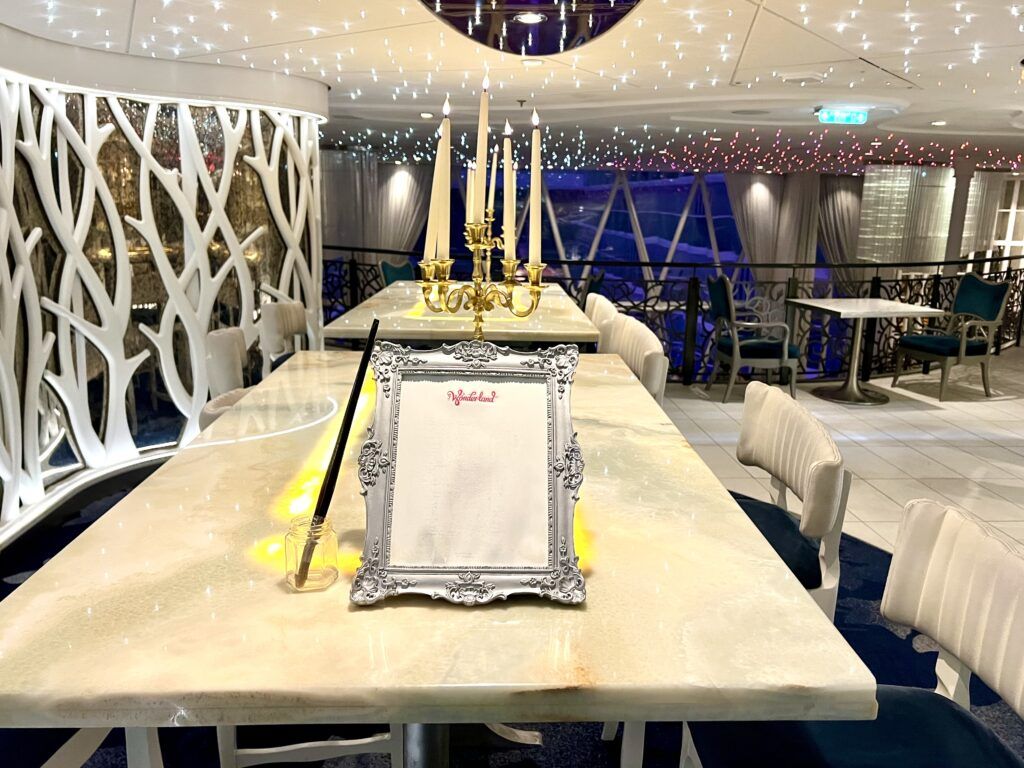
We understand cruise dining is somewhat subjective, but we think Carnival wins in this category for both quality and value. Not only does it have more free selections, but the food is consistently great, regardless of whether you’ve paid extra for your meal or not.
On related notes, both brands are willing and able to cater to dietary needs. They have also invested significant time and effort in trying to cut down on food waste through a combination of slightly (so subtly that passengers are unlikely to notice) reducing portion sizes and finding ways to use the same foods in new ways to avoid spoilage.
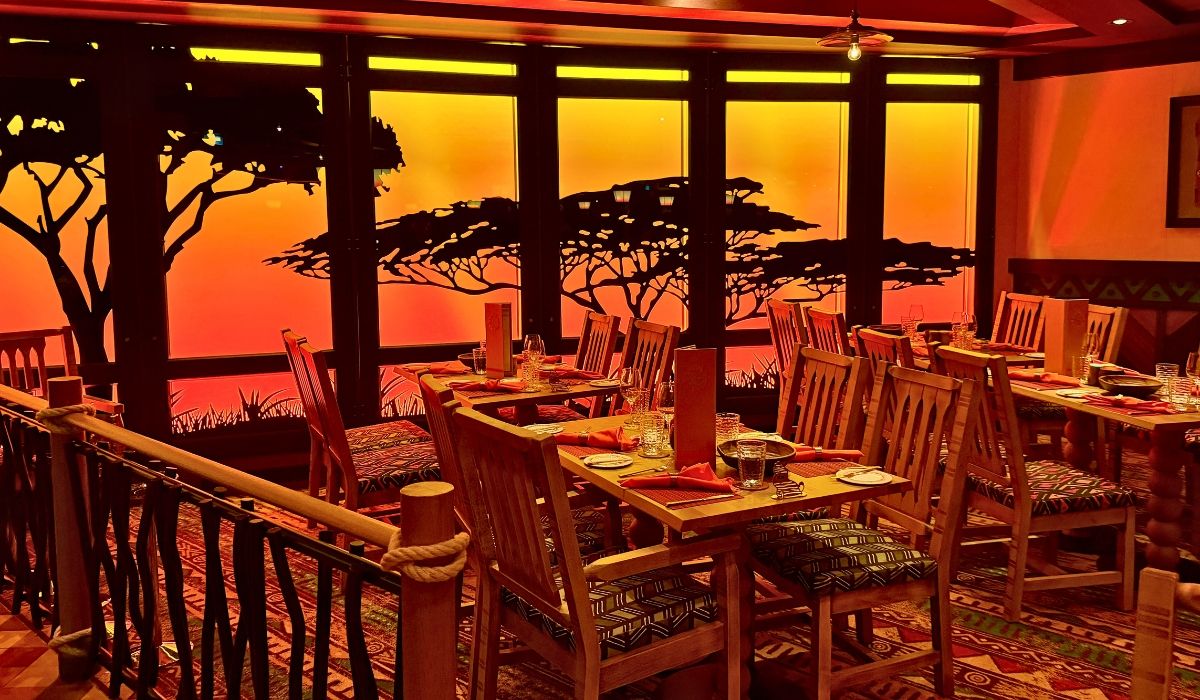
Sample dining menus from each cruise line include Royal Caribbean’s Star of the Seas and Carnival Jubilee.
Bars on Royal Caribbean Versus Carnival Cruises
Nearly as important as food are drinks. Royal Caribbean and Carnival are closely matched in terms of what they offer, with both featuring large numbers of bars on their ships. Passengers will find no shortage of places to grab beer, wine, spirits and cocktails when they sail.
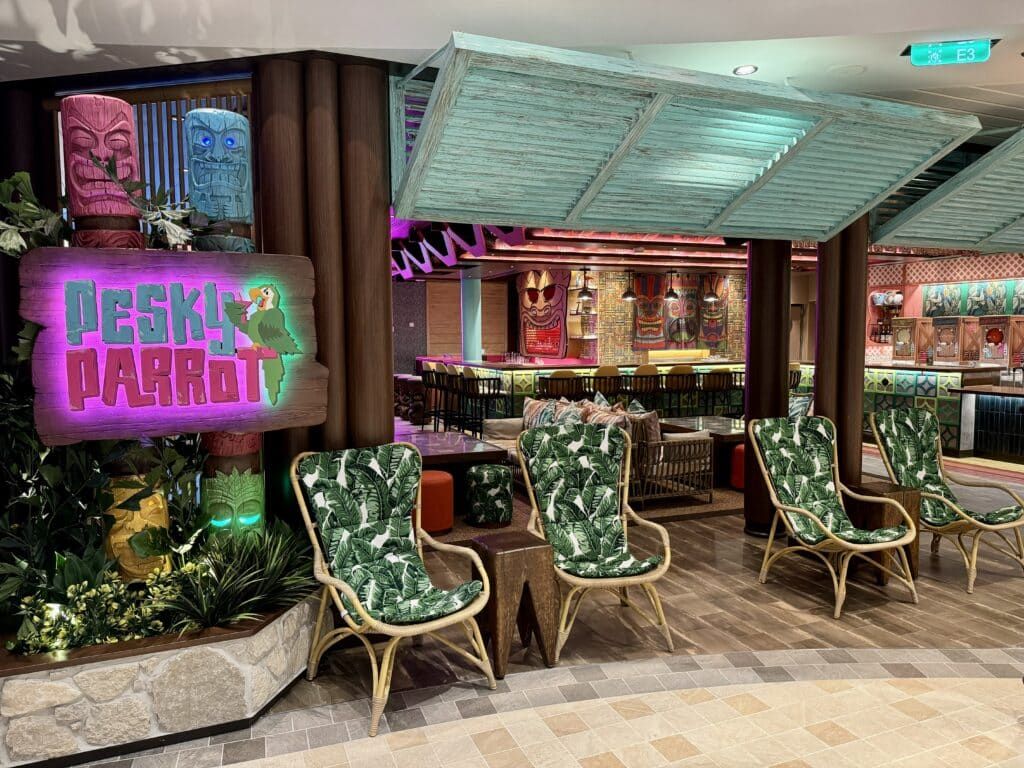
While Royal Caribbean tends to develop trendy, tech-forward or even gimmicky bars – like the Rising Tide Bar, which “levitates;” the Bionic Bar, at which patrons are served by robot bartenders; and the Pesky Parrot, where a rude mechanical bird lords over the establishment – Carnival seems to focus more on making its drinks innovative. For example, you might find color-changing cocktails or mixed drinks adorned with smoke bubbles, black-light-sensitive secret messages or odd garnishes like Swedish Fish. Carnival also has its own brand of ThirstyFrog beer, some of which is brewed right onboard its newest vessels.
Both also have bars – like the classically nautical Schooner Bar on Royal Caribbean ships or the music-forward Piano Bar or science-themed Alchemy Bar on Carnival vessels – that show up again and again, even on the newest ships across their respective fleets.
Per-drink prices are comparable across the lines, but depending on how much you plan to consume, a drink package could be worth the price. Each line offers a soda package, a nonalcoholic beverage package (for drinks like soda, bottled water, energy drinks, juice, milkshakes, and specialty coffee and tea) and an alcohol package.
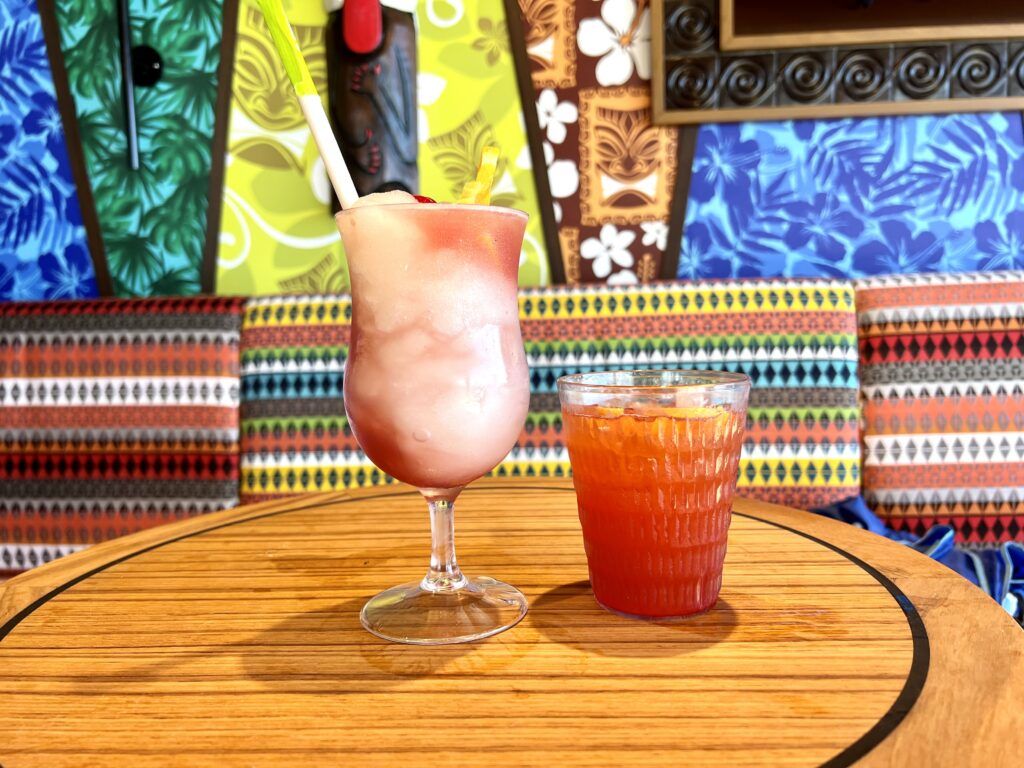
With both lines, prices for those three package types vary based on sailing length. They are generally similar across lines and are per person, per day, for the duration of the voyage. If one person in the cabin buys one, everyone has to (with nonalcoholic packages substituted for minors). Carnival’s Cheers! alcohol package has a 15-drink limit per person in each 24 hour period. Royal Caribbean’s Deluxe Beverage Package has no limit. That said, crew on both lines’ ships reserve the right to cut passengers off if they’re acting irresponsibly.
In this category, Carnival takes the cake for creative cocktails and onboard brewery capabilities. However, Royal Caribbean runs away with the award for innovative bar concepts. It also scores points for not having per-day limits on its alcohol packages. For these reasons, we’re calling it a tie.
Carnival vs Royal Caribbean Cruises for Cabins
With both cruise lines, the older ships’ cabins tend to have decor that can look a bit dated, despite regular refurbishments that have replaced carpeting and soft furnishings. New ships have been designed with a more modern look that incorporates neutral light woods with touches of color here and there in things like bed runners and throw pillows.
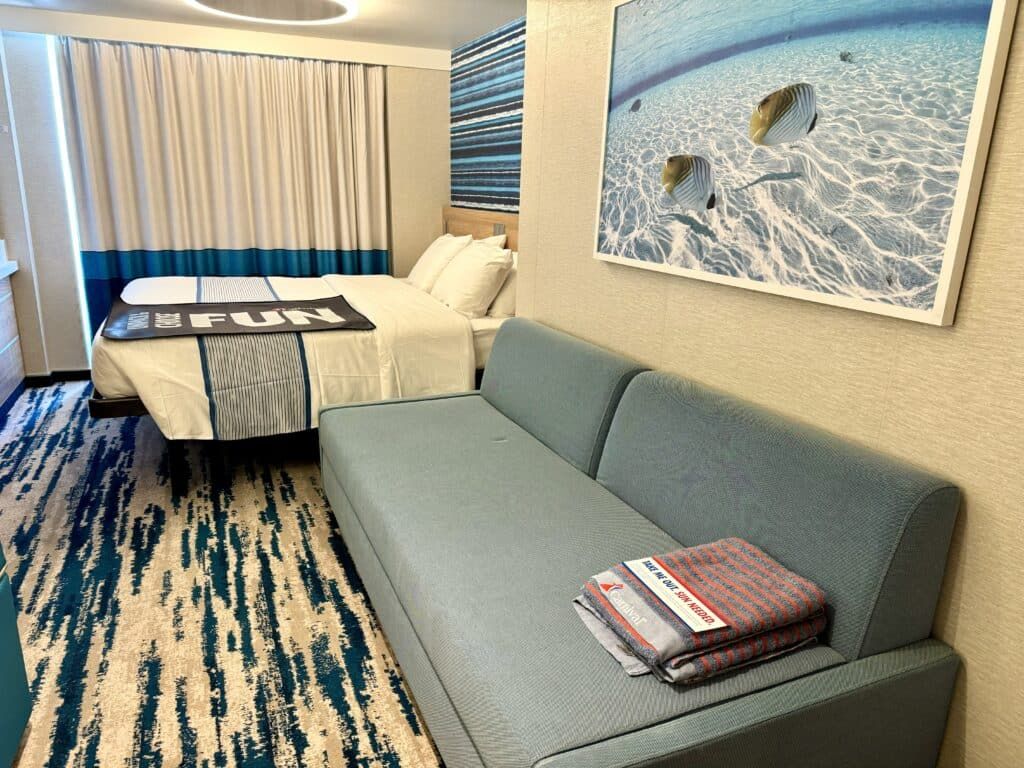
Even the most basic accommodations from both brands include at least a queen bed that converts into two twins upon request. Room also offer a closet and dresser/vanity with a mirror. Depending on cabin size, there’s usually some sort of extra seating, too, ranging from a single chair with a coffee table to a full sofa – sometimes one that converts into a bed if the cabin sleeps more than two people.
Additionally, all cabins on both lines come with their own private bathrooms. Amenities and configurations vary by ship and room type, which can range from insides with no windows or ocean-view cabins with windows that don’t open to balcony cabins with semi-private sitting areas and doors that open for fresh air. Both lines have suites, too.
Special cabin types on Carnival include Havana rooms, many of which allow direct access to a patio-style balcony that leads directly out onto a public sun deck. Passengers booked in these rooms also have exclusive access to a private bar and pool. Family Harbor staterooms are designed with families in mind. They’re in a separate area of the ship, and cruisers staying there are entitled to use the dedicated family lounge. The lounge offers board games, movies, daily snacks and soft drinks, and other family-fun amenities.
One of Royal Caribbean’s most iconic cabin types is the Ultimate Family Suite, which rises two decks. The layout includes separate bedrooms for parents and kids and a slide from the children’s bedroom down to the living room below. Speaking of the living room, it’s outfitted with comfy seating areas, games, activities and movies. On the balcony, the kiddos can enjoy a built-in climbing structure. An even larger version on the line’s Icon Class vessels is called the Ultimate Family Townhouse.
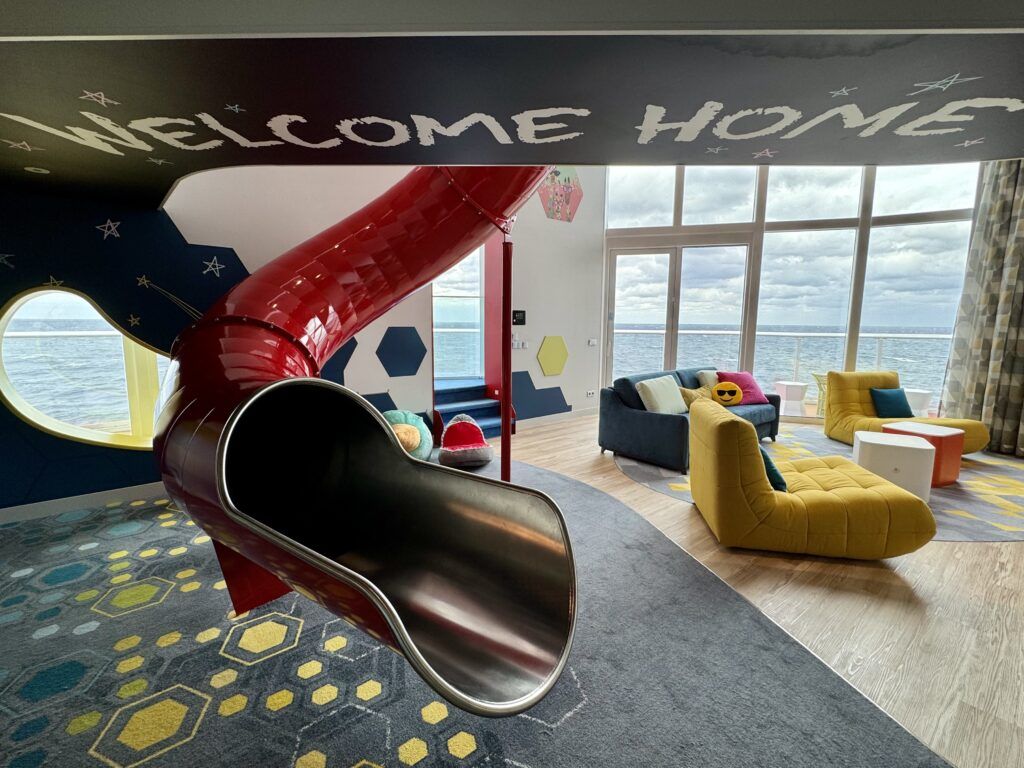
And the Ultimate Family Suites and Townhouses aren’t the only duplexes available. Several varieties of what the line calls Loft Suites provide larger two-deck accommodations with separate living and sleeping areas. They, like Ultimate Family accommodations, include the services of a Royal Genie – Royal Caribbean’s name for its butlers. Other amenities range from priority check-in and boarding and luxury bathroom amenities to included Wi-Fi, drinks and gratuities, as well as access to exclusive areas.
Non-suite standouts for Royal Caribbean are inward-facing balcony and oceanview rooms. These accommodations are located in the Royal Promenade indoor mall area. They also flank the upper walls of the Boardwalk open-air promenade space and above Central Park, where a resident gardener tends to tens of thousands of live plants.
Royal Caribbean also offers studio cabins for solo travelers on select vessels, virtual balconies, and infinite balconies on its newer ships. Carnival doesn’t have any staterooms for people cruising alone.
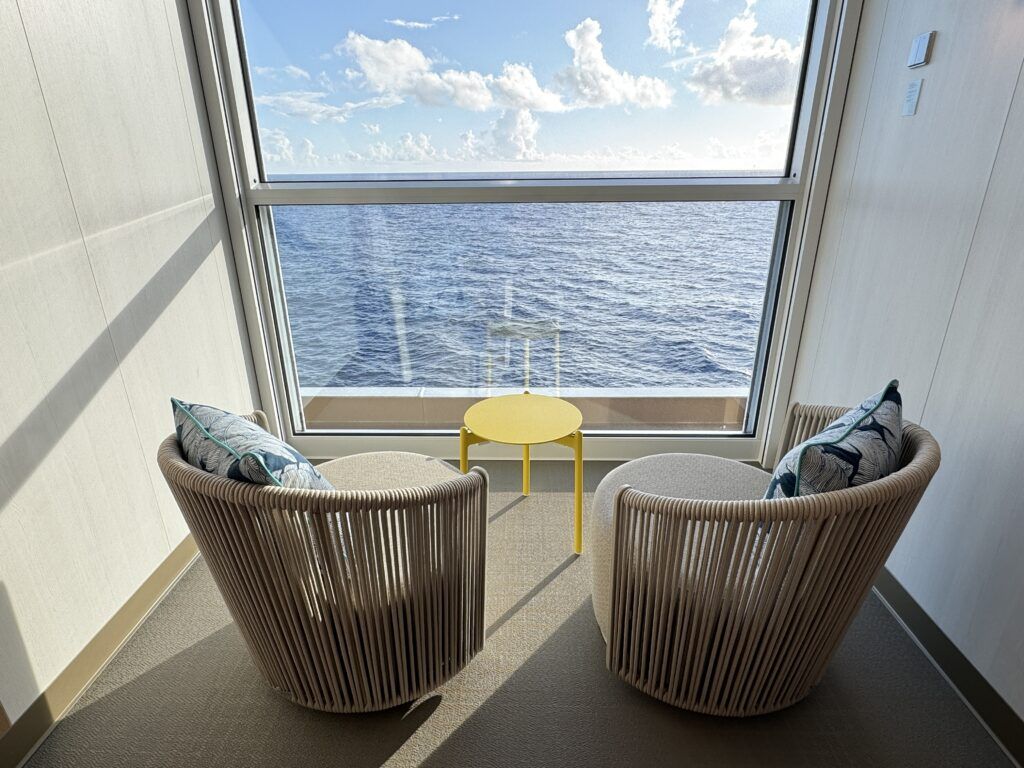
Both fleets have connecting cabins available for large groups traveling together. A selection of accessible rooms in various categories on each vessel across both lines features a mix of accommodations. Examples include wider doorways, more square footage for turning, flat thresholds, lowered vanities and closet storage space. Bathrooms might include roll-in showers, grab bars and toilets and sinks with adjusted heights. Skilled, friendly cabin stewards service rooms once a day. They will often leave extra touches like towel animals to make you feel special.
Carnival is known for having some of the most generously sized digs in the industry. However, the number of cabin categories and room options offered by Royal Caribbean is positively head-spinning, allowing you to find the perfect home away from home for you and your travel party. Plus, Royal Caribbean’s suites offer more amenities than Carnival’s do. In our book, all of this makes Royal Caribbean the winner here.
Activities, Shows and Outdoor Fun
Daytime activities on Carnival and Royal Caribbean tend to be pretty standard across both lines. (Think trivia, towel-folding demonstrations, pool deck competitions and dance classes.) Even nighttime holds some similarities, such as comedy performances, the Love and Marriage game show. Further, you’ll find various theme parties (glow parties, decade themes and more), and adult scavenger hunts (The Quest on Carnival and Crazy Quest on Royal Caribbean).
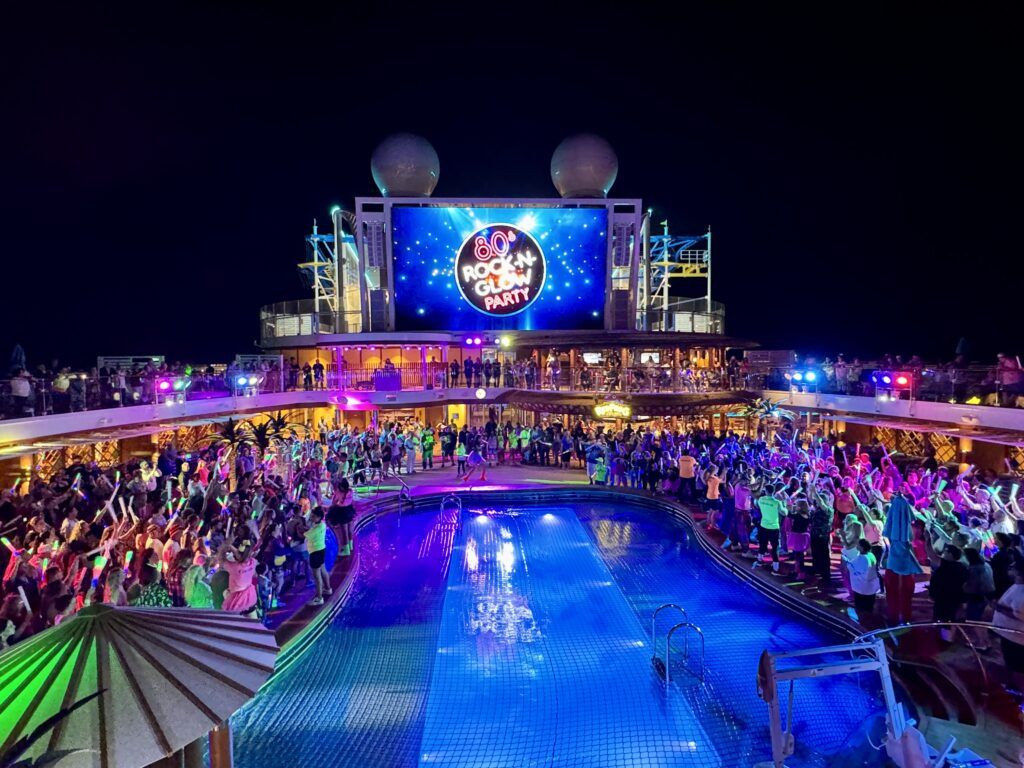
But where the two lines truly diverge is in their theater offerings, top-deck attractions and other performances. Spoiler alert: Royal Caribbean blows Carnival out of the water, despite Carnival’s efforts to innovate with acrobatic shows on its new ships, held in a secondary theater that faces the sea on one side of the vessels.
Carnival’s main theater production shows, dubbed Playlist Productions, were created especially for the line. They’re fun and attention grabbing, but they often have plots that are hard to follow and don’t hold a candle to Royal Caribbean’s Broadway shows. The line produces bridged versions of “Cats,” “Mamma Mia!” “Saturday Night Fever,” “Hairspray” and “Grease” on several of its vessels. Not to mention, the Icon Class ships feature “The Wizard of Oz” and “Back to the Future: The Musical” productions.

Royal Caribbean also has ice skating rinks on several of its ships. The spaces host shows by professional skaters, as well as time for passengers to take to the ice themselves.
Additionally, Royal Caribbean consistently breaks the mold with its AquaTheater high-dive, dance and acrobatic performances. On most ships where they’re held, the shows take place outdoors with the wake in the background. On Icon Class vessels, though, a massive glass dome houses the performance space. The shows often incorporate unexpected elements like juggling, trampoline and slackline acrobatics. You might also see synchronized swimming or even tightrope walking in addition to jaw-dropping diving routines – all set to music.
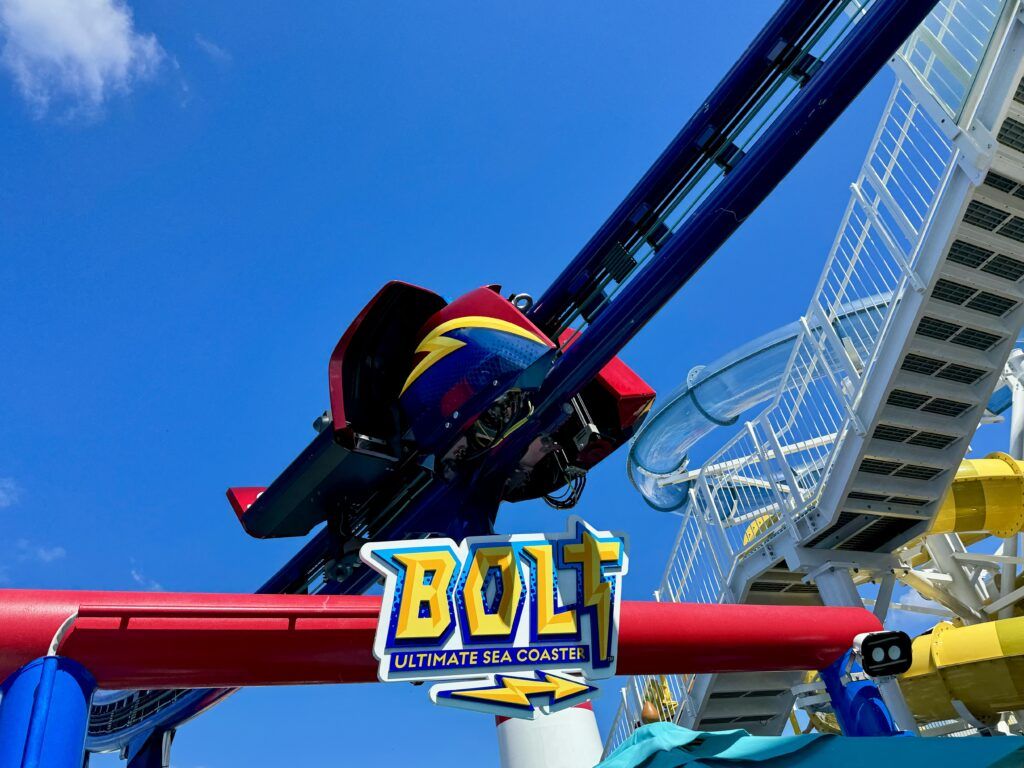
As for adrenaline-pumping pursuits, Carnival gets credit for being the first – and still only – cruise line to have a roller coaster at sea. BOLT sends passengers for two laps around a track that rings the upper decks of three of the line’s ships. It’s absolutely cutting edge. But, in our opinion, that alone isn’t enough to outdo all of Royal Caribbean’s top-deck advancements over the years – especially because passengers have to pay to ride BOLT.
Royal Caribbean is the first and only cruise line to have surfing and sky-diving simulators at sea, along with suspended infinity pools. And, although other lines have since “borrowed” the ideas, carousels, ziplines and dry slides that drop 10 decks also first appeared on Royal Caribbean ships. Throw in massive water parks with thrilling waterslides, numerous pools, miniature golf, rock-climbing walls, and basketball and pickleball courts – all of which are free – and Royal Caribbean has a winning recipe for this category.
For Kids Stuff, Which Is Better: Royal Caribbean or Carnival?
When it comes to organized kids club offerings, Carnival’s Camp Ocean and Royal Caribbean’s Adventure Ocean are alike in many ways. Both are split into six main groups:
Carnival’s Camp Ocean
- Turtles: 6-23 months
- Penguins: 2-5 years
- Stingrays: 6-8 years
- Sharks: 9-11 years
- Circle C: 12-14 years
- Club O2: 15-17 years
Royal Caribbean’s Adventure Ocean
- AO Babies: 6-35 months
- Aquanauts: 3-5 years
- Explorers: 6-8 years
- Voyagers: 9-11 years
- Navigators: 12-14 years
- Teens: 15-17 years
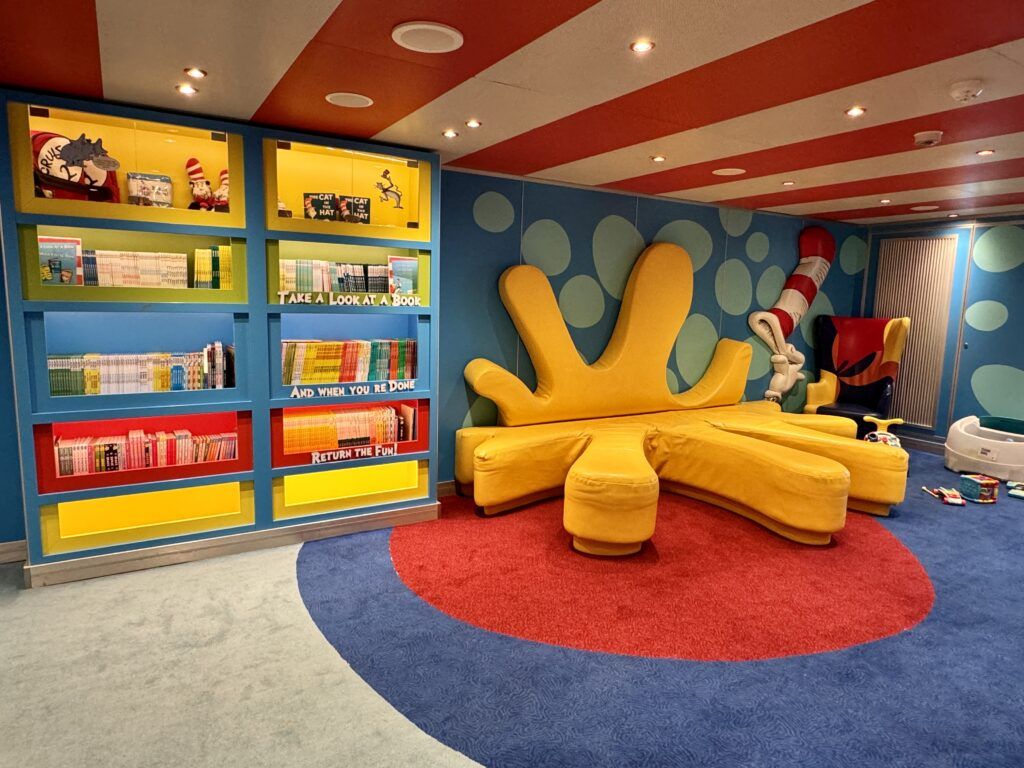
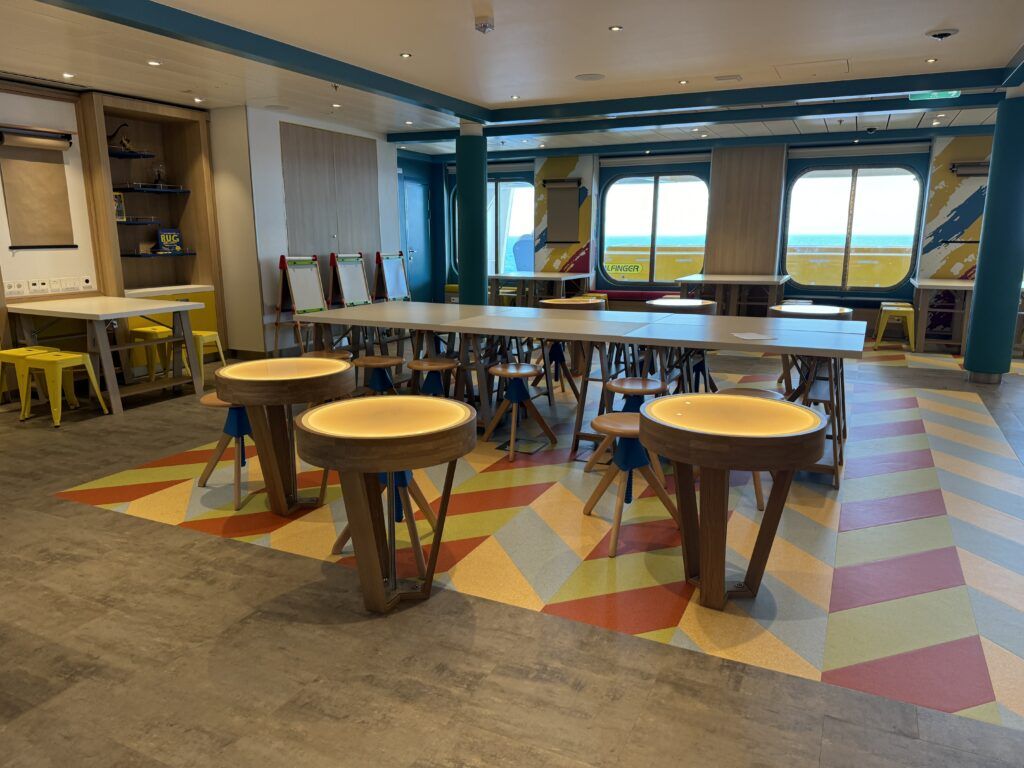
Both lines have special dedicated areas for tweens and teens away from the younger children. They allow kids in these older age groups to come and go as they please with fewer scheduled activities and more emphasis on just hanging out with video games, mocktails and parties.
Both also allow for-fee drop-off babysitting services for children from 6 months old. There are also late-night activities for kids up to 11 years old that allow parents a bit of alone time for a per-child hourly cost.
As far as the actual programming, both lines schedule similar age-appropriate activities. They might range from story time and arts and crafts for the youngest kids to scavenger hunts, sports competitions and video game tournaments for older ones. Trained youth staff are likely to sprinkle science experiments, dance parties and movies in with the fun.
But where the lines diverge is in Royal Caribbean’s spaces versus Carnival’s. For example, in addition to rooms for its individual age groups, the former houses mini-theaters where Adventure Ocean participants can perform for their parents in plays and talent shows on the largest ships in the fleet. The line also has rooms earmarked as science labs, allowing for a wider array of (sometimes messy) experiments.
What Carnival lacks in activity-specific rooms it makes up for through its partnership with Dr. Seuss. In Carnival’s kids clubs, children might run into The Cat In the Hat or Thing 1 and Thing 2. Ships also schedule these characters to appear for promenade parades and themed brunches and breakfasts onboard. (Breakfast and brunch come with added fees.)
But kid-friendly diversions aren’t limited only to the clubs. Ships in both fleets include video arcades, and top-deck fun like water parks. Royal Caribbean’s rock-climbing walls and surf simulators are big hits with kids, as are Carnival’s SkyRide and BOLT roller coaster. However, Royal Caribbean has laser tag and escape rooms on some ships, which Carnival doesn’t have.
All things considered, the lines are matched pretty evenly for kid-centric things to do.
Royal Caribbean vs Carnival Itineraries: Where Do They Sail?
Each of these cruise industry giants has a massive presence in North America, with loads of vessels departing from East Coast ports – particularly those in Florida. They offer many itinerary choices that visit the Caribbean and Bahamas, as well as Bermuda. They both also feature sailings to Canada and New England from the East Coast, as well as the Caribbean and Mexican Riviera from Galveston. The Mexican Riviera, Hawaii and Alaska via West Coast ports in California and Canada’s Vancouver are also popular destinations.
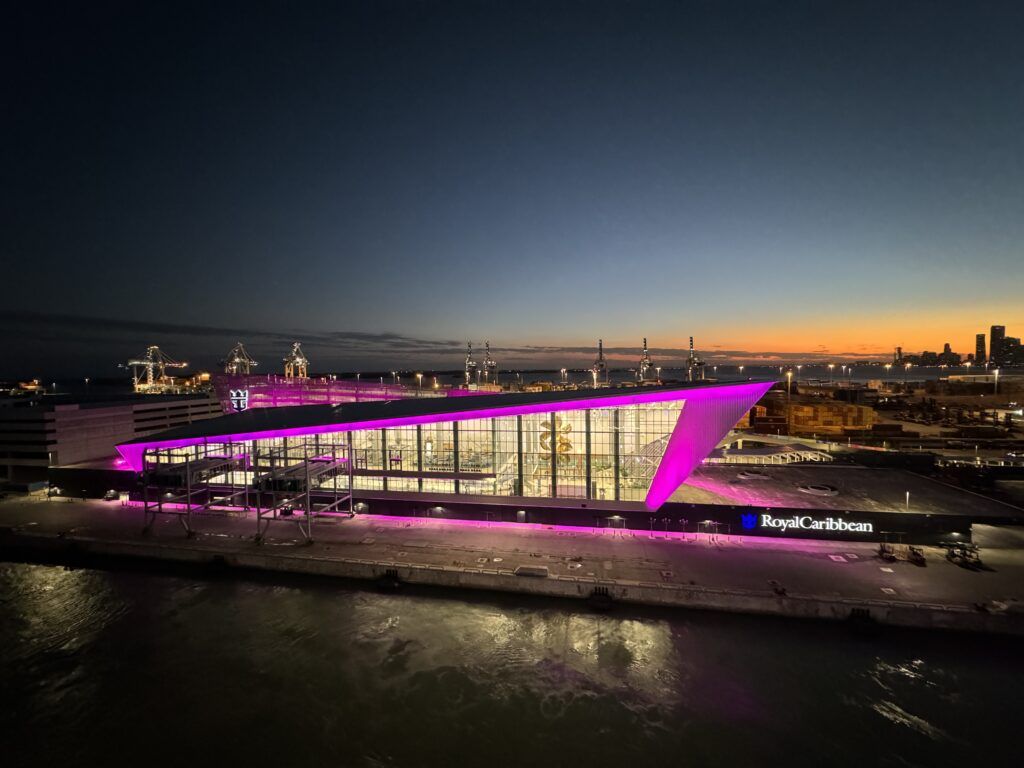
Both lines offer Panama Canal sailings every so often as ships reposition, and both have vessels based in the Australia and New Zealand region, too, which offer sailings Down Under and to the Pacific Islands.
Both lines sail Europe cruises, but Carnival tends to sail transatlantic voyages of at least two weeks’ duration when it calls there, as opposed to Royal Caribbean, which does weeklong cruises when it has ships based across the pond. However, in general, the latter covers more of the globe than Carnival does, with ships based in Asia and the Middle East (when it’s safe for them to be there).
Sailings of three to seven nights are the most popular with both brands’ passengers, but both also offer longer voyages. At press time, Carnival and Royal Caribbean each had slightly more than a dozen sailings of 15 nights or longer scheduled. However, Carnival had 2.5 times as many 10- to 14-night voyages on the books as Royal Caribbean did.
It used to be that these lines dedicated their older, smaller ships to short sailings. Recently, though, both Carnival and Royal Caribbean allocated some of their newest hardware to short three- to five-day itineraries. That means passengers no longer have to forfeit the latest bells and whistles in order to book a short cruise.
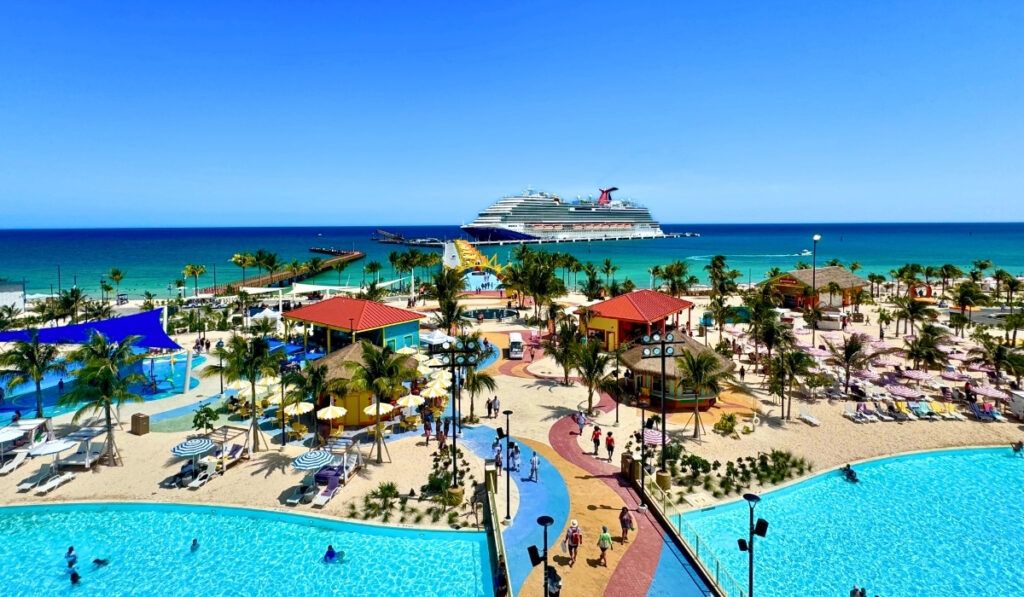
Carnival’s Private Destinations
These private destinations are exclusive to passengers sailing on Carnival and, occasionally, Holland America Line ships.
- Half Moon Cay: a private island in the Bahamas
- Celebration Key: a private beach destination on Grand Bahama Island
Royal Caribbean’s Private Destinations
These private locations are for use only by travelers who cruise with Royal Caribbean and, sometimes, Celebrity Cruises.
- Perfect Day at CocoCay: a private island in the Bahamas
- Labadee: a private destination in Haiti on the island of Hispaniola
- Royal Beach Club Paradise Island: a private beach destination on Paradise Island in the Bahamas (recently opened)
- Royal Beach Club Cozumel: a private beach destination in Cozumel, Mexico (opening in 2026)
- Royal Beach Club Santorini: a private beach destination in Santorini, Greece (opening in 2026)
- Perfect Day Mexico: a private beach destination in Mahahual, Mexico (opening in 2027)
- Lelepa: a private destination on Lelepa, an island in Vanuatu in the South Pacific (opening in 2027)
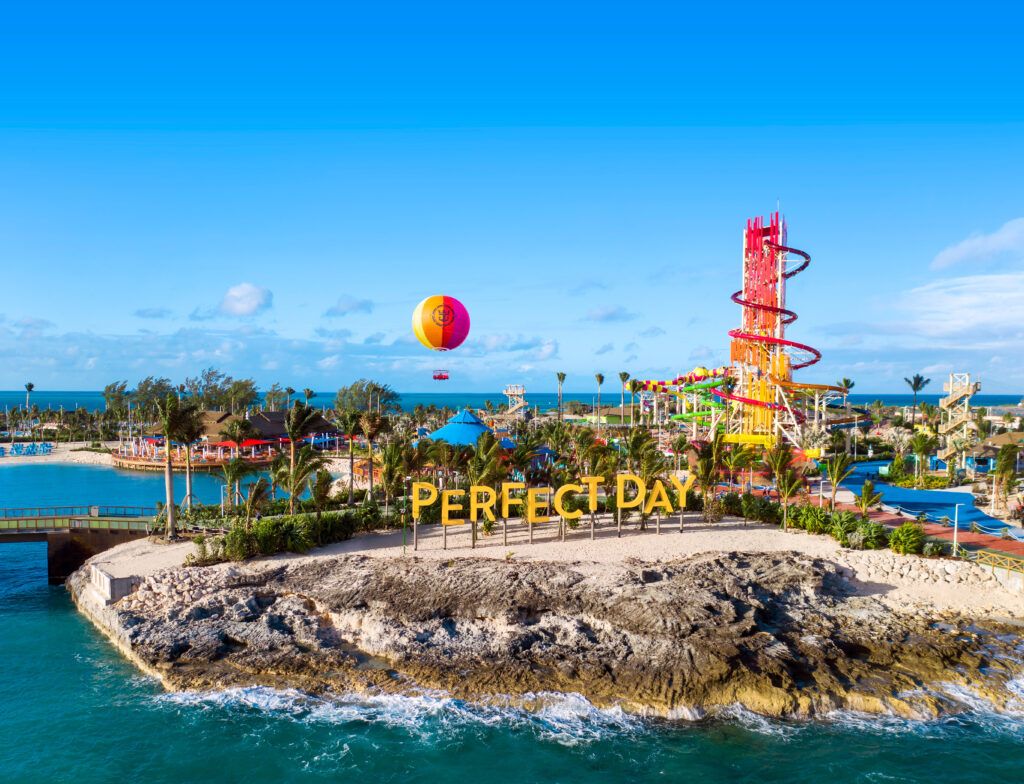
Although Carnival has a larger number of longer cruises than Royal Caribbean does, Royal Caribbean sails to more regions, bases ships in a wider variety of countries and has more private destinations in its portfolio, making it the overall winner here.
Is Carnival cheaper than Royal Caribbean?
The answer to this question largely depends on where the ships are sailing and what ship you choose. Generally, Carnival is cheaper than Royal Caribbean when it comes to cruises from Florida to the Caribbean and Bahamas. However, Carnival’s pricing can exceed Royal Caribbean’s in destinations like Alaska on sailings from the West Coast and on Mexico voyages that depart from Galveston.
It’s difficult to compare pricing for Europe and Hawaii itineraries, as the lines either don’t offer cruises of comparable lengths in those regions or ships of similar ages. But, broken down by per-night pricing, fares tend to be roughly equal in Hawaii. In Europe, Carnival’s average per-person, per-night fares are lower, likely because the line mainly does transatlantic voyages, which are longer but which don’t include as many ports.

The lines are similar in that they charge more for cabins on their newest ships than they do for rooms on their oldest.
Here are some examples. (Note: Fares were accurate at the time of publication; they are subject to change without notice. All prices are for inside cabins, including taxes and fees.)
4-Night Bahamas Cruise From Miami
- Carnival Conquest (2002): $343 per person, visiting Half Moon Cay and Celebration Key
- Freedom of the Seas (2006): $514 per person, calling on Perfect Day at CocoCay and Nassau
7-Night Western Caribbean Cruise From Port Canaveral
- Carnival’s Mardi Gras (2021): $709 per person, stopping at Roatan, Cozumel and Celebration Key
- Star of the Seas (2025): $1,471 per person, including Perfect Day at CocoCay, Costa Maya, Roatan and Cozumel
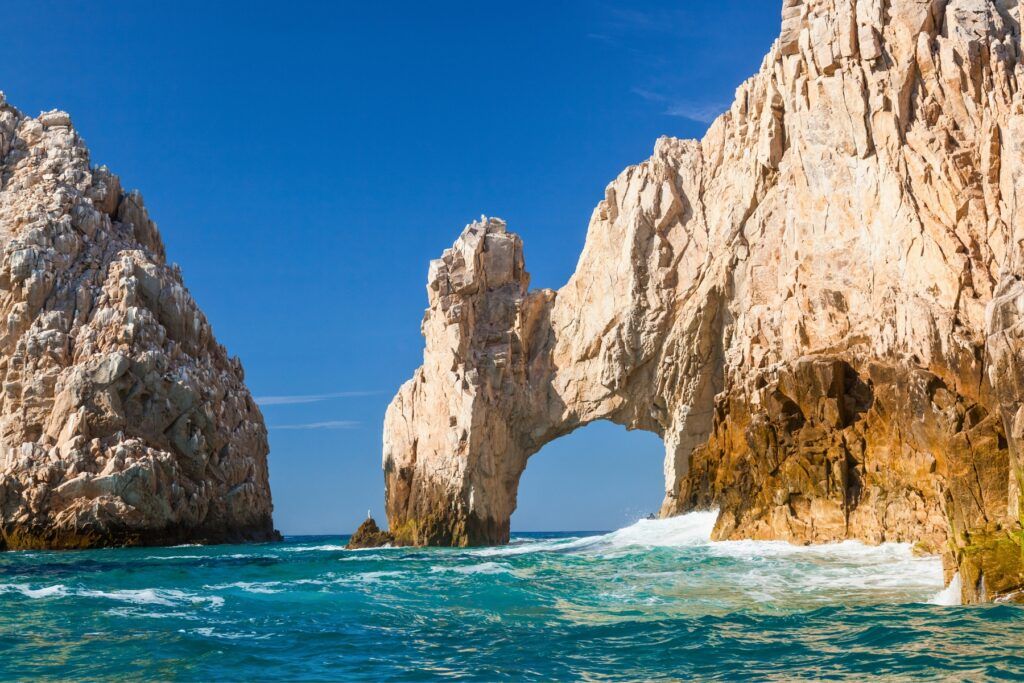
4-Night Mexican Riviera Cruise From Galveston
- Carnival Miracle (2004): $559 per person, visiting Cozumel
- Mariner of the Seas (2003): $446 per person, calling on Cozumel
7-Night Alaska Cruise From Seattle
- Carnival Spirit (2001): $949 per person, with calls on Tracy Arm, Skagway, Juneau, Ketchikan and Victoria in Canada
- Voyager of the Seas (1999): $787 per person, stopping at Juneau, Skagway, Sitka and Victoria
As already mentioned, pricing does depend on several factors, but overall, Royal Caribbean tends to have the higher price tag.
Is Royal Caribbean Better Than Carnival?
Ultimately, there are some areas – fleet, drinks/bars, pricing and kids clubs – where these two market-dominating cruise lines are fairly evenly matched.
However, where Carnival truly pulls ahead is in the food department. You’ll pay some of the lowest prices in the industry to sail with this brand. You’ll be rewarded with some of the best meals – many of them free – that you can find on a mainstream cruise line.
Alternatively, Royal Caribbean wins out when it comes to cabin selection, itinerary breadth and entertainment.
In the battle of Royal Caribbean vs Carnival cruises, only you can decide which cruise line best suits your needs.
Comments
Do you have a preference when it comes to Royal Caribbean vs Carnival? What factors make it the best cruise line for you? Drop us an anchor below to share your favorite cruise line and why.








1 comment
Terry C
You did not mention the loyalty programs. IMO, RC blows Carnival out of the water there.