
 Don Bucolo
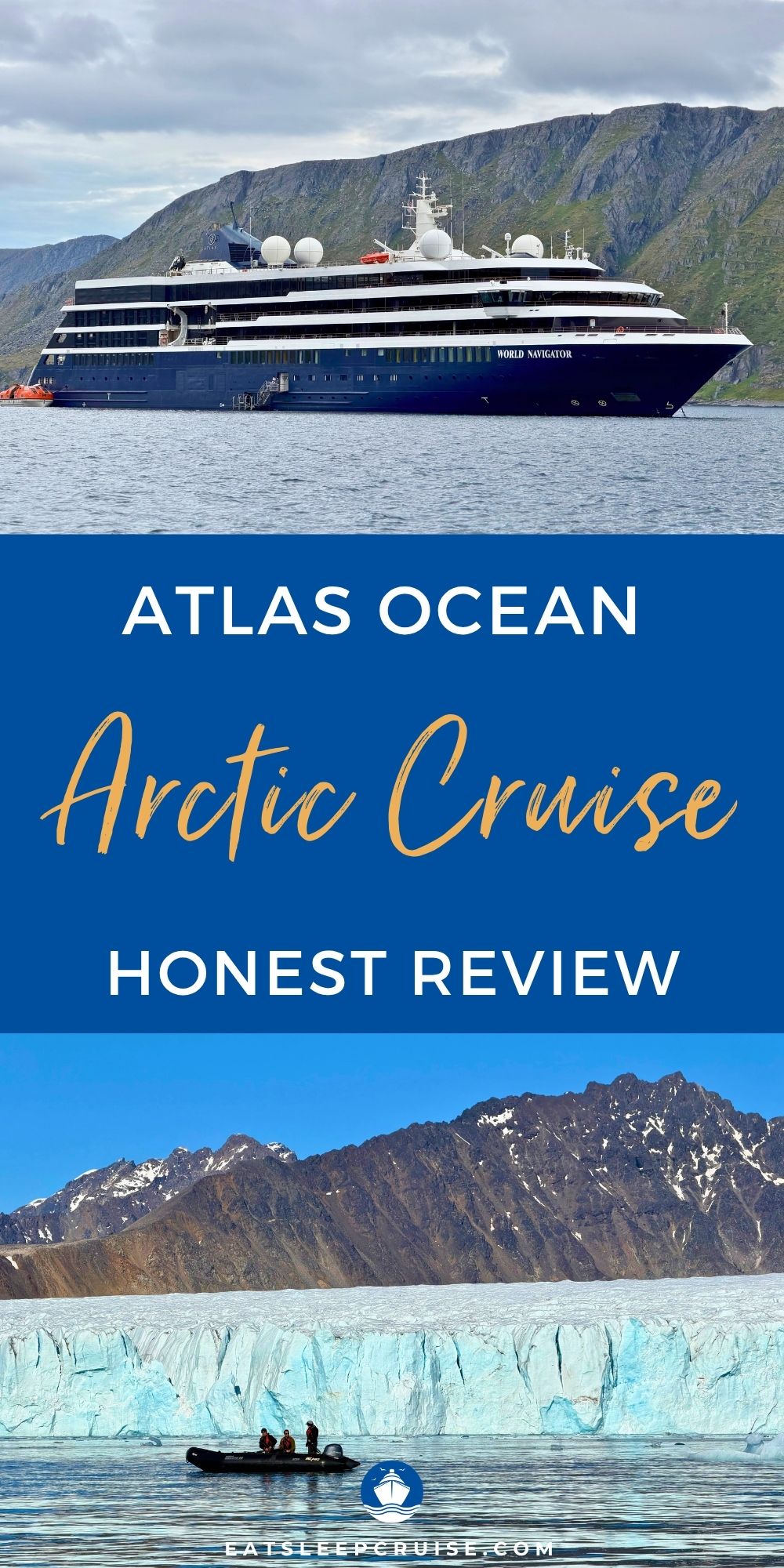
Our Atlas Ocean Voyages Arctic cruise took us further north than we had ever sailed, all the way to 79 degrees north into the high Arctic. Over 12 days, our Arctic adventure combined a Norwegian coastal cruise with a true polar expedition in Svalbard.
Even though we’ve sailed to Antarctica with Atlas, this hybrid cruise was quite different. In this cruise review, we break down what an Atlas Arctic cruise is really like, from the ship and the ports to the actual expedition and our honest verdict on who this cruise is right for.
The Itinerary
Atlas Ocean Voyages offers a variety of polar expedition itineraries in the Arctic. Ranging from one week to two weeks and beyond, almost no two are the same. From Norway to Iceland, Greenland, and Northern Canada, you can visit several different places on an Arctic expedition cruise. But when we envisioned the experience, one destination sat at the top of our list: Svalbard.
This northern archipelago is known for its glaciers and 24 hours of daylight in summer. It’s also home to some 3,000 polar bears (including the territorial waters and seasonal sea ice of the Barents Sea). Especially via cruise ship, this is the place to go if you want to see these marine mammals. In fact, in much of Svalbard you aren’t allowed to leave the settlement without proper protection.
During our 12-night Oslo to Longyearbyen itinerary, we weaved through fjords, stopping in quaint coastal villages and even reached the North Cape, the northernmost point of continental Europe. It was from there that our Norwegian fjords cruise became a full expedition, as we journeyed along the west coast of the Svalbard archipelago.
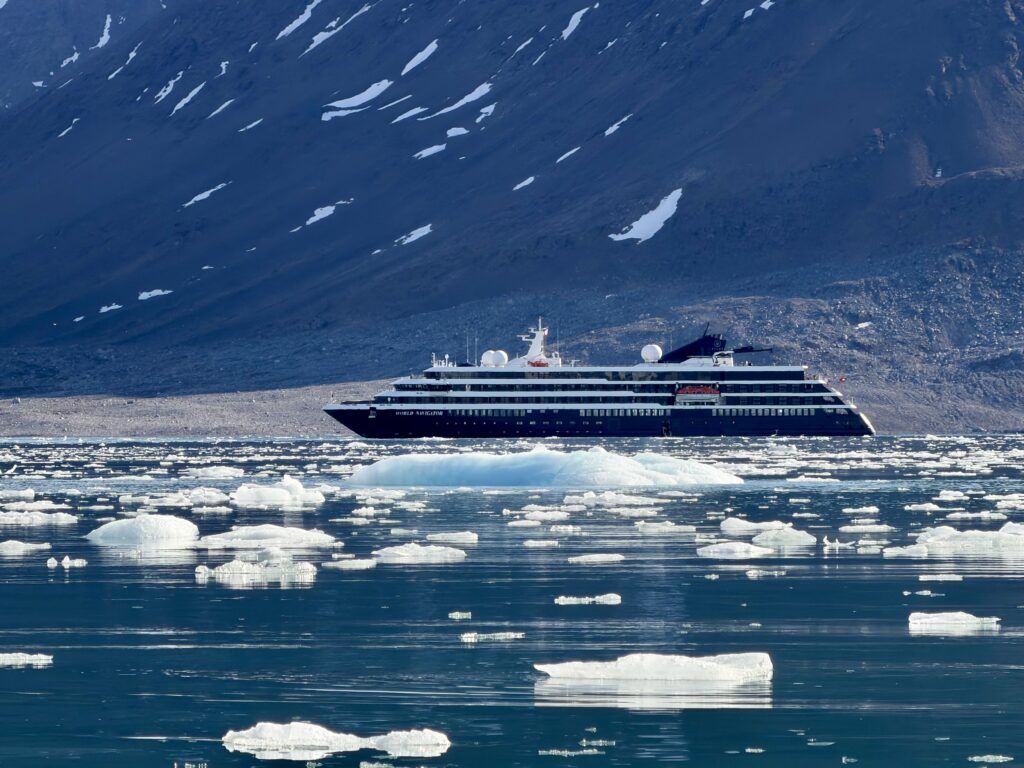
Life Onboard Atlas Ocean Voyages World Navigator
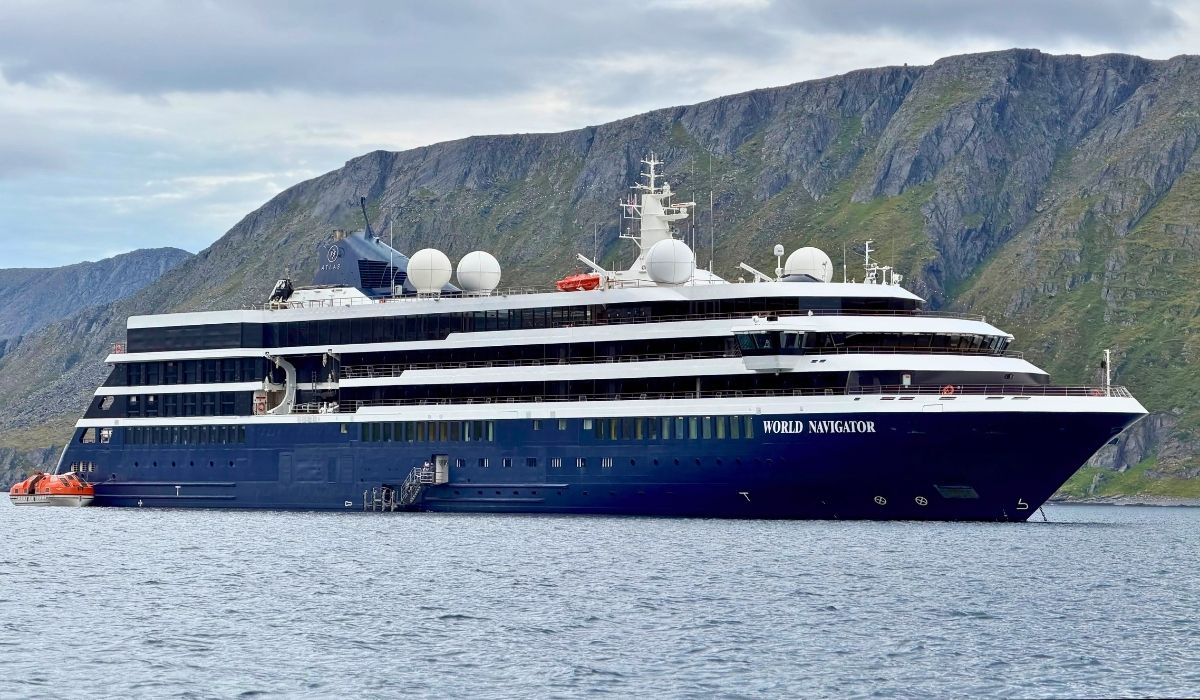
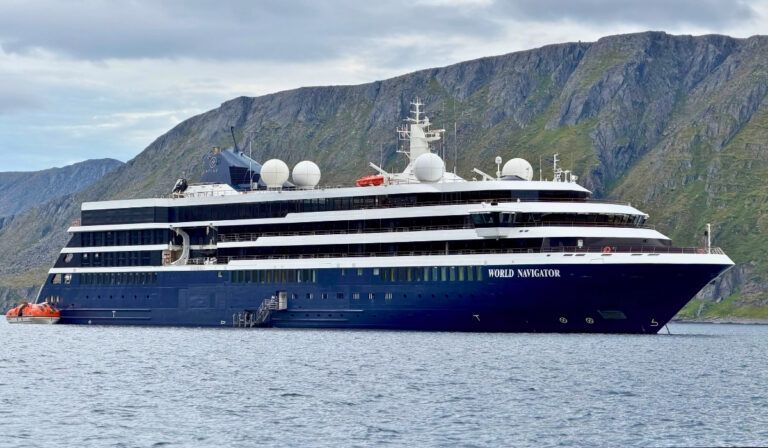
Atlas Ocean Voyages has a current fleet of three nearly identical polar-class yachts. We’ve previously sailed on the line’s two other ships: World Traveller in the Mediterranean and World Voyager in Antarctica. So, we were already familiar with the layout, amenities, and overall vibe.
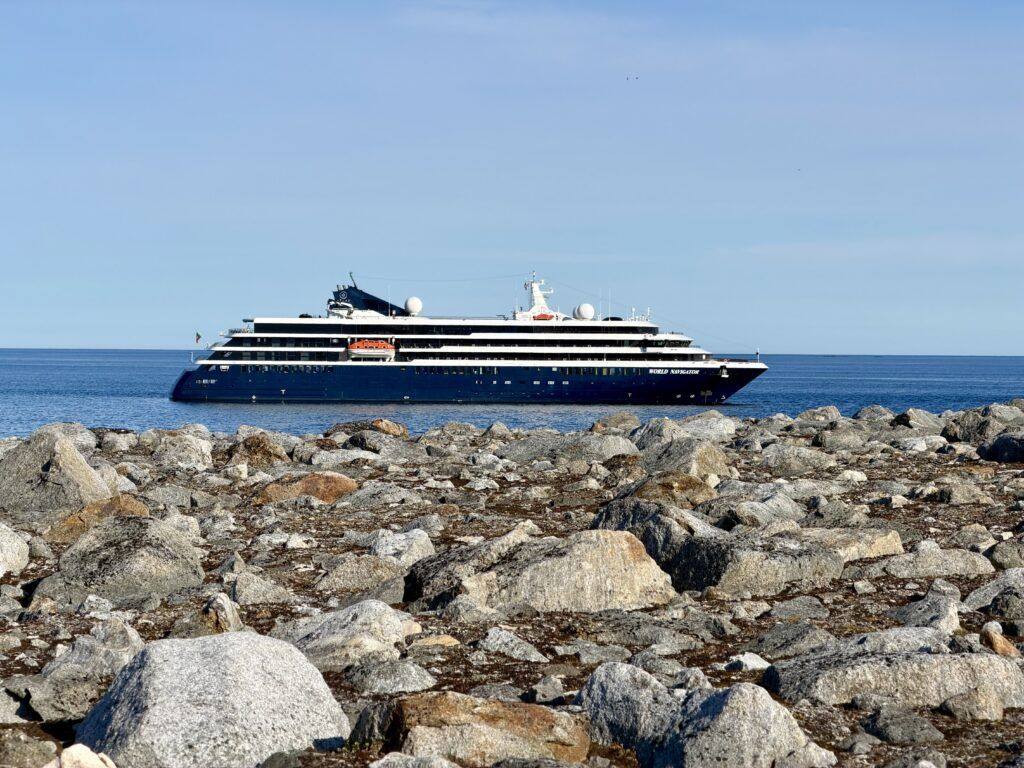
Like its sisters, World Navigator pairs a luxe cruise experience with the capabilities of an expedition. With under 200 passengers, the ship offers intimacy while still providing all the comforts of cruising.
Yes, a smaller ship does mean fewer venues, dining options, and onboard events. However, most who choose an Atlas Ocean Voyages Arctic cruise are really coming for the itinerary. So, the ship is just the elegant backdrop.
Onboard Amenities
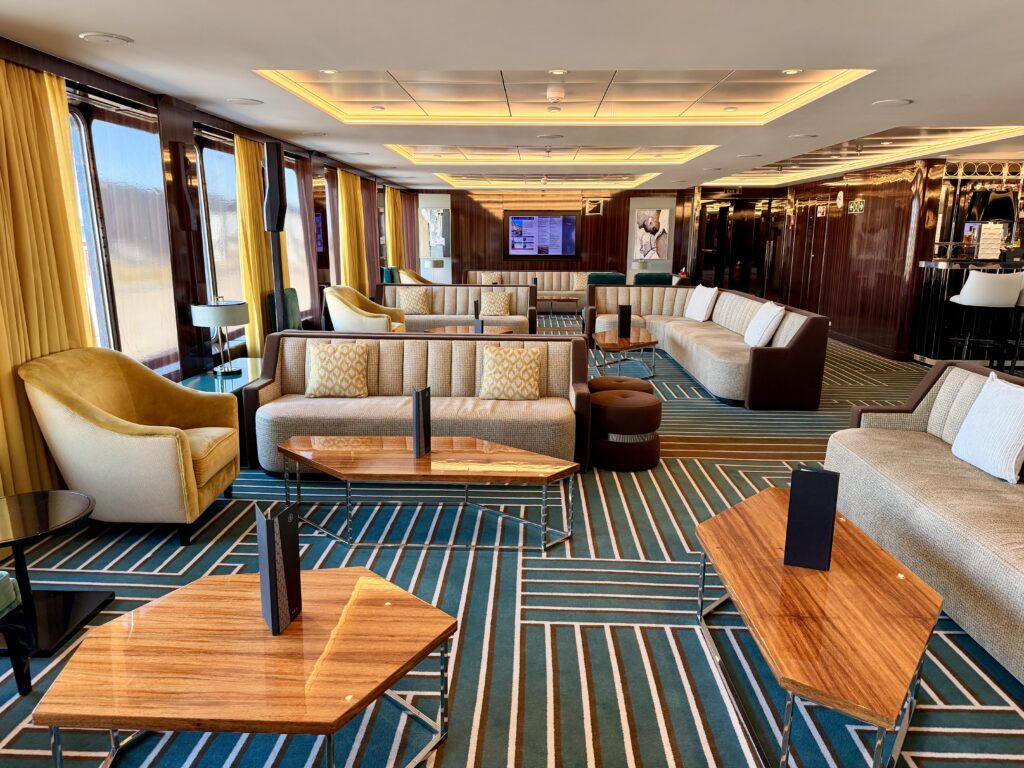
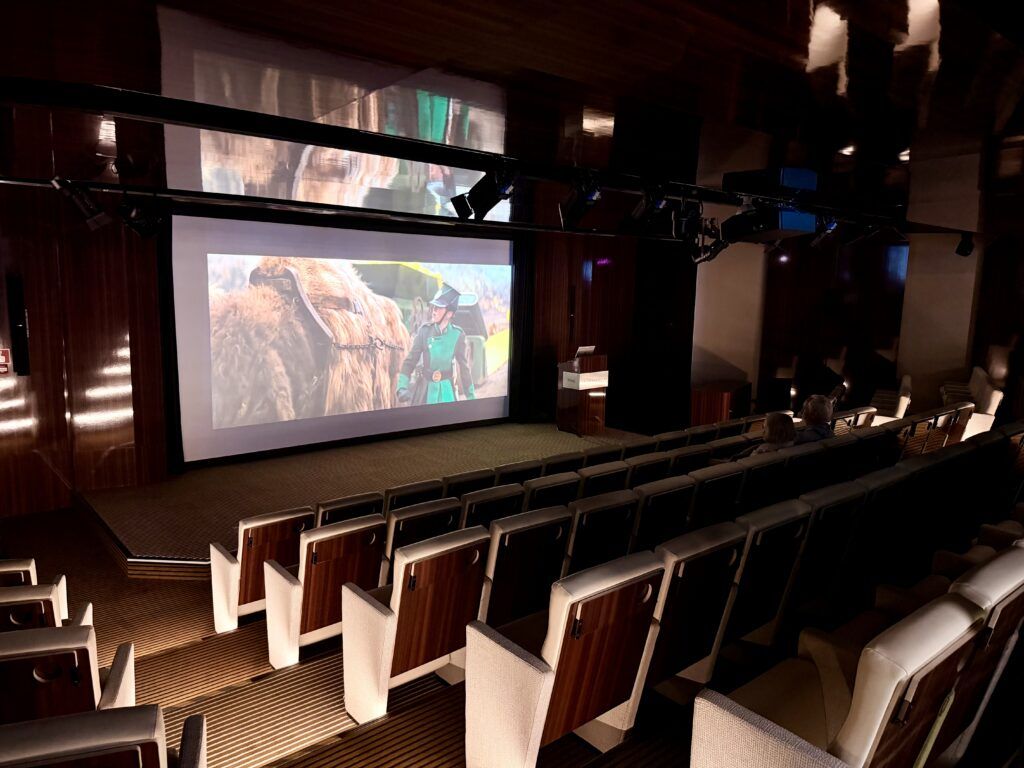
Deck 4 is the central hub of World Navigator. It houses the Atlas Lounge, the main indoor bar where guests gather before dinner. Here, cruise director Tee also hosts trivia and game shows. Nearby sits the Dom Henrique Auditorium. This is where port talks, lectures, expedition briefings, and the occasional movie take place.
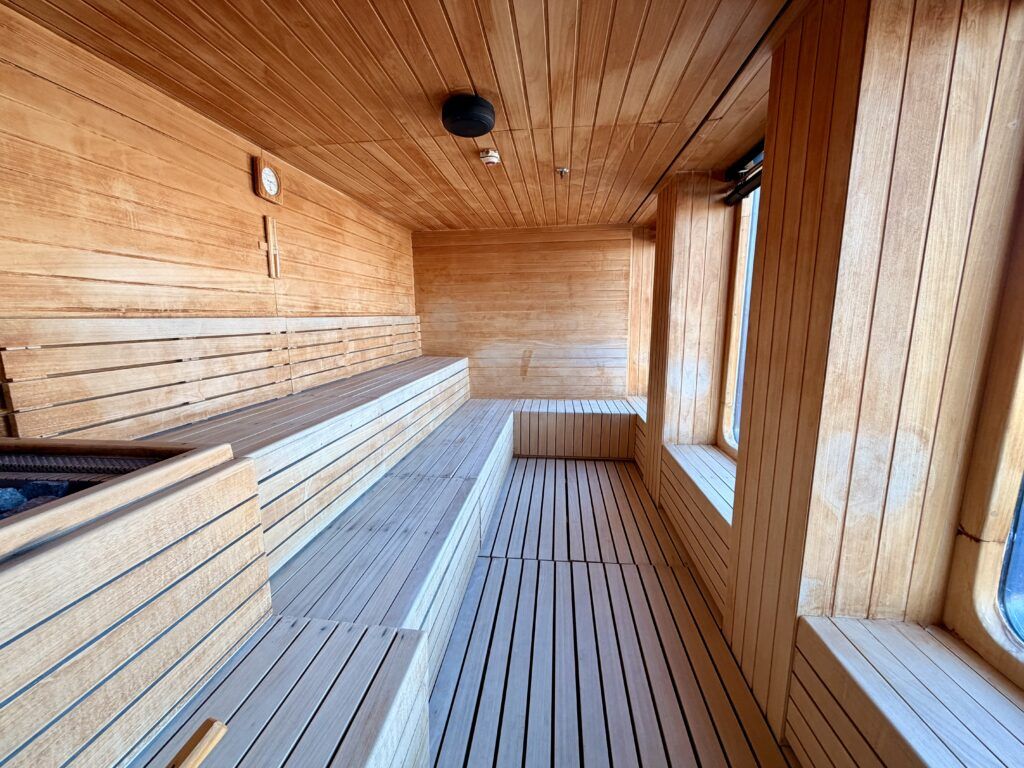
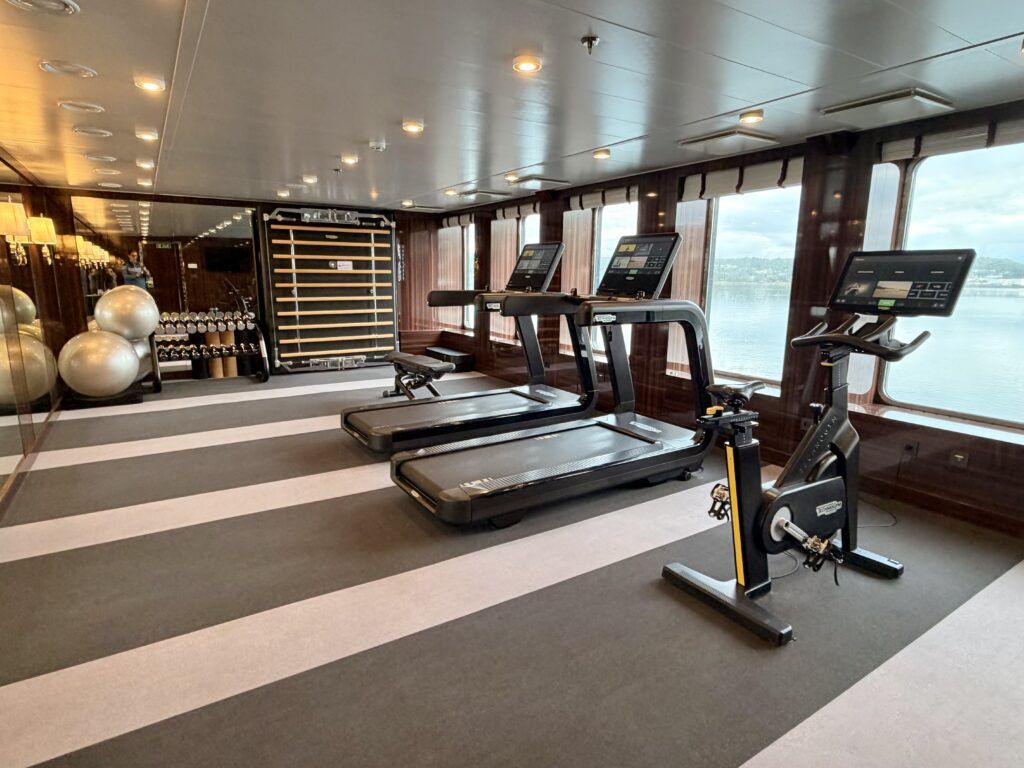
The L’Occitane SeaSpa, plus a complimentary sauna and relaxation room, is also located on Deck 4. Around the corner, you’ll find a 24-hour fitness studio and the Navigator Choice gift shop.
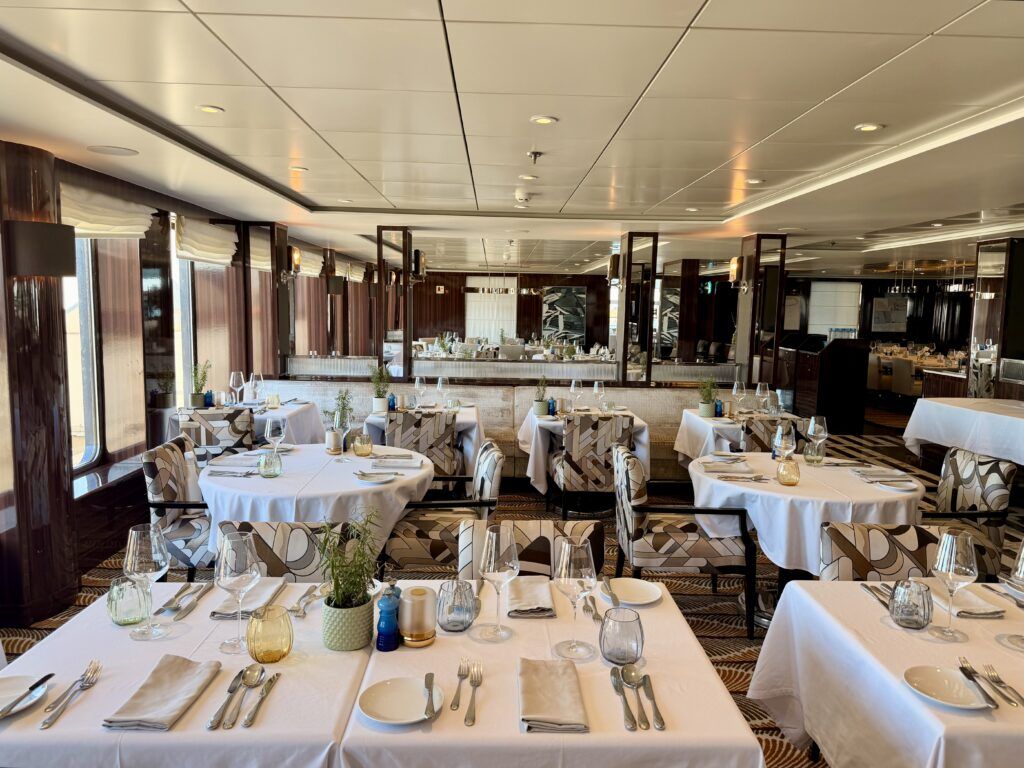
There’s also the coffee shop, Paula’s Pantry, as well as the Porto restaurant, the ship’s main dining room.
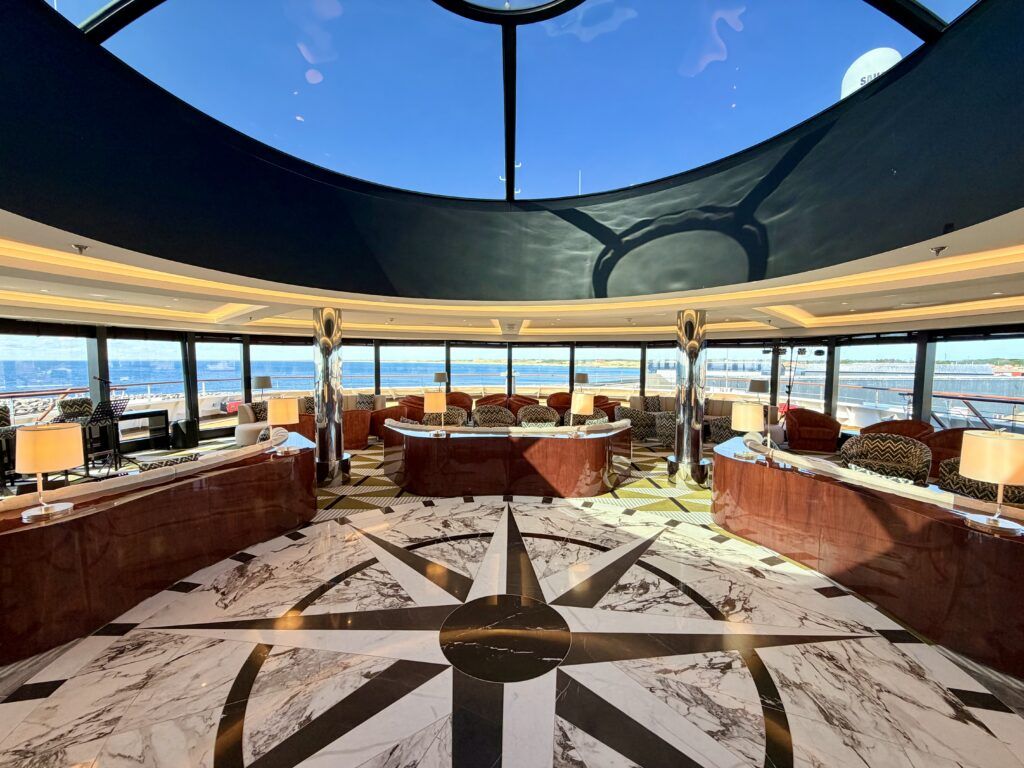
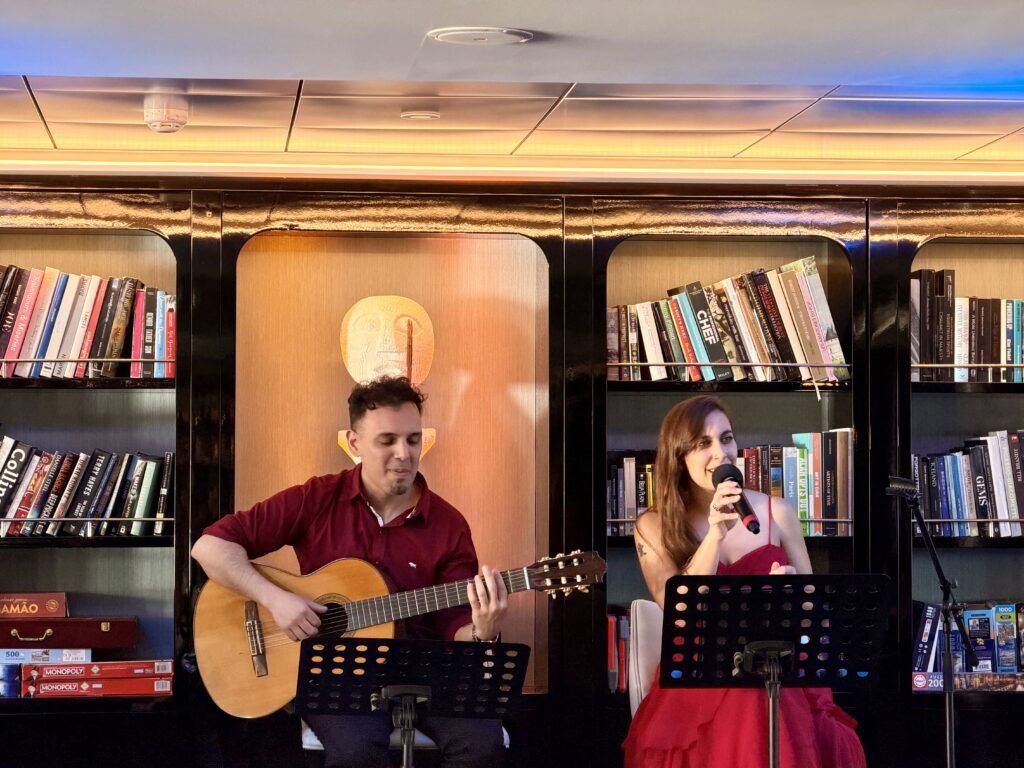
Up on Deck 7 sits The Dome. This forward observation lounge with floor-to-ceiling windows has some of the best views on the ship. In the mornings, it’s a quiet space. Later in the day, it hosts afternoon tea. Then in the evenings, the Java Duo play themed sets with a heavy focus on jazz.
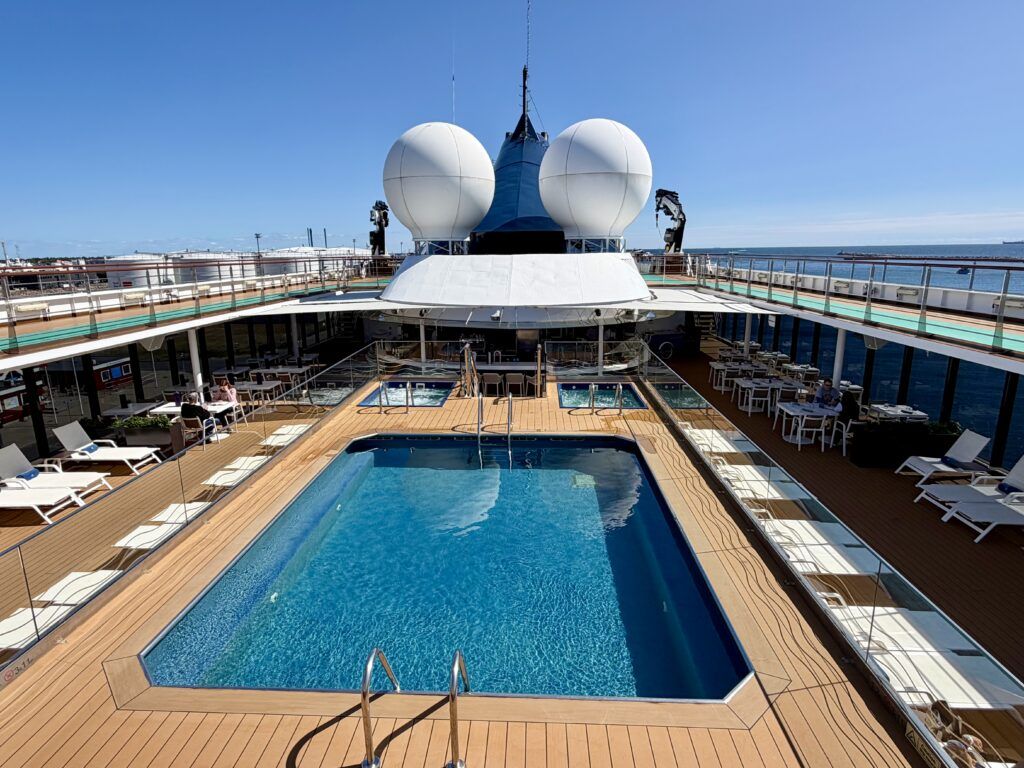
Heading outside on Deck 7, there’s a heated pool and hot tubs, along with the 7Aft Grill and Pool Bar. Even though this was an Arctic cruise, southern Norway gave us several warm days. So, the pool deck was busier than you’d expect. One deck up, there’s also a jogging track. With mild weather, I even managed to get in a couple of outdoor runs.
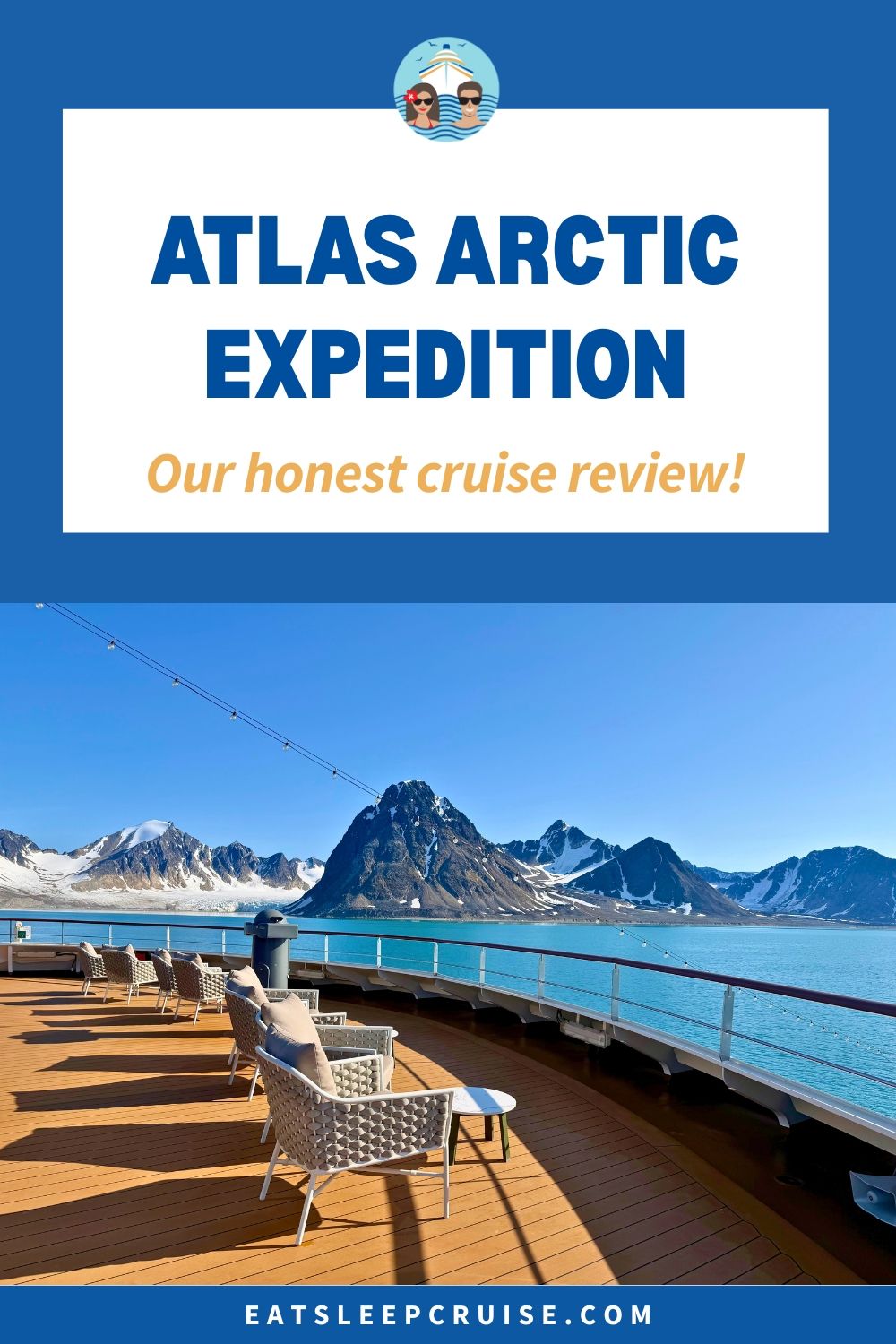
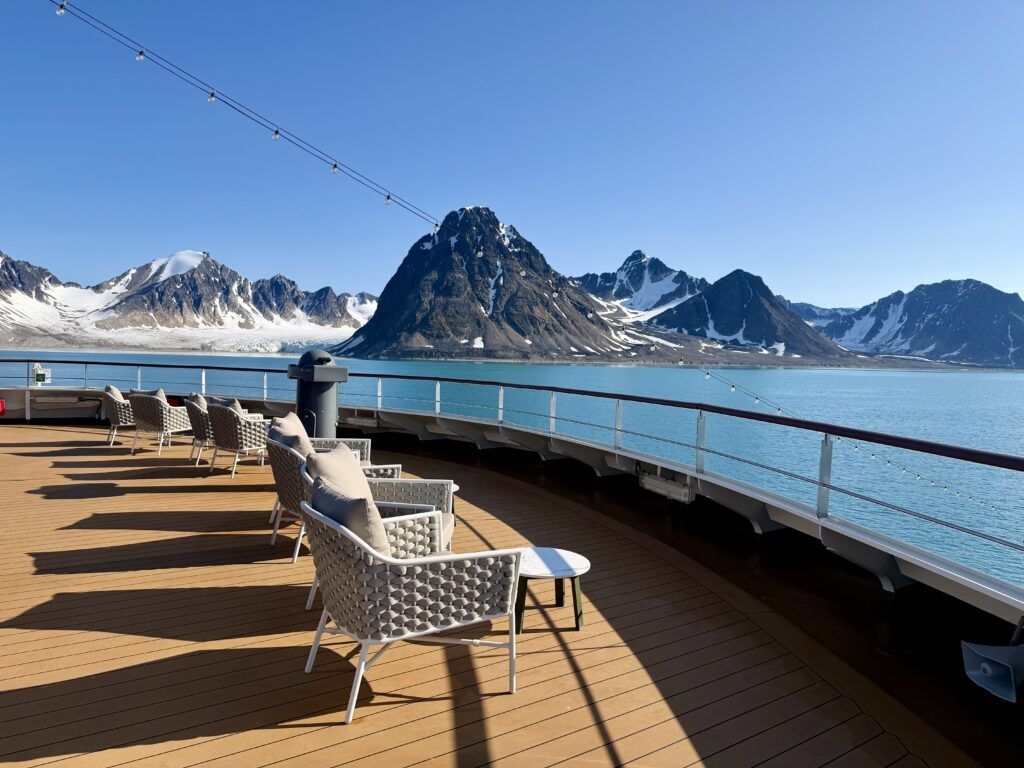
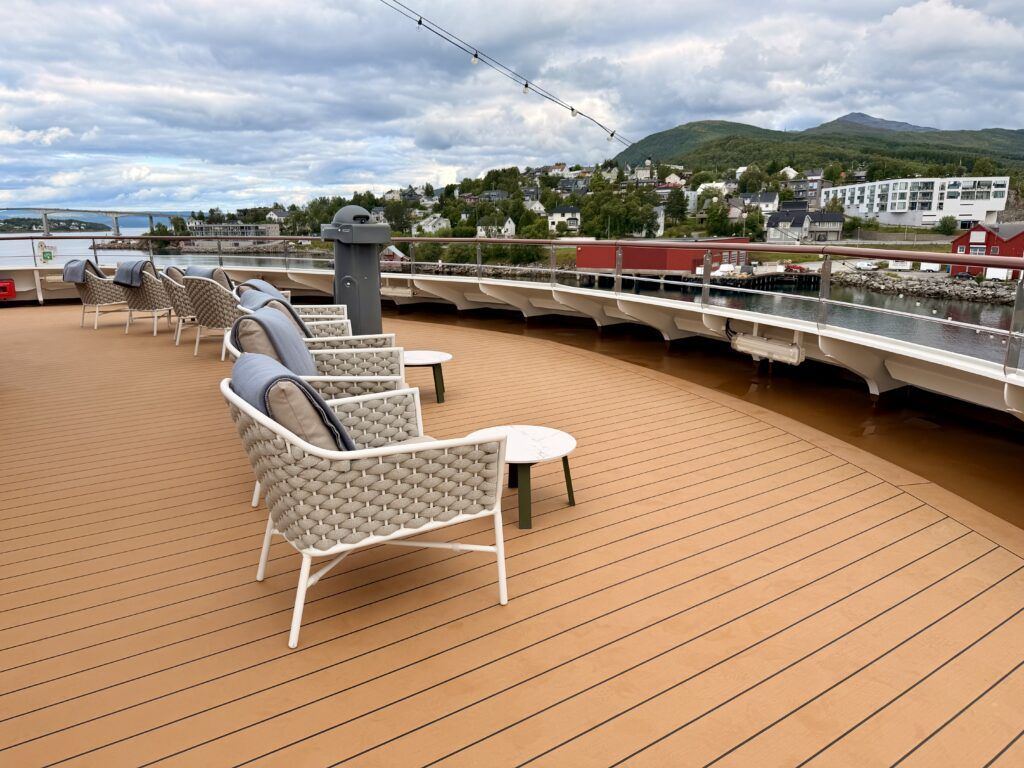
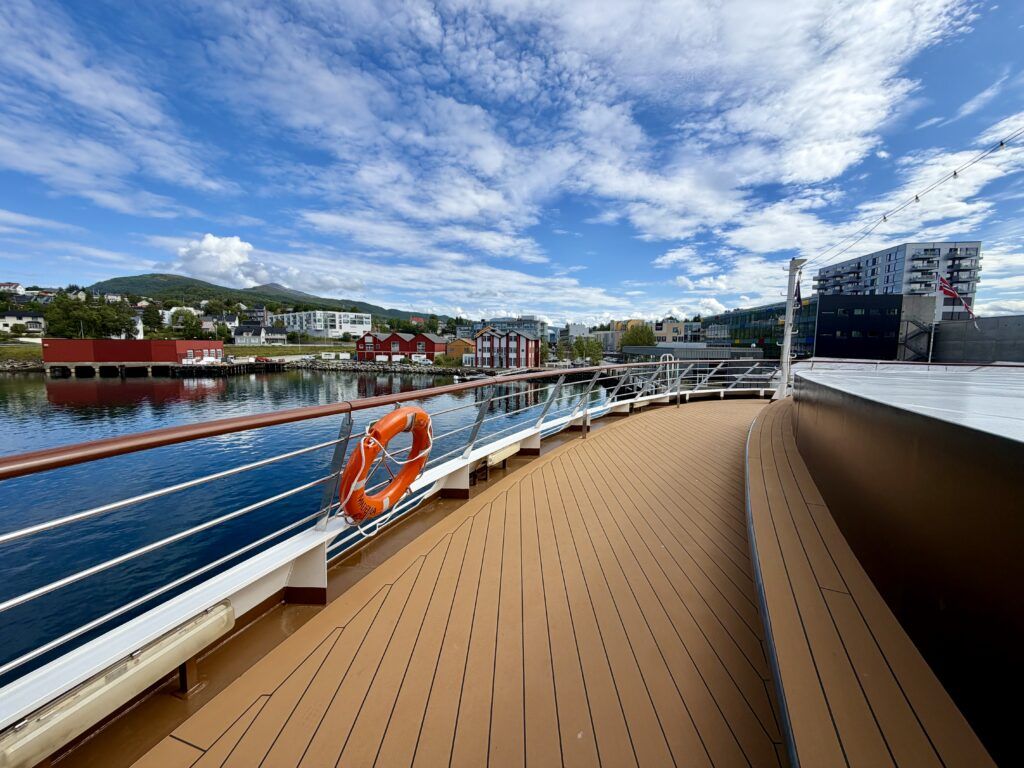
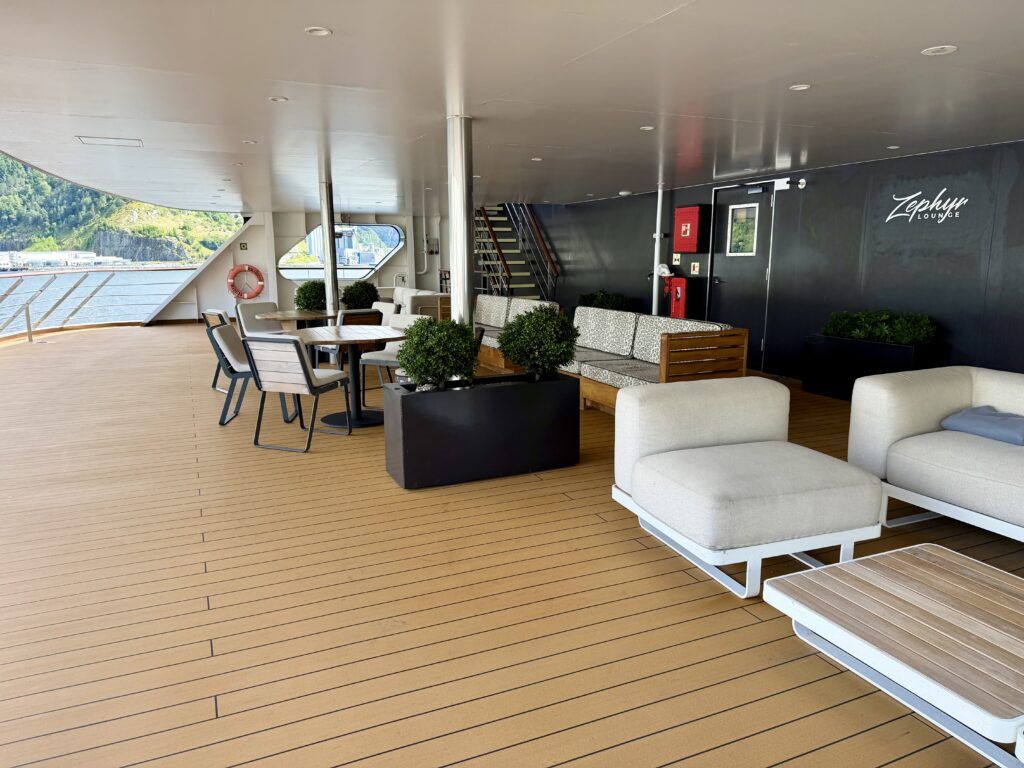
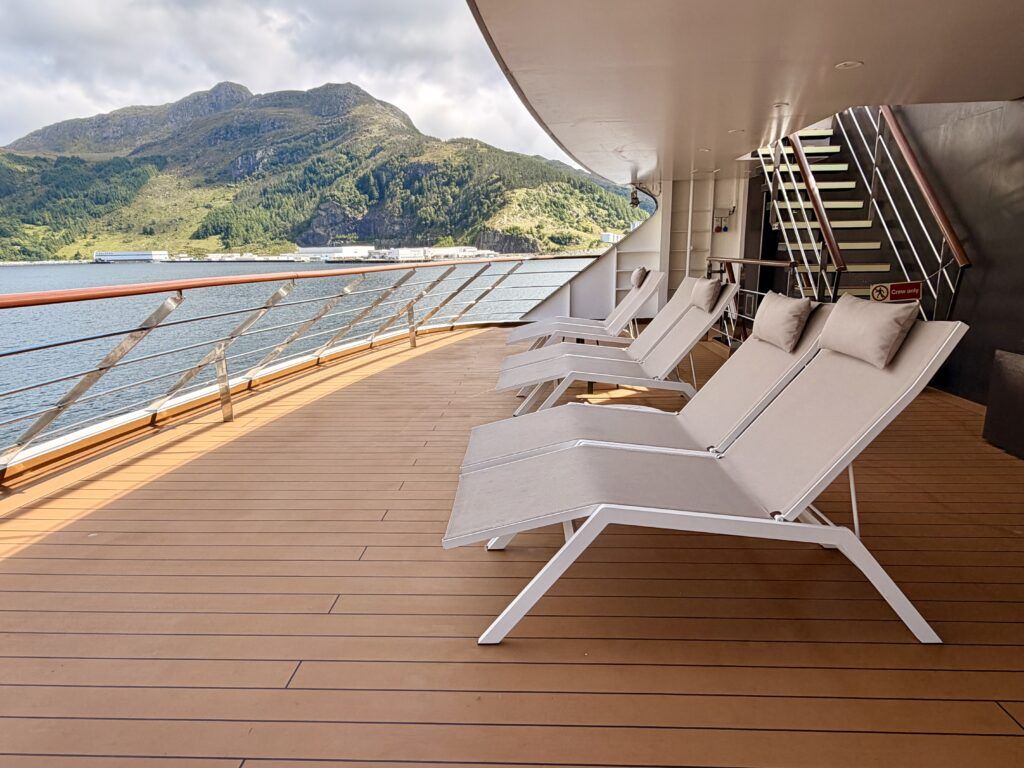
Prime for expedition, World Navigator features several outdoor spaces. Along with the viewing platform on Deck 7 forward (outside of The Dome), there’s the Water’s Edge on Deck 5 forward. Set right on the bow, it puts you closer to the marine life and horizon than anywhere else onboard.
You’ll also find observation areas on Decks 5 and 6 aft, with some sun loungers, sofas, and chairs creating a relaxing spot to watch the sailaway from each port or scout for wildlife from the back of the yacht.
Dining During An Arctic Cruise on World Navigator
Across the board, the food was excellent, even if the options felt limited at times especially for Heidi. Atlas Ocean Voyages menus are standard across the fleet, with occasional regional dishes, mostly featuring Arctic fish and seafood.
Main Dining Room on World Navigator
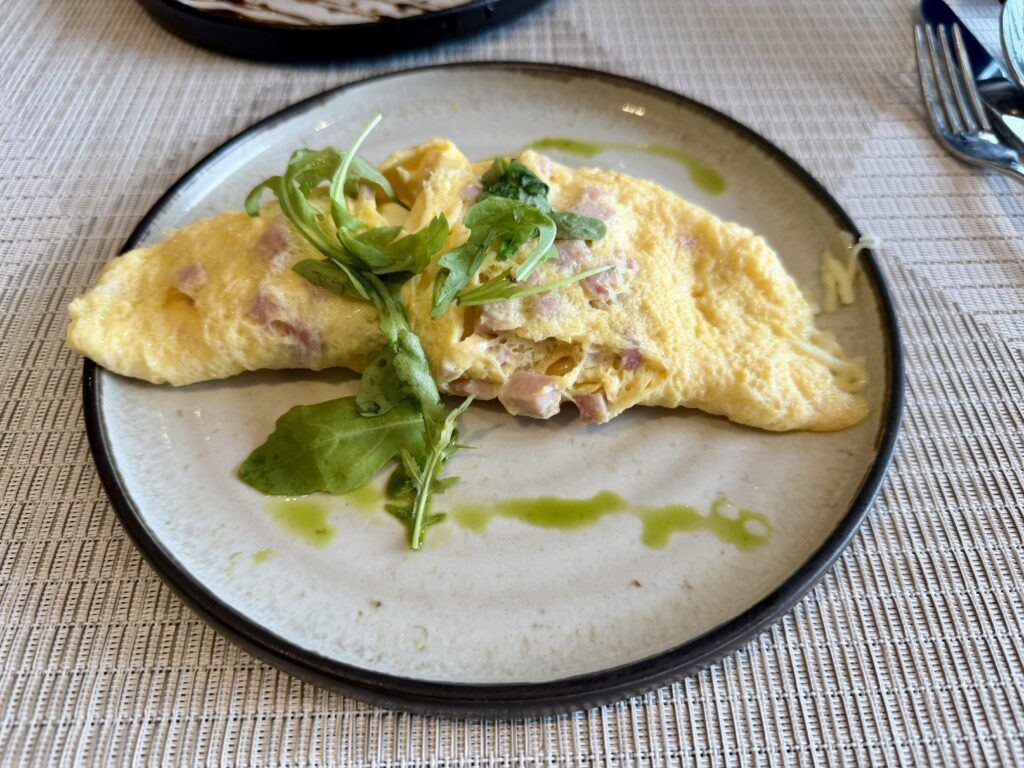
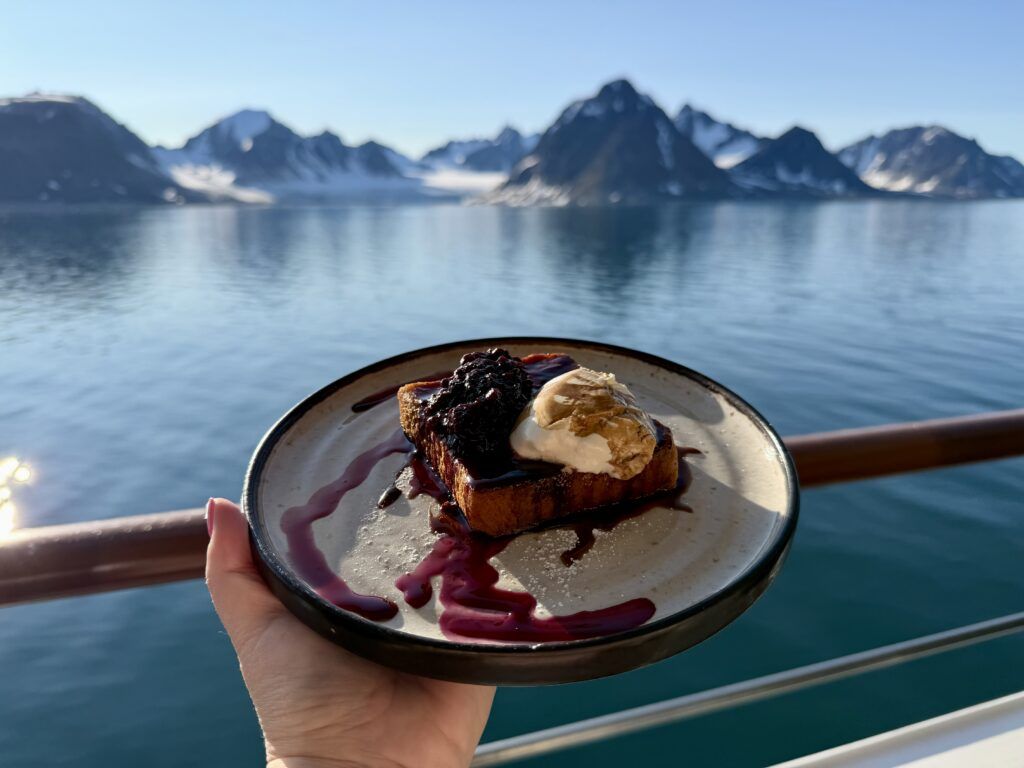
Most meals happen in Porto, the main dining room on Deck 4 aft. Breakfast runs buffet-style with some continental items, scrambled eggs, and typical sides. There’s also a made-to-order menu with omelets, pancakes, and French toast.
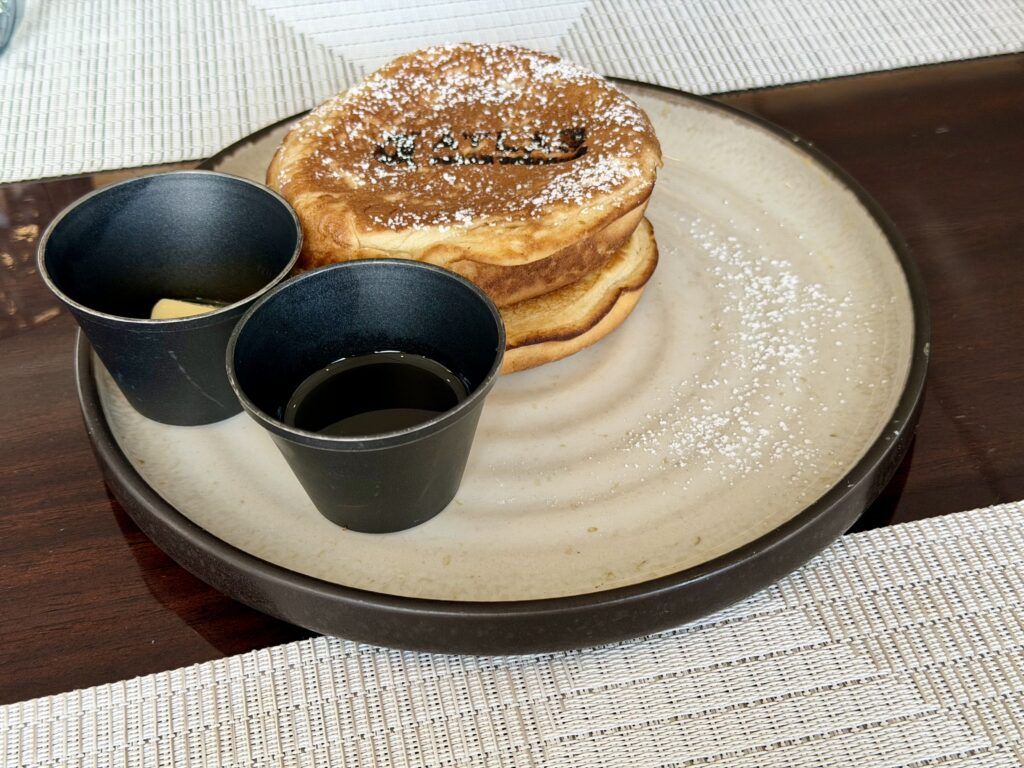
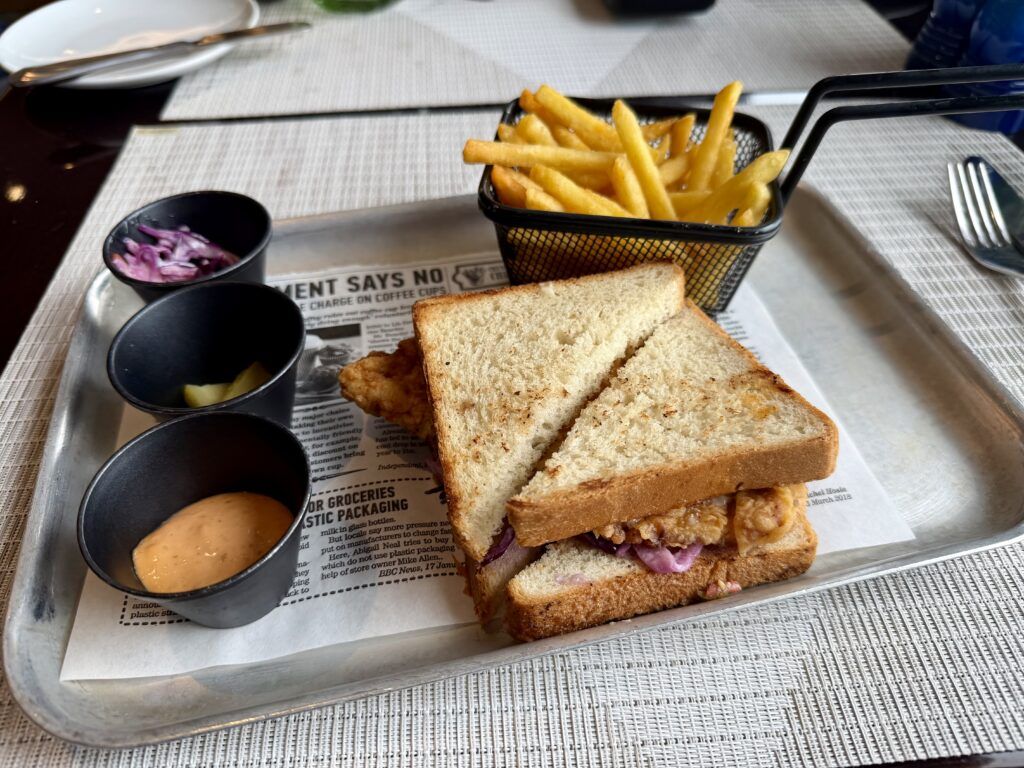
Lunch follows the same setup. The buffet offered rotating entrees and sides, along with salads, soup, and dessert. I was a fan of the roasted pork, chicken, and salmon. Also, the live cooking station featured custom options, like Asian noodles and pasta. Likewise, there’s a made-to-order menu with selections like burgers and Heidi’s personal favorite chicken sandwich.
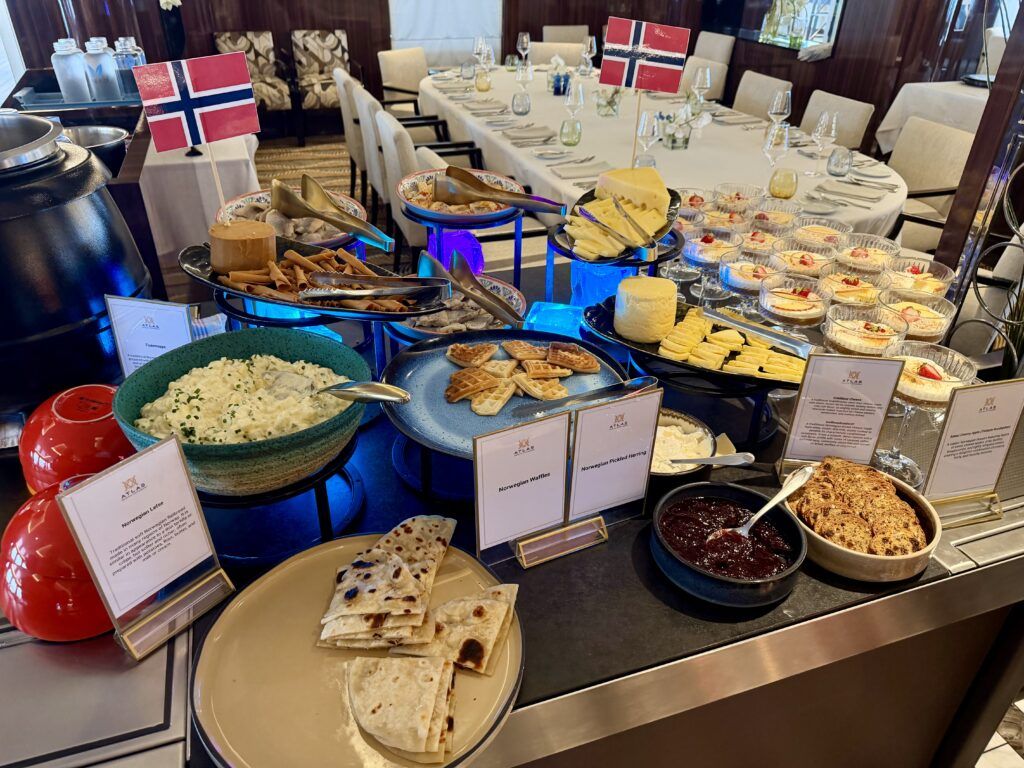
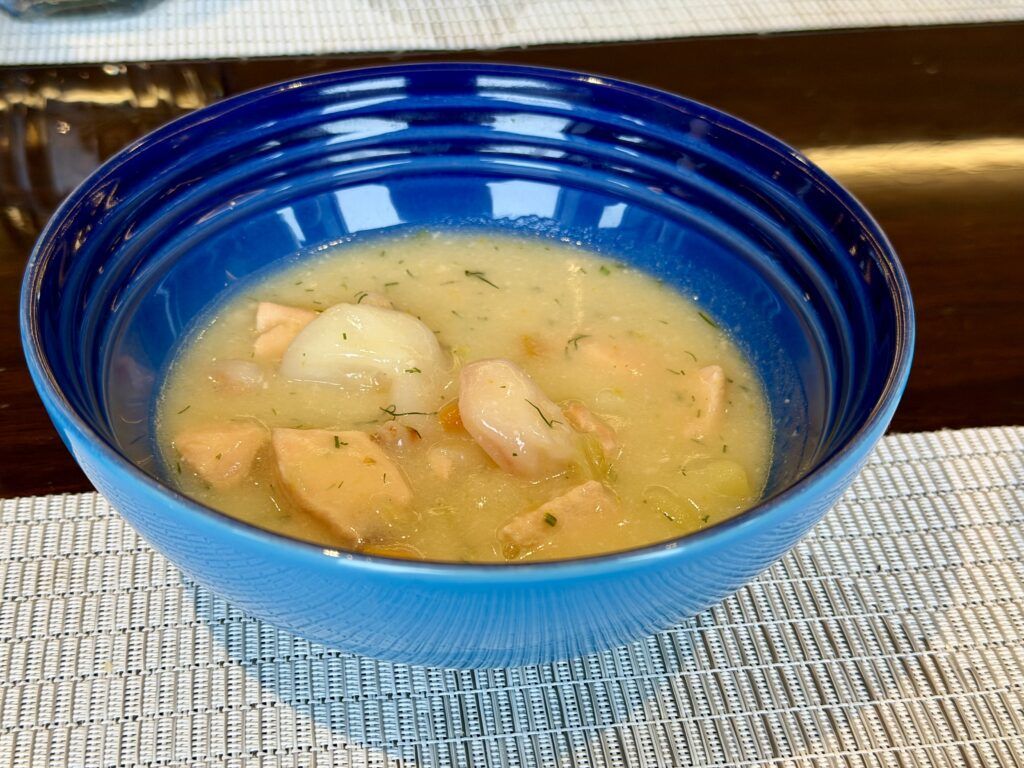
We were surprised that it took guests complaining that they couldn’t find Norwegian waffles in port for the chef to create a Norwegian-style spread. This eventual feast was perhaps one of the best, with fish stew, Norwegian cheese, and, of course, waffles.

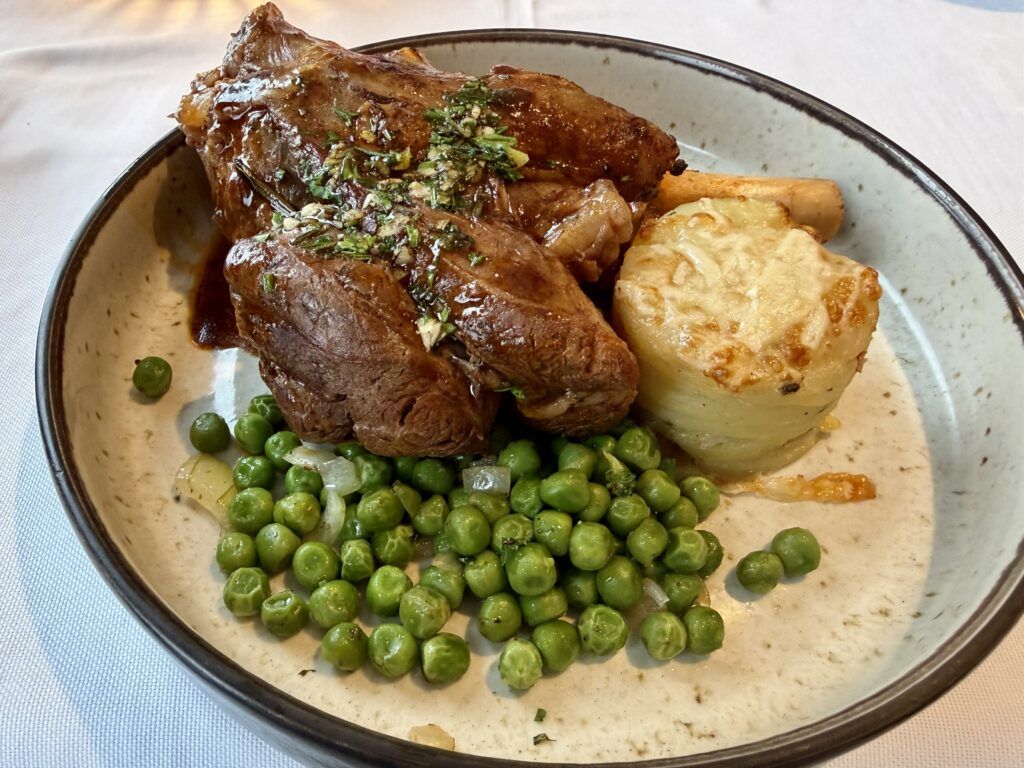
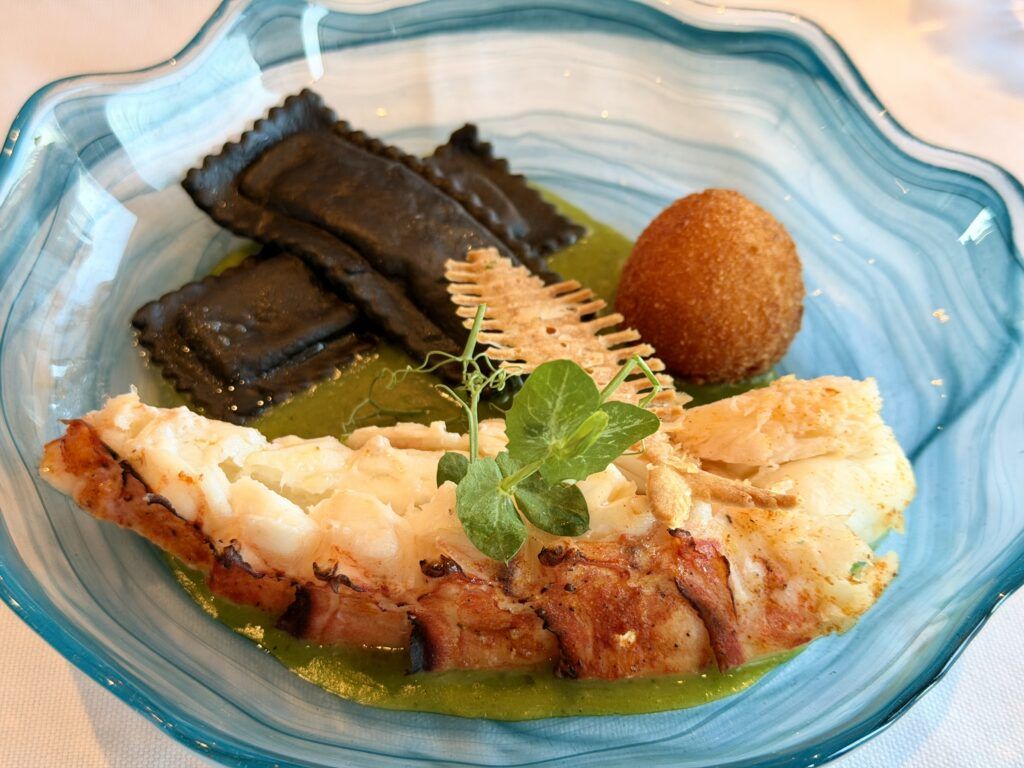
At night, Porto shifts to a sit-down restaurant and multi-course dinner. Here, the food quality really shined.
For me, staples like the lamb shank and lobster tail were expertly prepared. The always-available steak was flavorful and cooked just right, too. A few rotating dishes were more hit-or-miss. Even so, I really enjoyed the Mongolian beef and the glazed salmon, among other entrees.
Heidi had a harder time, since so many entrees featured fish or red meat. Luckily, she liked several of the nightly pasta dishes, and the always-available chicken supreme was a fallback when she couldn’t find anything.
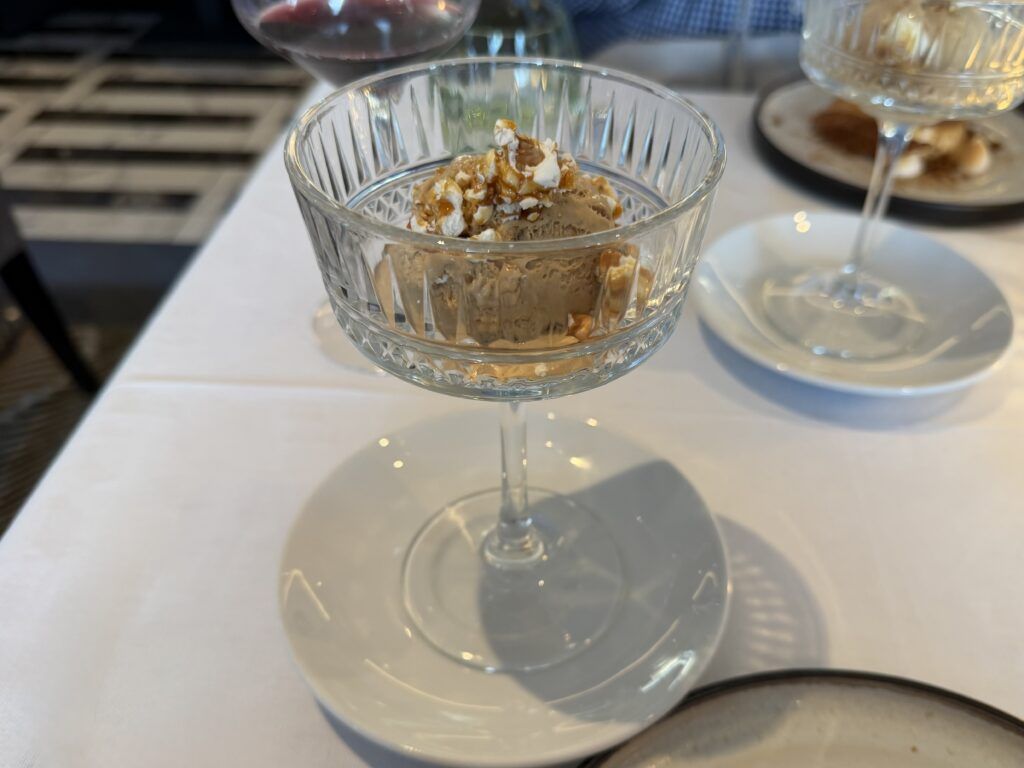
Overall, the starters and desserts were somewhat limited and pretty typical cruise food quality. One treat stood out, though: the creamy, delicious ice cream. You’ll find it at a self-serve cart near the pool by day, and again at lunch and dinner. Simply put, it was the best sweet onboard.
7Aft Grill
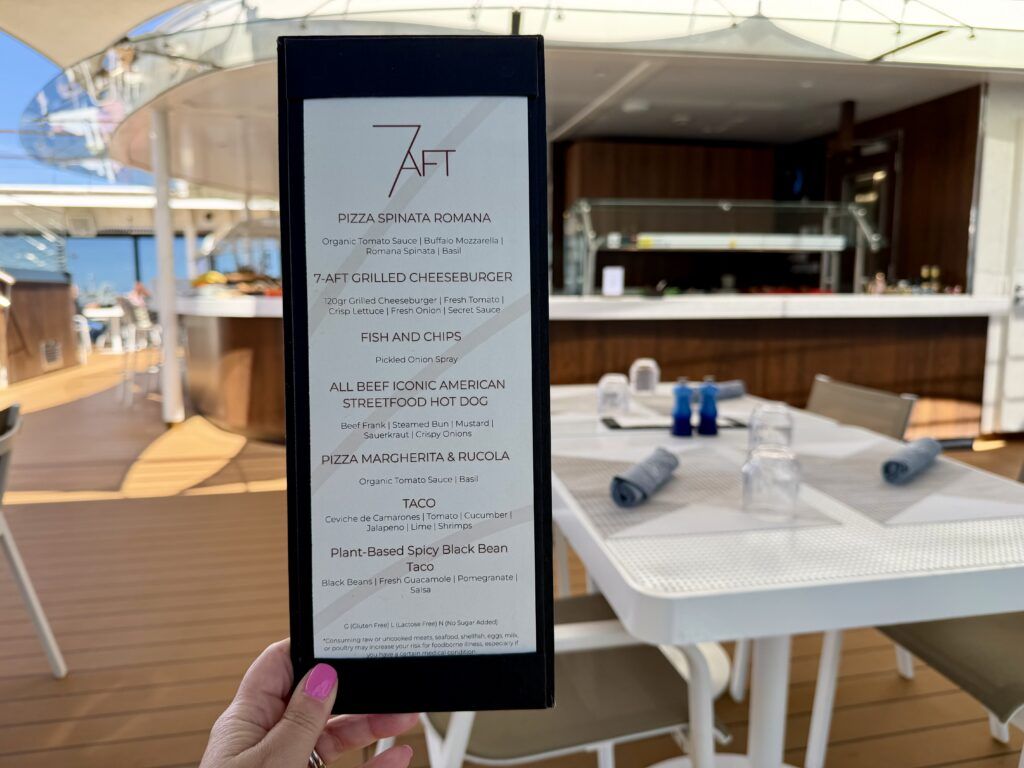
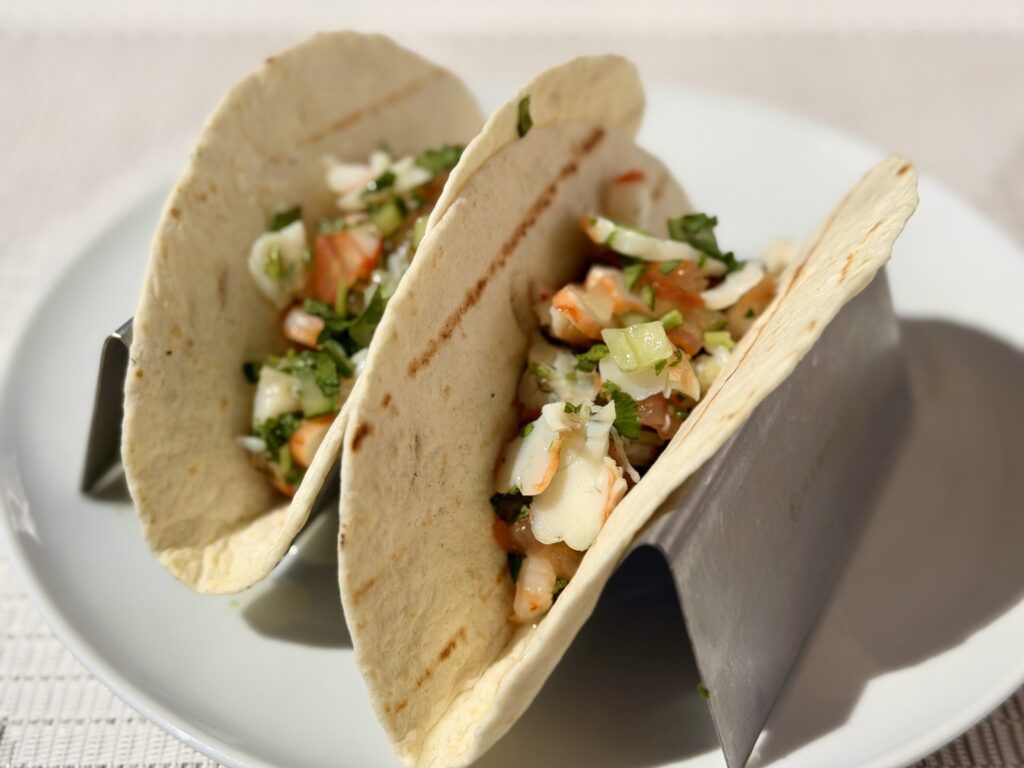
When the weather cooperated, the 7Aft Grill up on Deck 7 offered an al fresco lunch with many of the same buffet selections as down in the main dining room. Although, it did offer a unique made-to-order menu with different flatbreads, hamburgers, and shrimp tacos.
On a warm Norwegian afternoon, it made for a nice change of scenery and menu.
Paula’s Pantry
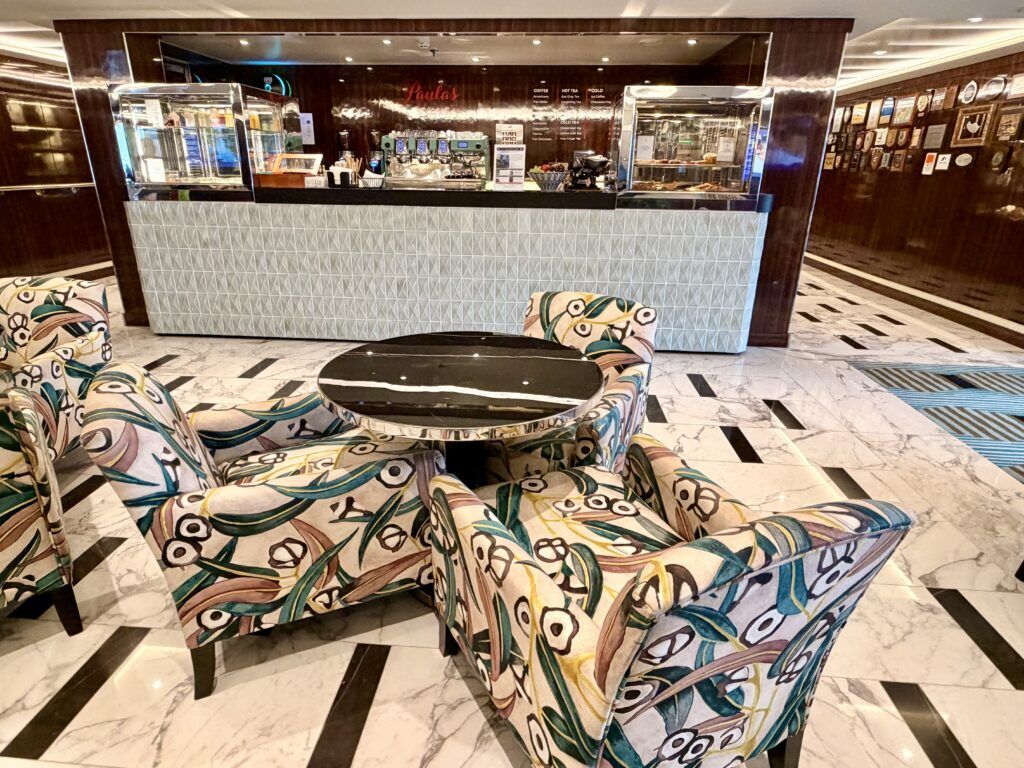
One of our favorite spots on any Atlas Ocean Voyages ship is Paula’s Pantry.
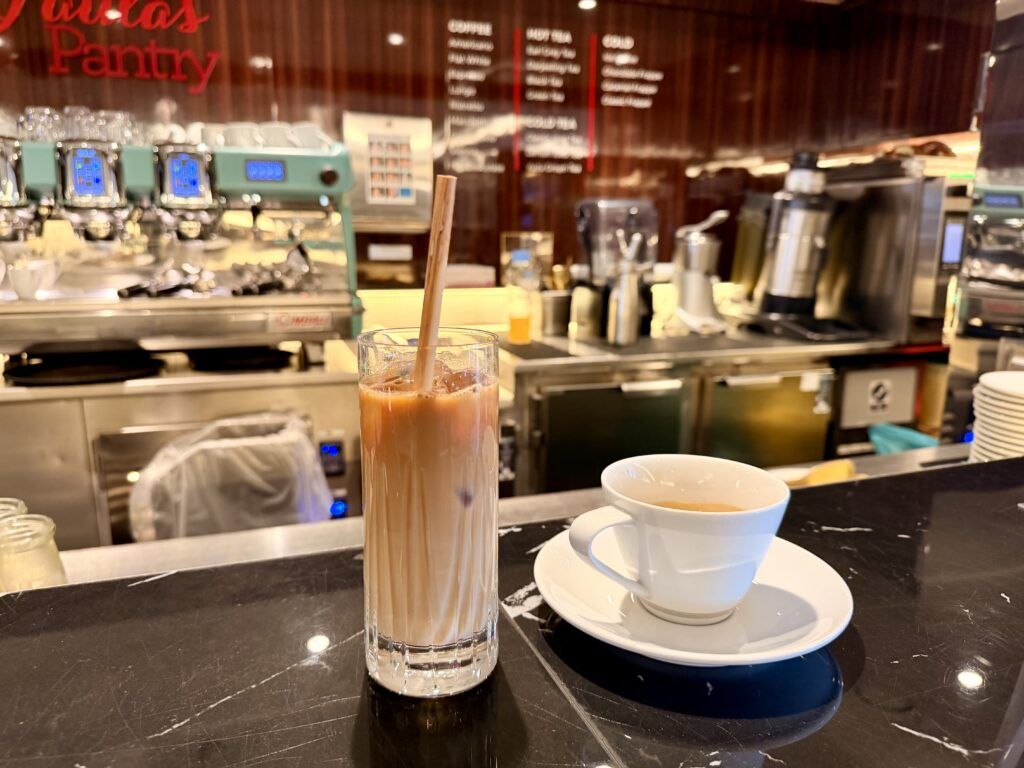
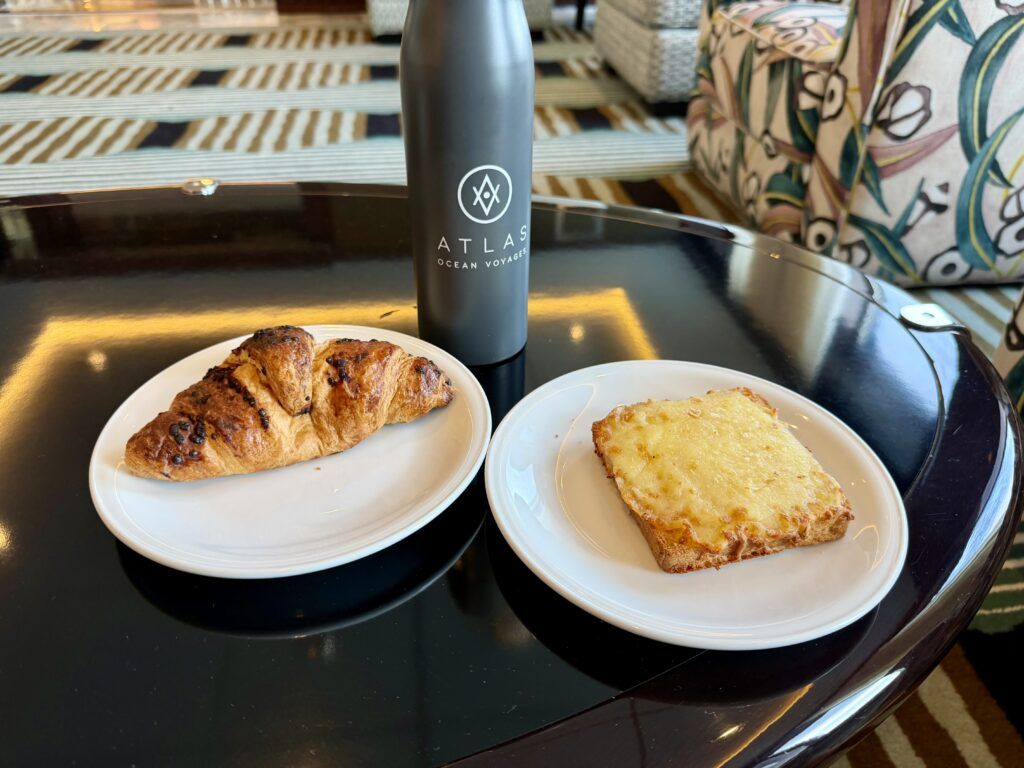
This coffee shop and cafe on Deck 4 is open from 6:30 am to 6:30 pm daily. It was our go-to spot for several espresso-based drinks throughout the cruise. It is also home to some breakfast pastries, fresh-squeezed juices, and energy shots, which were very popular. Although, Heidi’s ham and cheese toastie got a complete makeover, and not in a good way.
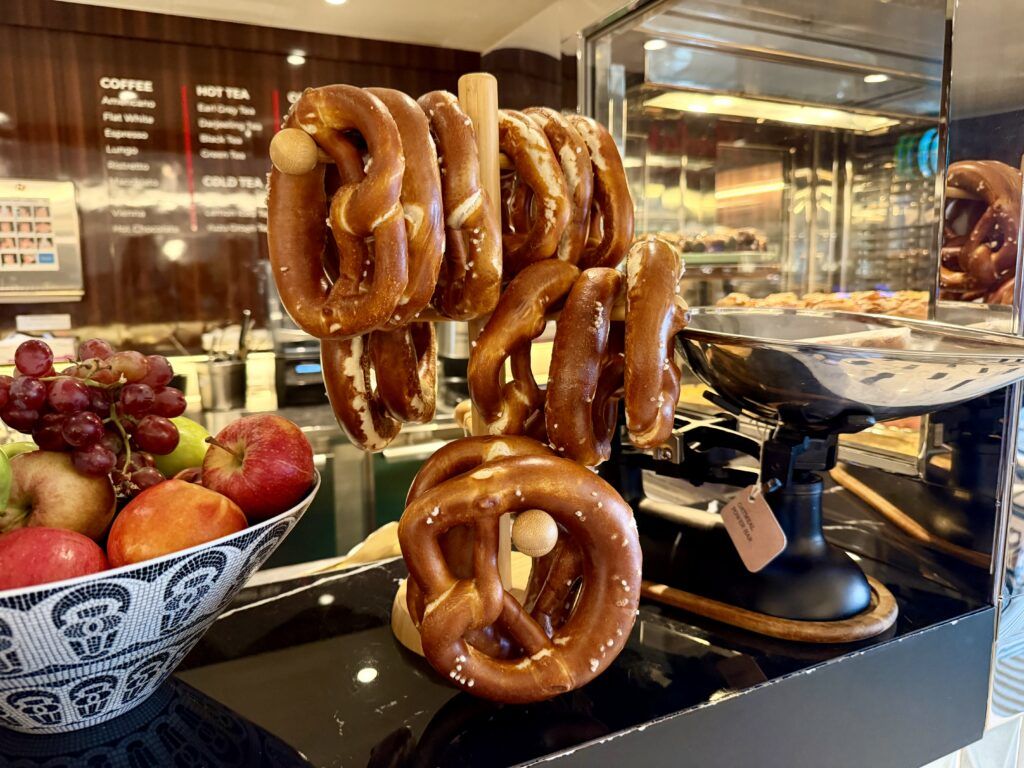
In the afternoon, snacks, quiches, sandwiches, plus sweet treats were on the menu. From cookies to giant pretzels, banana bread, and other desserts, it was hard not to walk by and grab something, even if you had just eaten!
Room Service
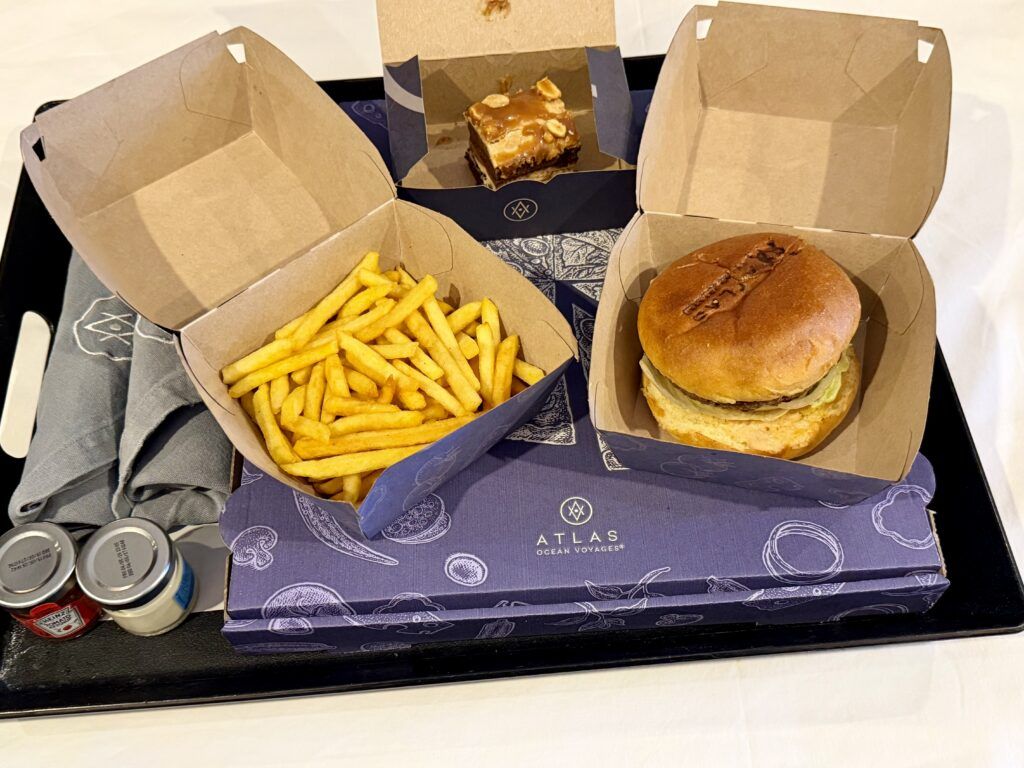
Finally, room service is included around the clock.
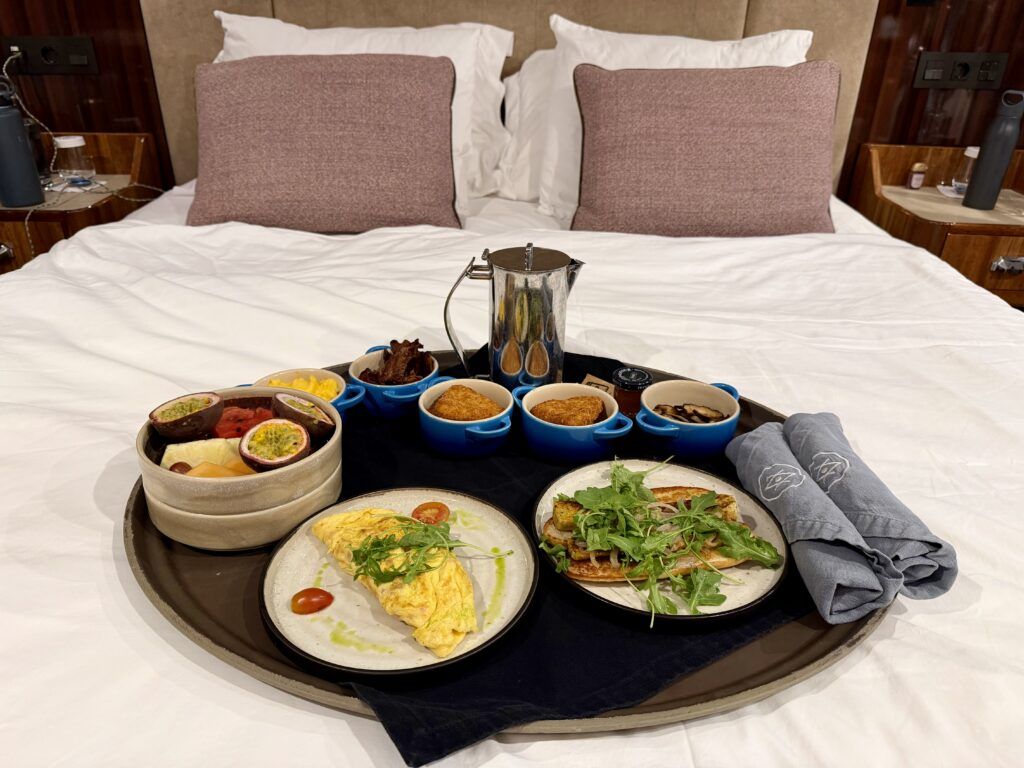
On a couple of early mornings, we ordered breakfast, and it was excellent. All items were hot, fresh, and well prepared. It was a perfect accompaniment to watching the scenery pass by, in our pajamas, from the comfort of our room.
However, the all-day menu is small, with just a handful of items geared more toward lunch than dinner. Still, the hamburger and pizza hit the spot one expedition day in between outings.

Onboard Activities and Enrichment
Small ships aren’t known for big entertainment. Still, World Navigator offered more than we expected, and more than our past Atlas sailings.
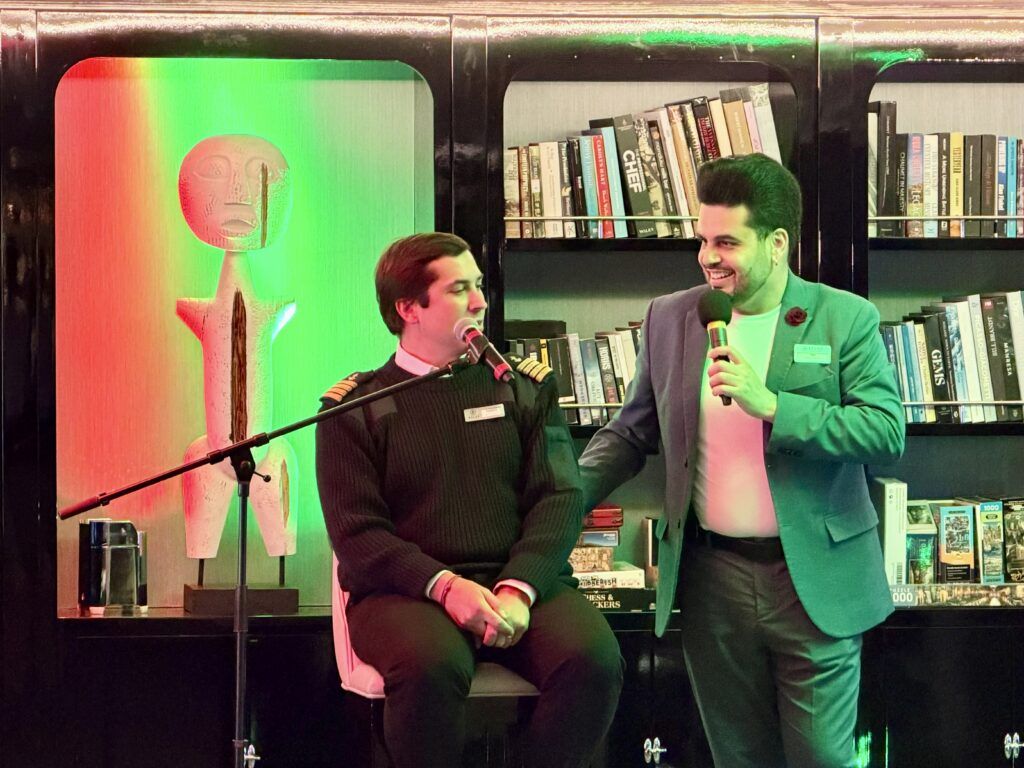
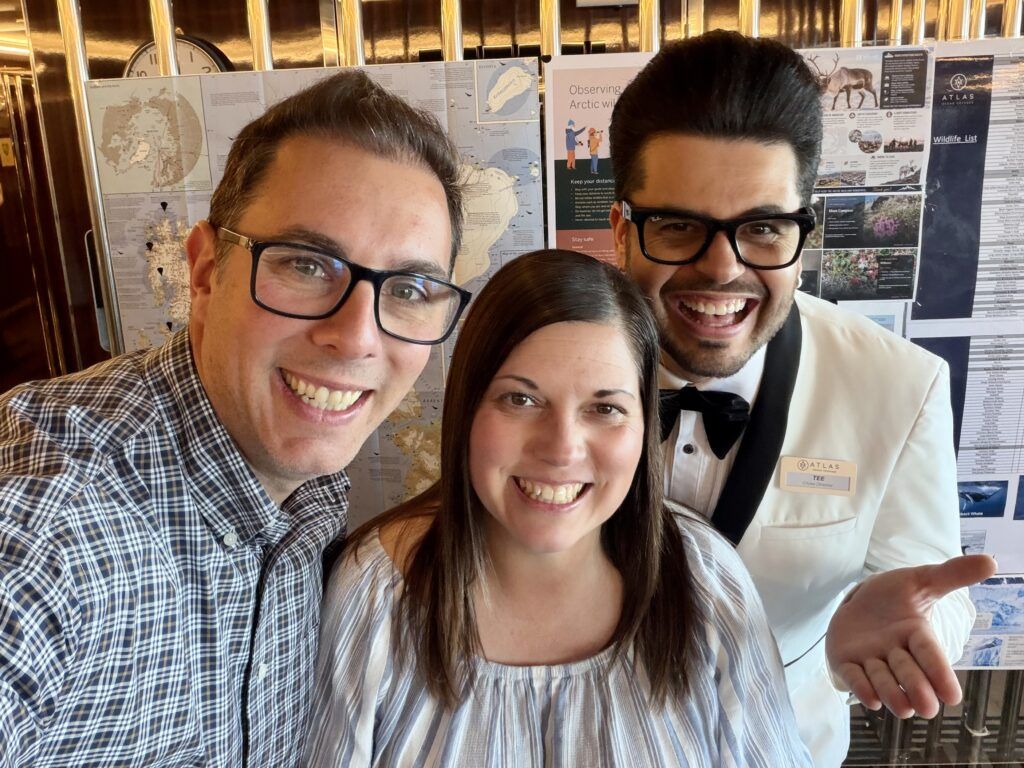
A lot of that came down to our cruise director, Tee. Throughout the week, he kept things lively with classic game shows like Yes or No and Majority Rules. On top of that, he hosted trivia, mixology sessions, and other events around the ship. He was friendly, energetic, and much more approachable than our previous Atlas cruise directors. We welcomed his big-ship cruise director personality, humor, and enthusiasm.
Evenings brought more variety, too. Up in The Dome, the Java Duo played themed music sets most nights, along with pre-dinner sets in the Atlas Lounge. In the Dom Henrique Auditorium, the ship screened movies, complete with fresh popcorn, on select nights. Add in the crew talent show and our Arctic crossing dance party, and there was usually something to do after dinner.
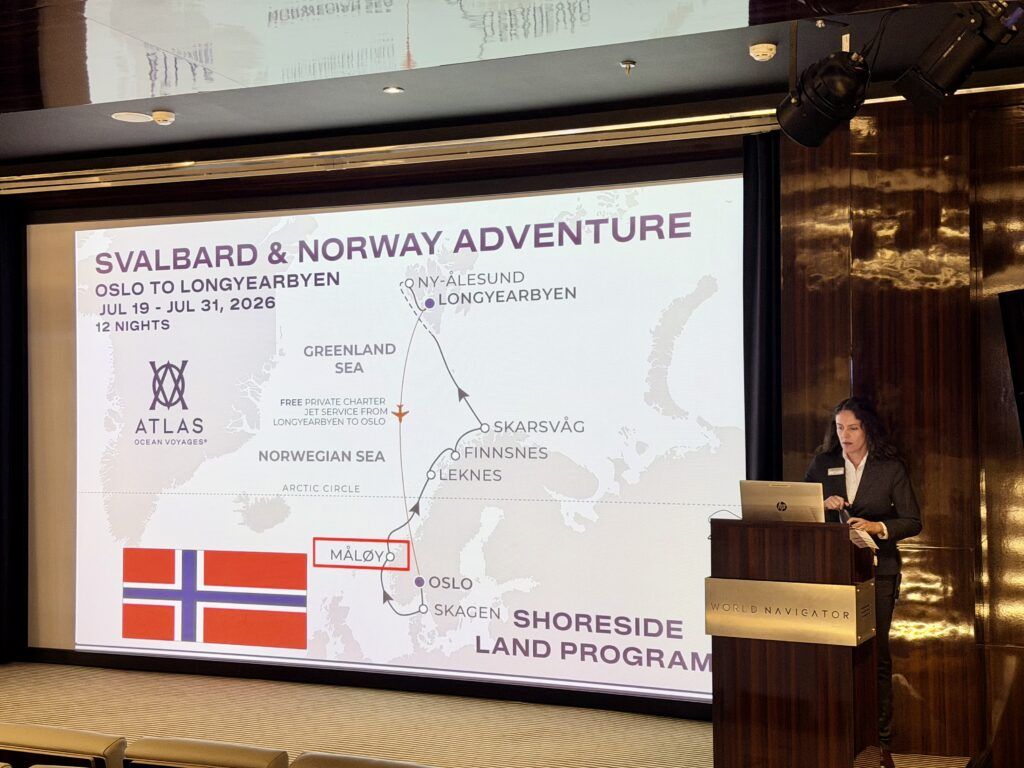
Where this particular cruise fell short, though, was enrichment. On our previous Atlas voyages, the lectures and guest speakers were a real highlight. Here, the first two-thirds of the trip had nothing beyond a brief port talk. To her credit, Melany, the excursions lead, did her best with the standard preview of the next day’s stop. But, we kept wishing for more. We were sailing the Norwegian coast, after all. A few talks on Norway’s history, folklore, or geography would have gone a long way. Or some talks on the Arctic, Svalbard, or the wildlife to get us in the expedition mindset ahead of our visit. We think many guests would have even enjoyed some narration during our scenic sailing.
Thankfully, Tee hosted some mainstream cruise activities, as we have no idea what we would have done with all the down time otherwise.
Things finally shifted on Day 9 of the trip. Once the expedition lead Ekaterina and her team came aboard, the daily lectures and briefings began. Suddenly, the auditorium came alive with talks on Arctic wildlife, glaciers, and the region ahead.
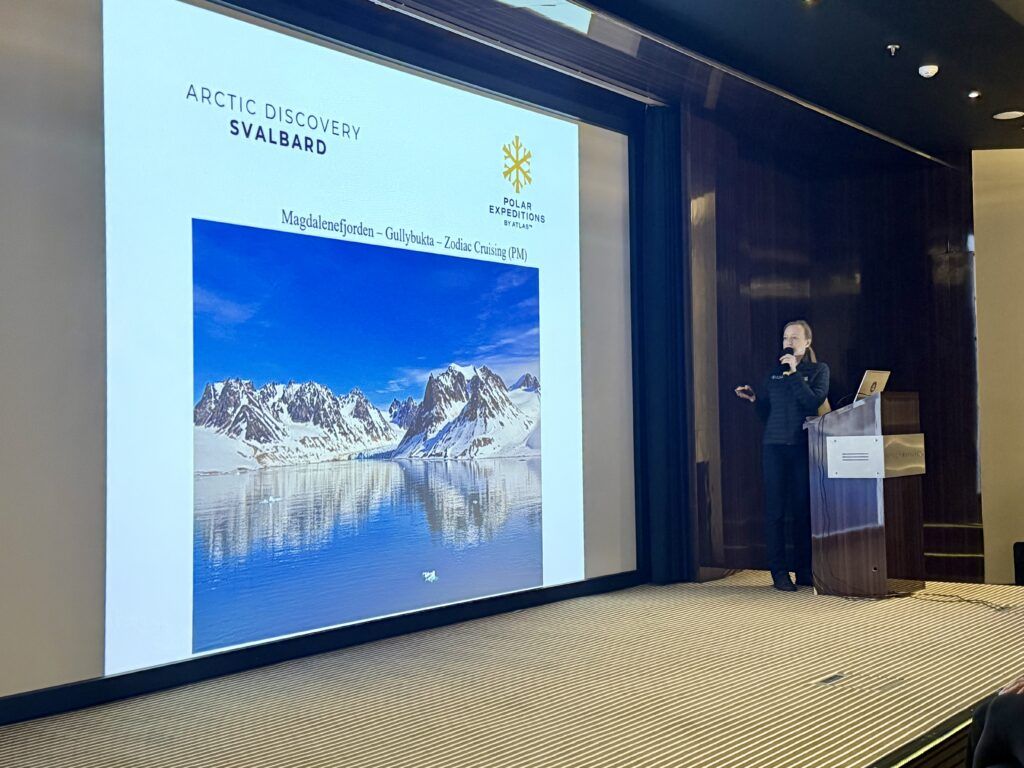
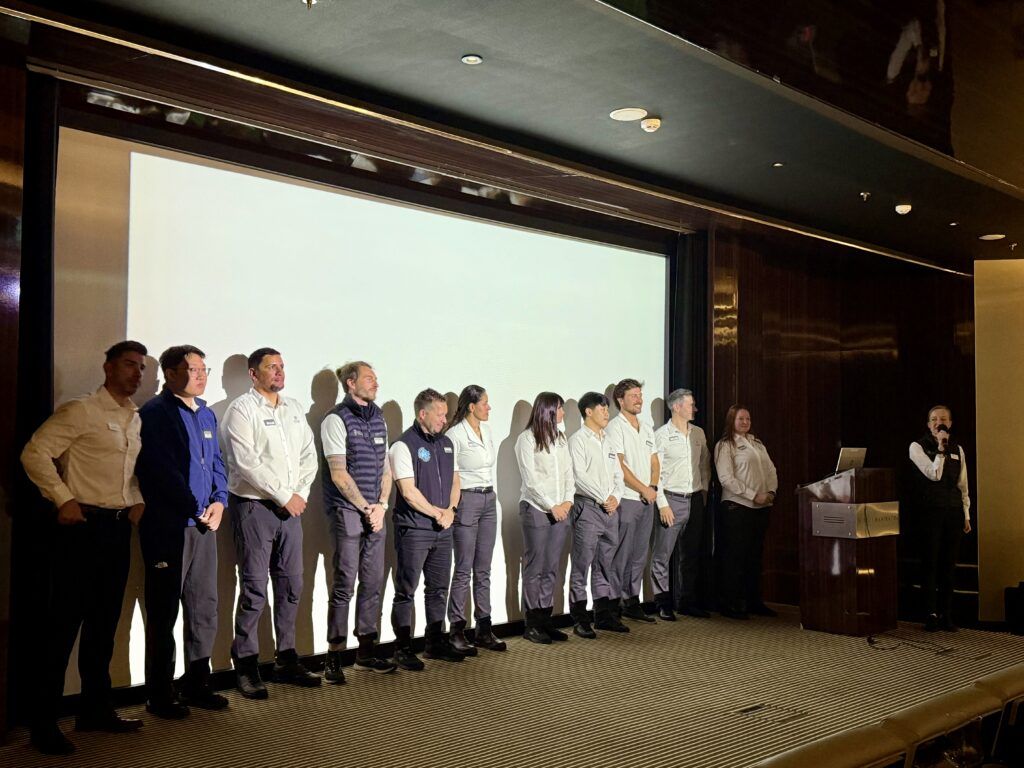
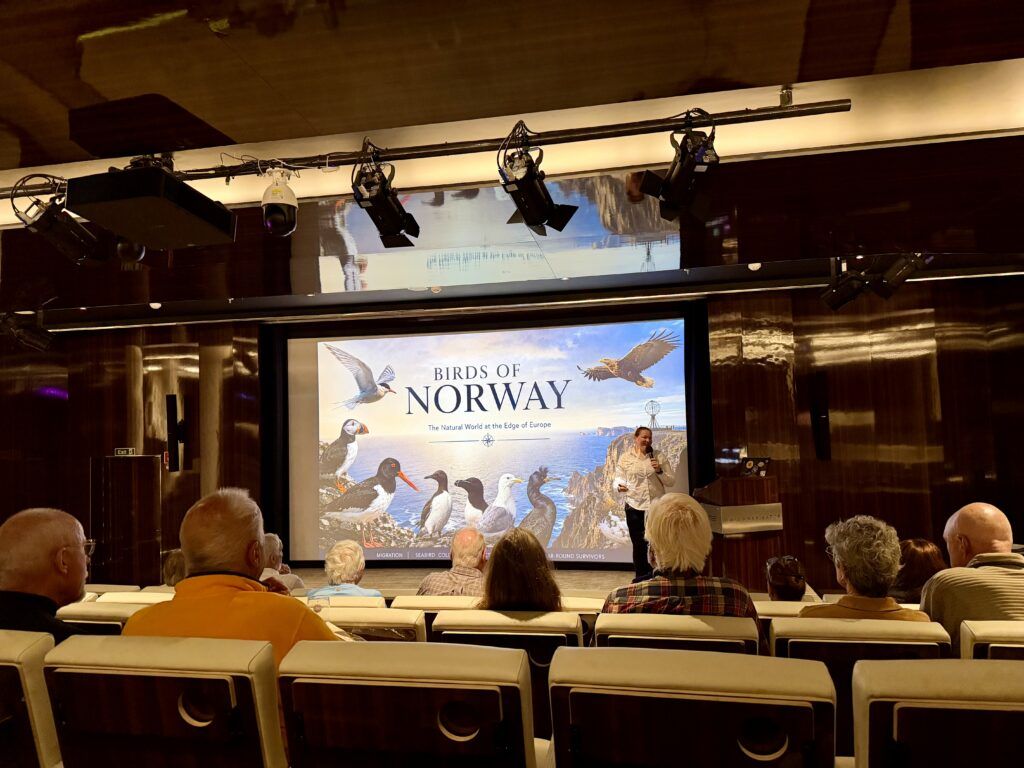
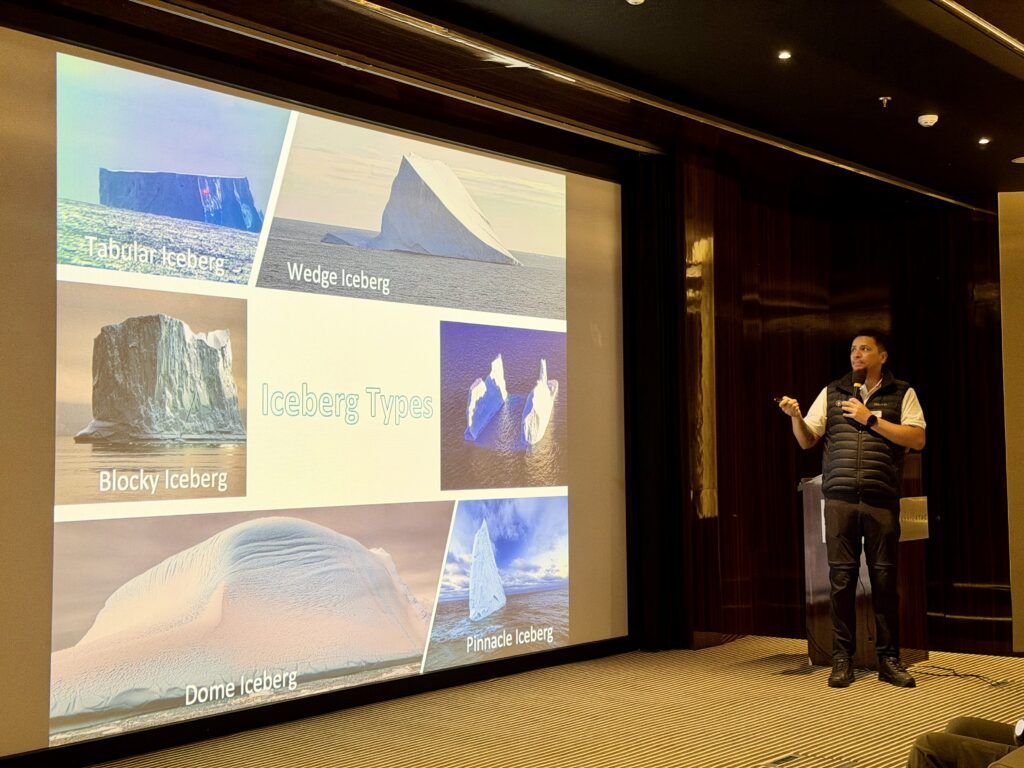
The programming was excellent, and many of the guides (especially Ekaterina, Lena, and Guiliano) were very knowledgeable. It just arrived too late. For example, we got a lecture on Norwegian birds the evening after our Bear Island Zodiac safari. Yet, Bear Island is famous for its birdlife.
In our view, at least part of the expedition team should’ve been onboard the entire time and started the enrichment sooner. That one small change would make the slower first half far richer.
Our Balcony Stateroom on World Navigator
For this cruise, we stayed in stateroom 601, a traditional balcony cabin. This Veranda Suite sits all the way forward on the starboard side of Deck 6. In fact, we had the very last stateroom before the bridge.
At roughly 270 square feet including the balcony, it felt noticeably larger than the balcony cabins on contemporary lines.
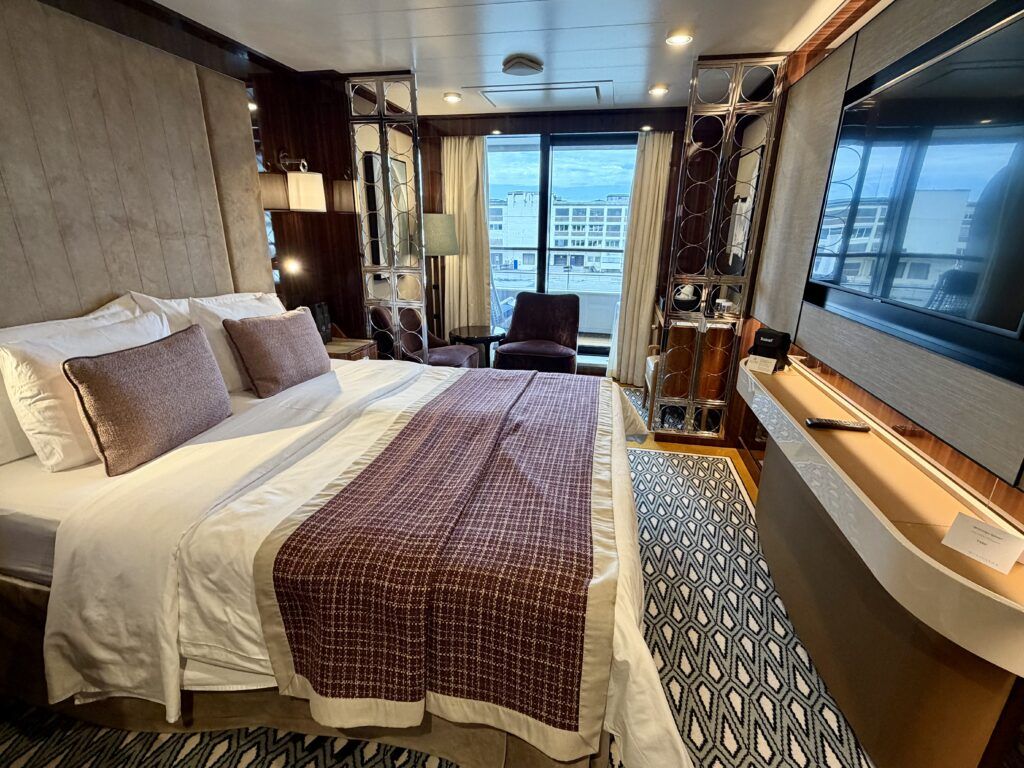
The layout is familiar, though. As you enter, the bathroom sits on the forward wall to your left. Across from it, the closet lines the opposite wall to your right. Then, past the bathroom and closet, you reach the bed. Beyond that, a small seating area and desk lead out to the balcony.
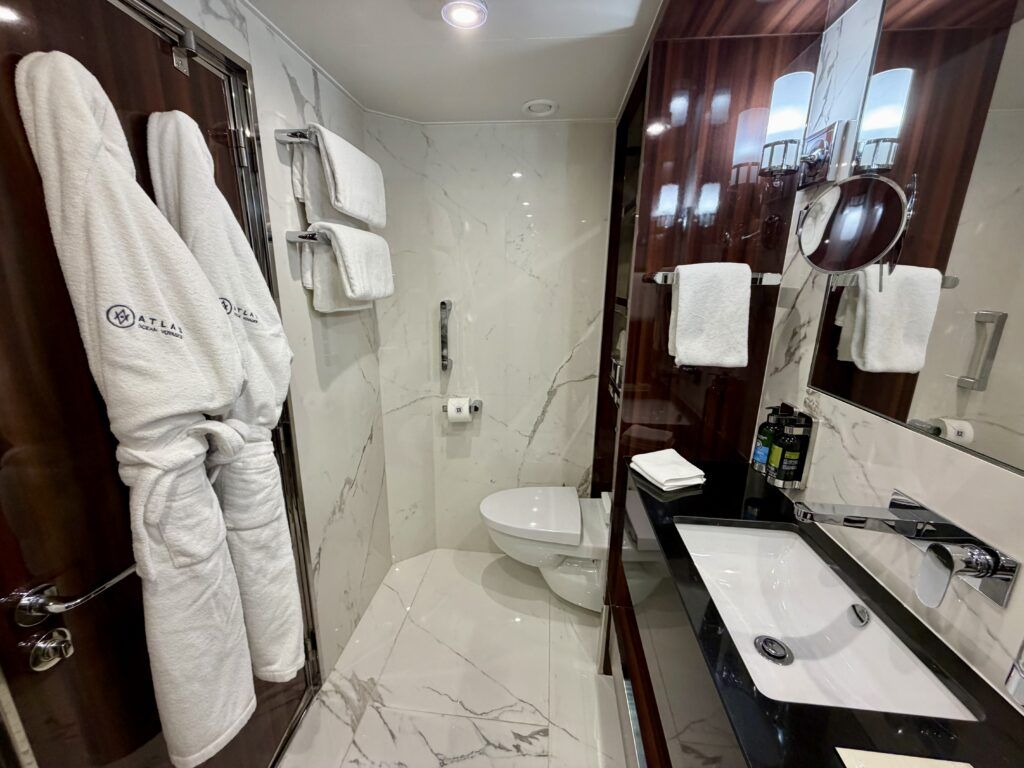
The bathroom is a big upgrade over mainstream cruise lines with regard to size and amenities. It features marble finishes and a walk-in mosaic shower with a rainfall showerhead and body jets. It also stocks L’Occitane products so you can leave your toiletries at home.
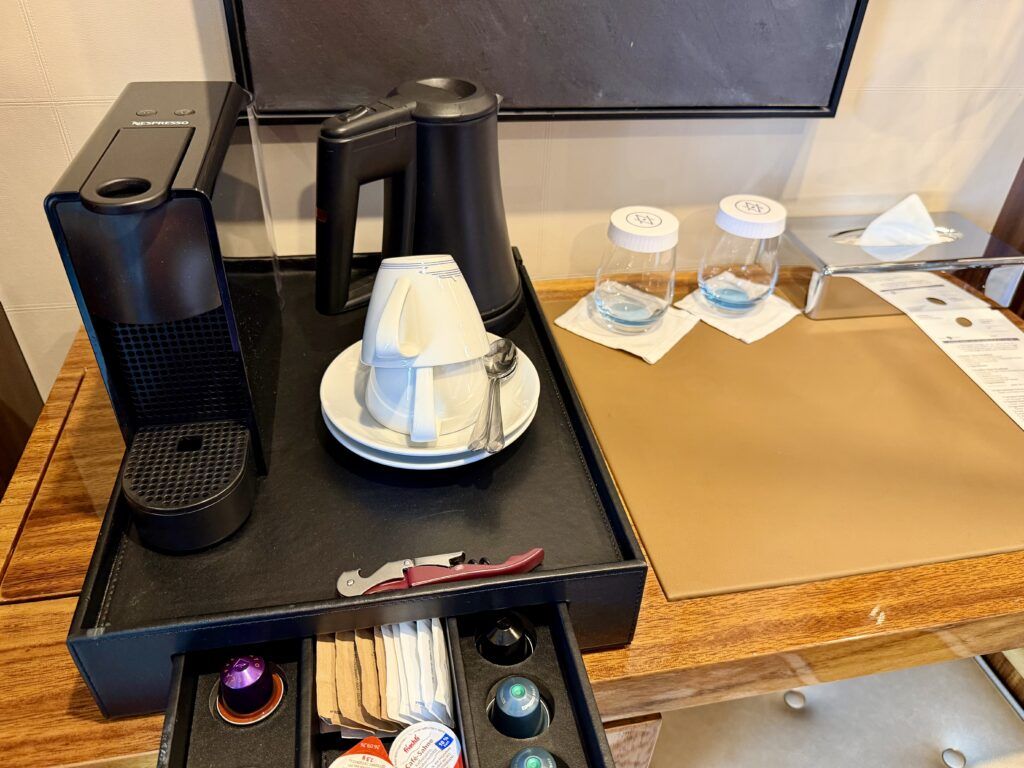
The queen bed is draped in soft Portuguese cotton linens. Nearby, the desk boasts a Nespresso maker and the stocked mini-fridge tucked underneath, both of which are complimentary. Across from the desk sit two oversized chairs and a small table. This area was cramped with all our gear, but we managed.
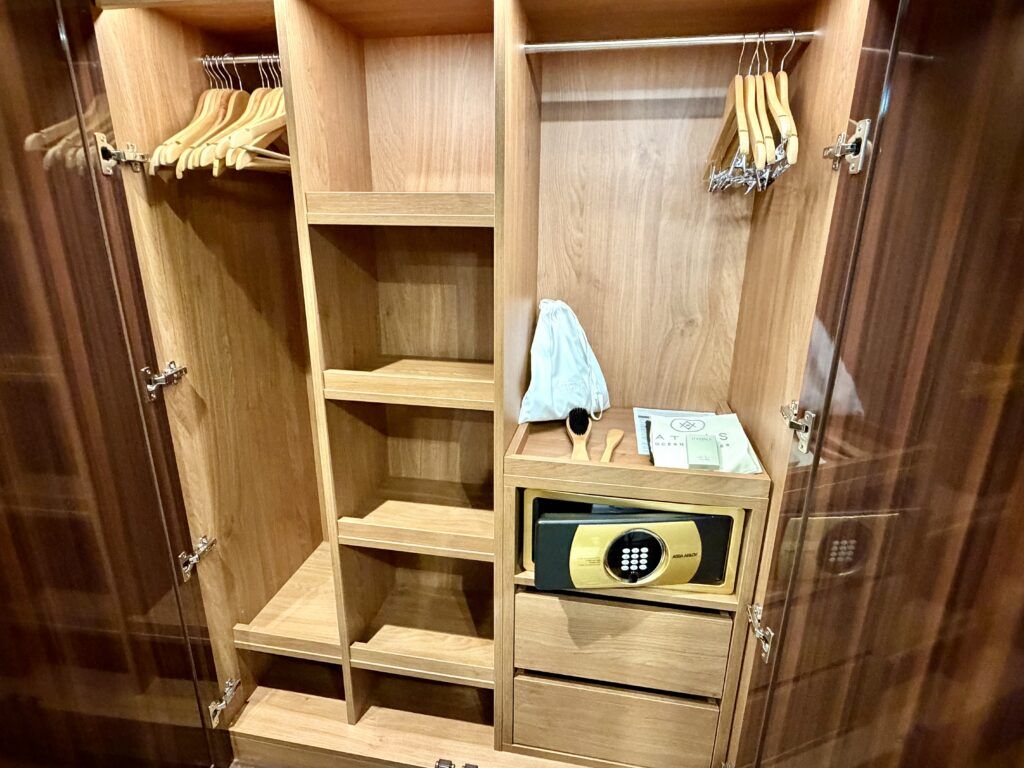
Like our previous Atlas staterooms, storage was the biggest issue. After all, we were packing for three seasons over 12 nights. So, we had to get creative. Luckily, our packing cubes and pocket organizer saved us. In the end, we found room for all our clothing and outerwear. Even so, we’d love a few more drawers or larger shelves.
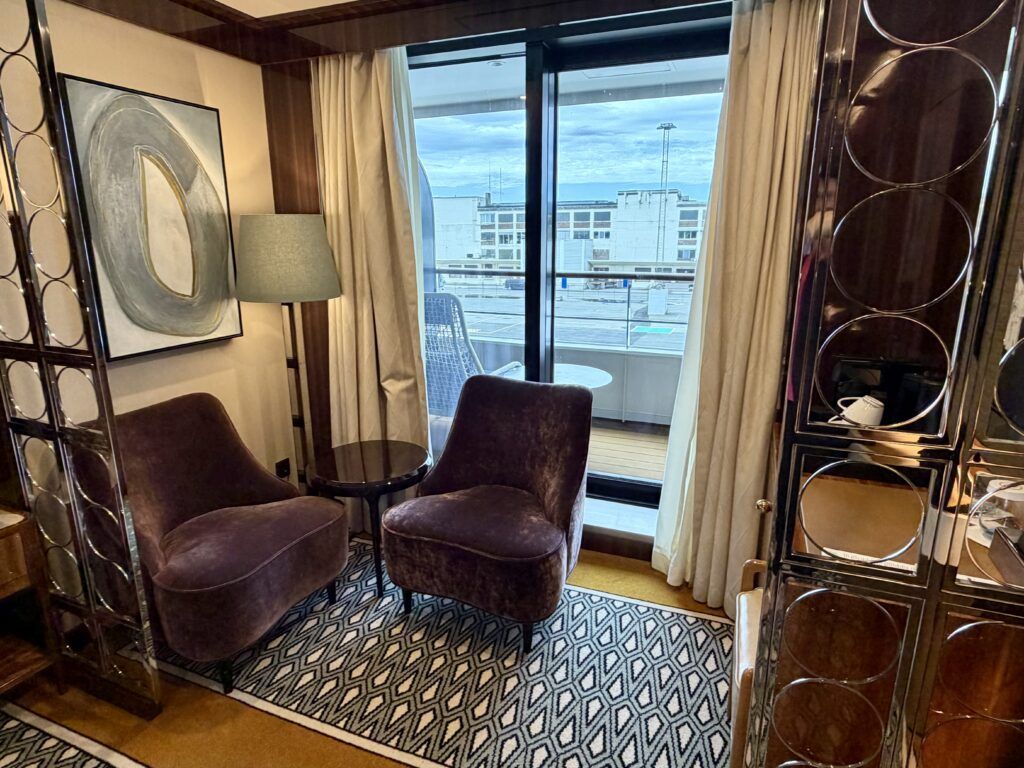
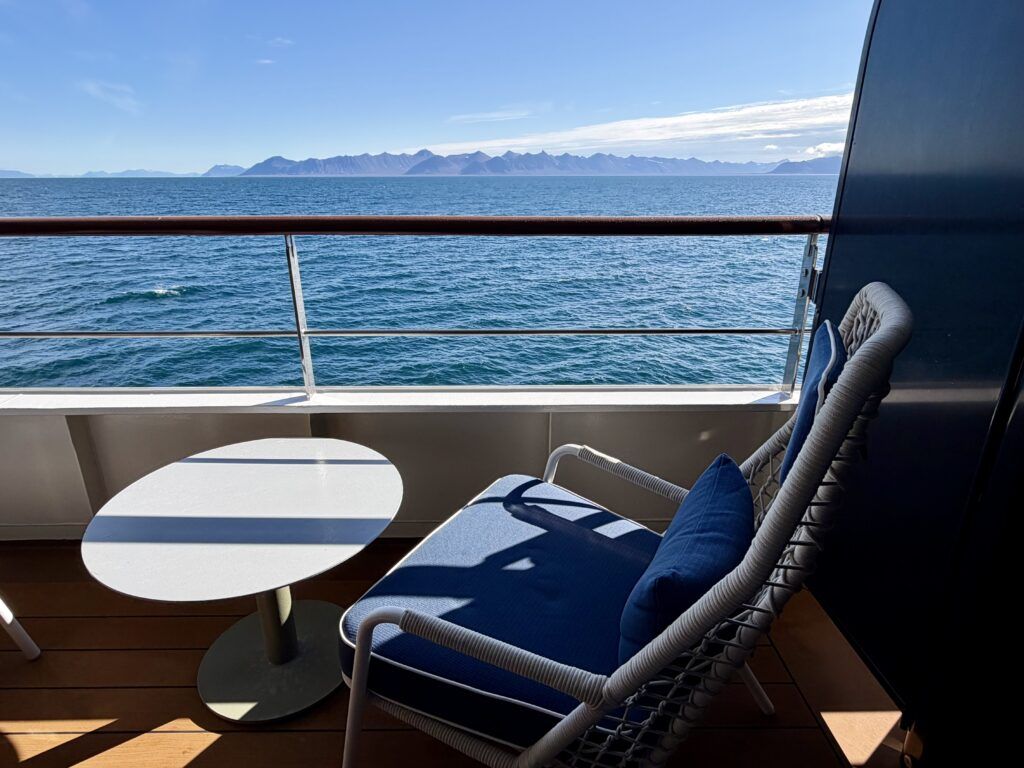
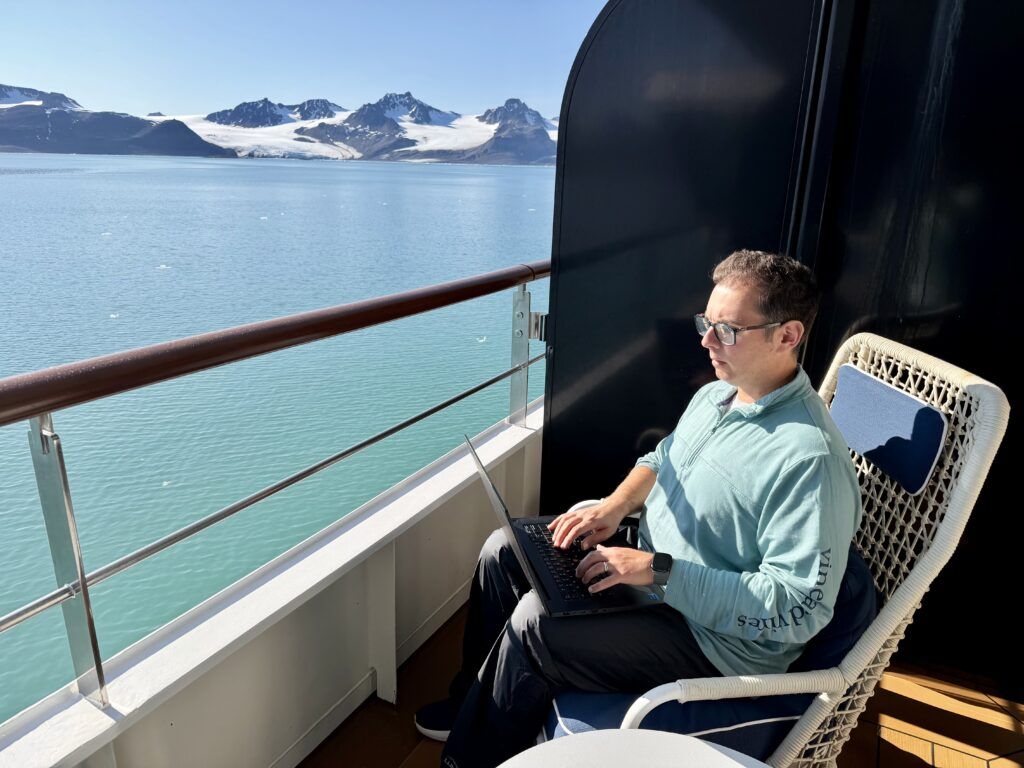
With more downtime than usual, we were thankful to have a balcony. Whether it was sailing by glaciers, fjords, or small towns, we were never far from an amazing view. Unlike typical cruise balconies, World Navigator has oversized, cushy chairs and a large table. So, we could settle in with a coffee or our laptops and admire the vistas at virtually any hour.
An Arctic Adventure With Atlas Ocean Voyages
Embarking in Oslo
Given the transatlantic flight to reach our departure port, we built in a pre-cruise night in Oslo. For our stay, we booked the Amerikalinjen, right in the heart of the city. Even though we arrived early, we simply didn’t have it in us to tour that first day.
The next day was a different story. Since Atlas doesn’t start boarding until 3 pm, we had most of the morning and early afternoon free. That let us make the most of the hotel’s central location.
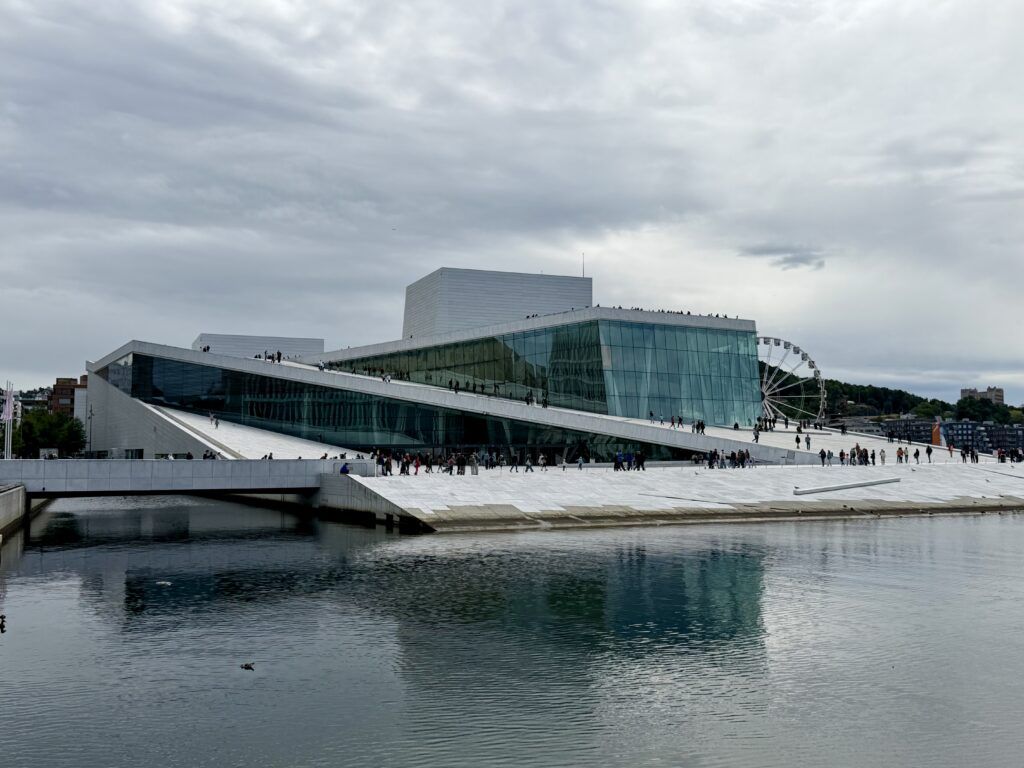
From the hotel, we followed the pedestrian path of Karl Johans gate up to the Royal Palace. Along the way, we paused for photos at the Parliament building and a few other sights. Later, we headed the opposite direction, strolling toward the Opera House and the Munch Museum.
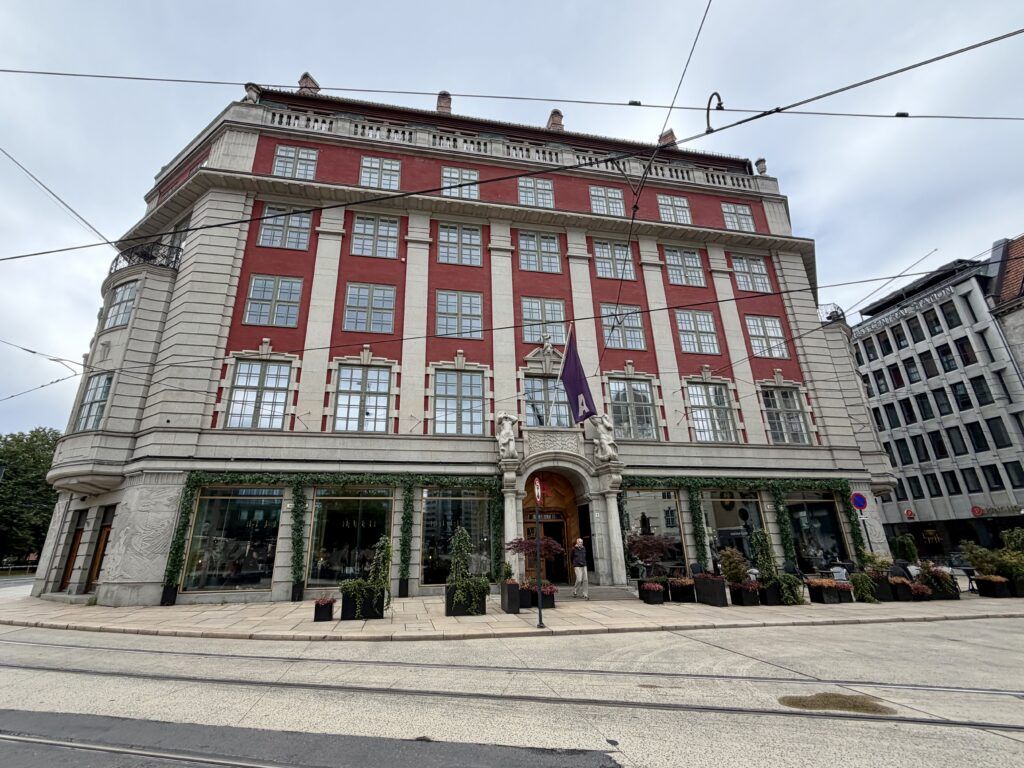

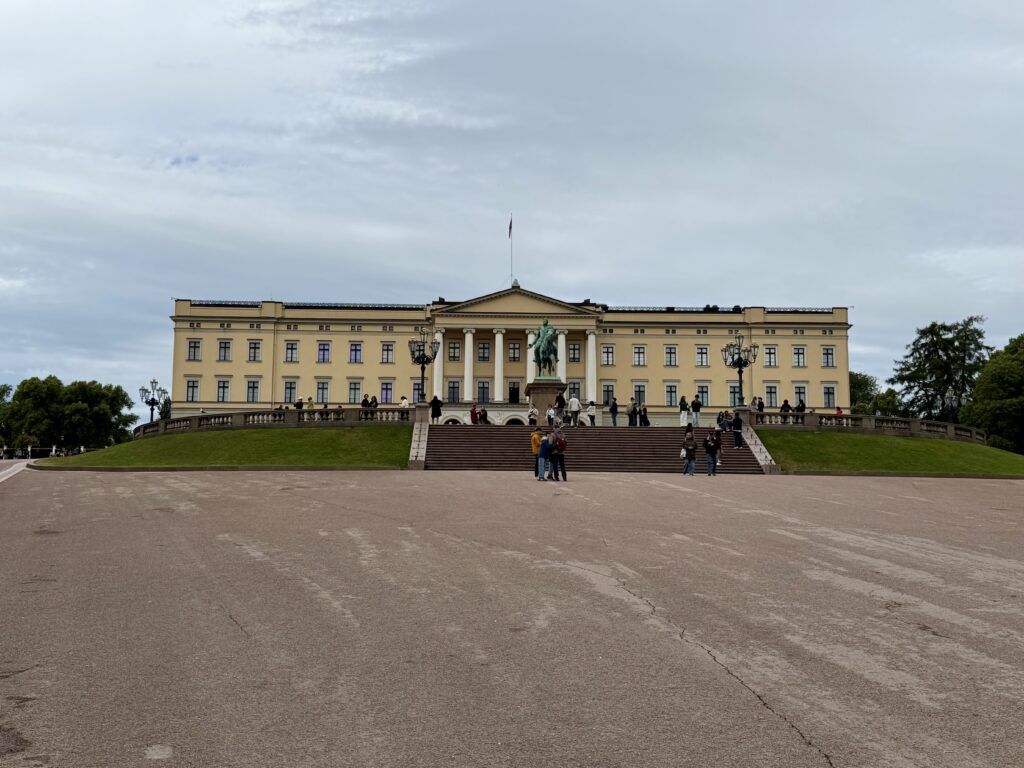
We had the hotel staff flag us a taxi around 2:30 pm, and we set off for the pier.
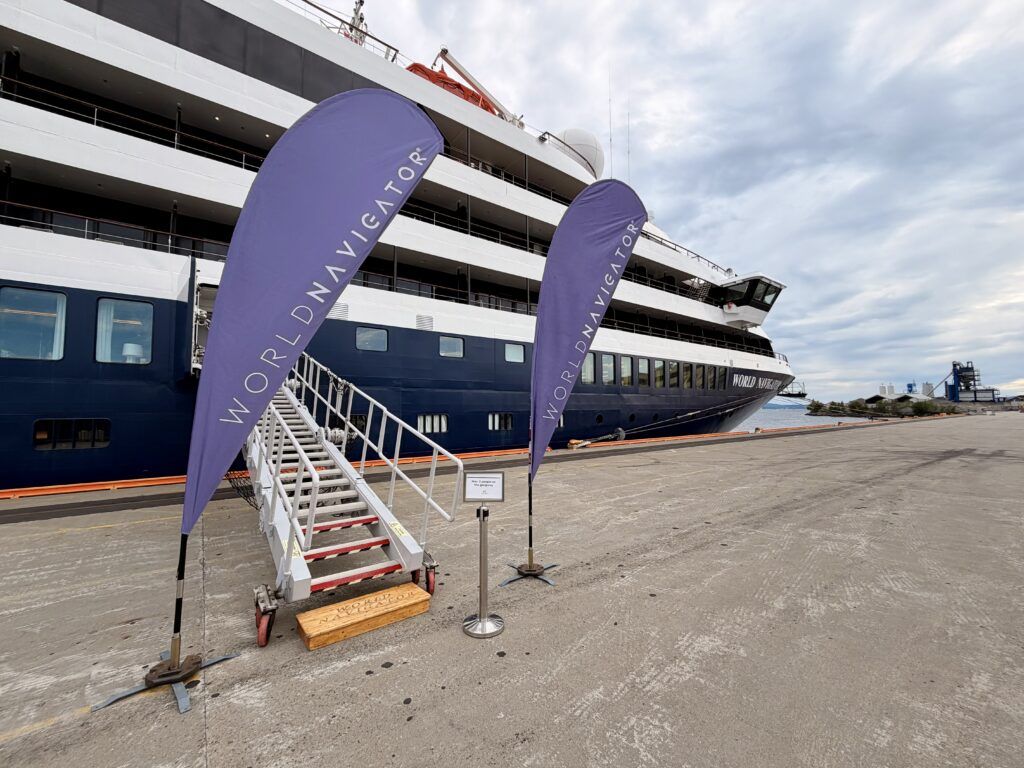
For a moment, we weren’t even sure we had the right spot. Then our driver rounded a corner, and there sat World Navigator at its small berth. We checked in inside a tent, waited about 15 minutes, and climbed the gangway. Just like that, our near two-week exploration of the Arctic began.
Skagen, Denmark
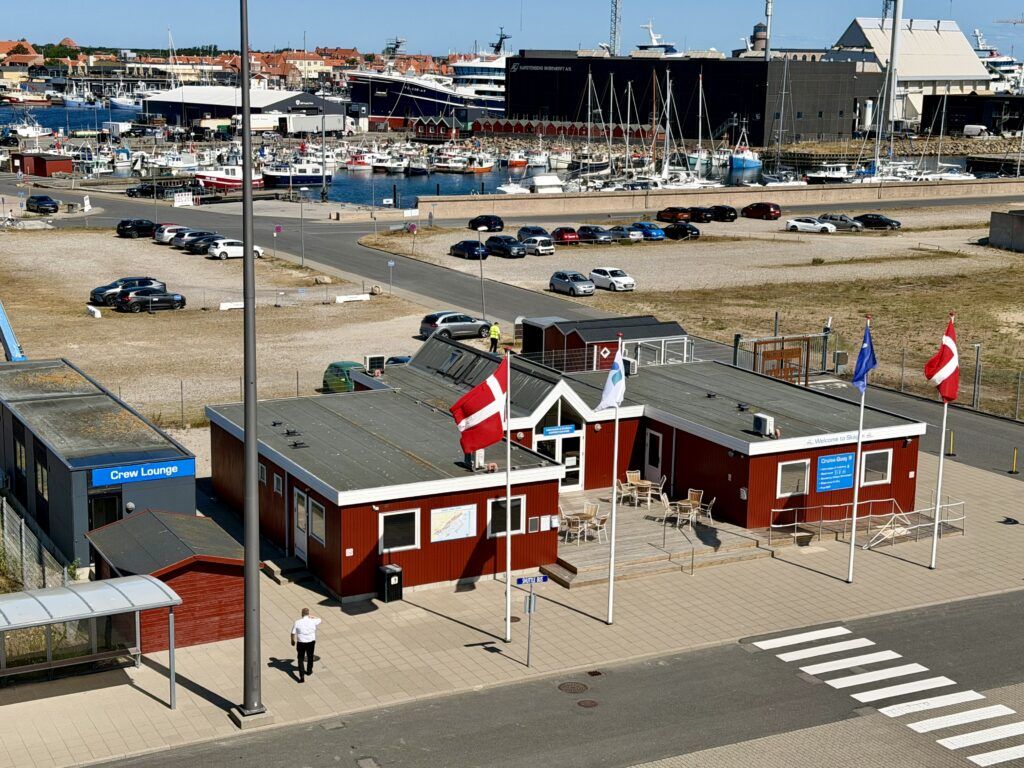
Our first stop was Skagen, the northernmost town in Denmark. It’s a charming place, known for its cheerful yellow houses and its history as an artists’ colony. To see it, we booked the Panoramic Skagen, Grenen, and the Buried Church tour.
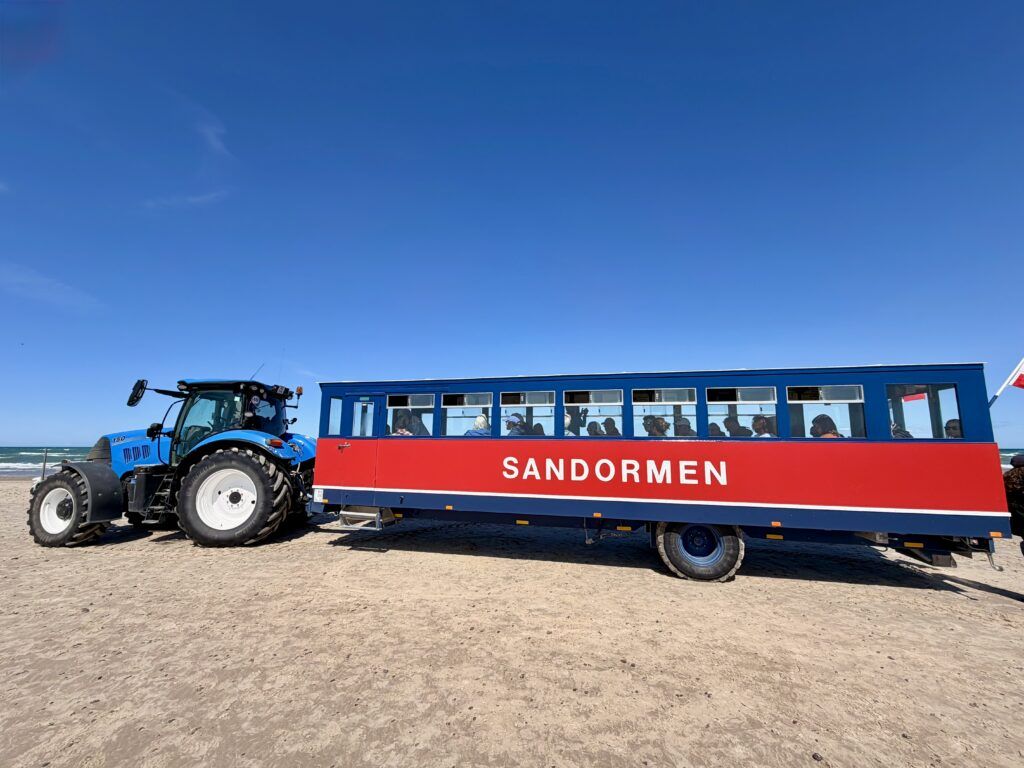
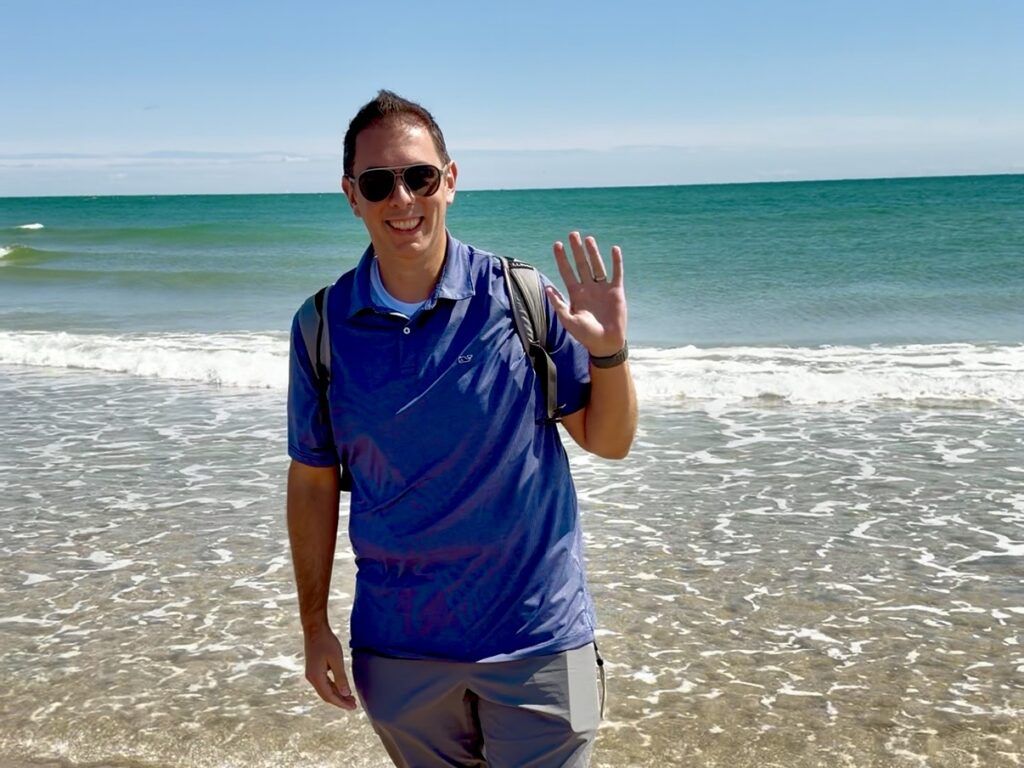
The clear highlight was Grenen itself. To reach the point, we hopped aboard the Sandormen, a quirky tractor-pulled wagon that carries guests across the sand. The name roughly translates to “the sand worm.” At the tip, we watched the Baltic Sea and North Sea crash together from opposite directions.
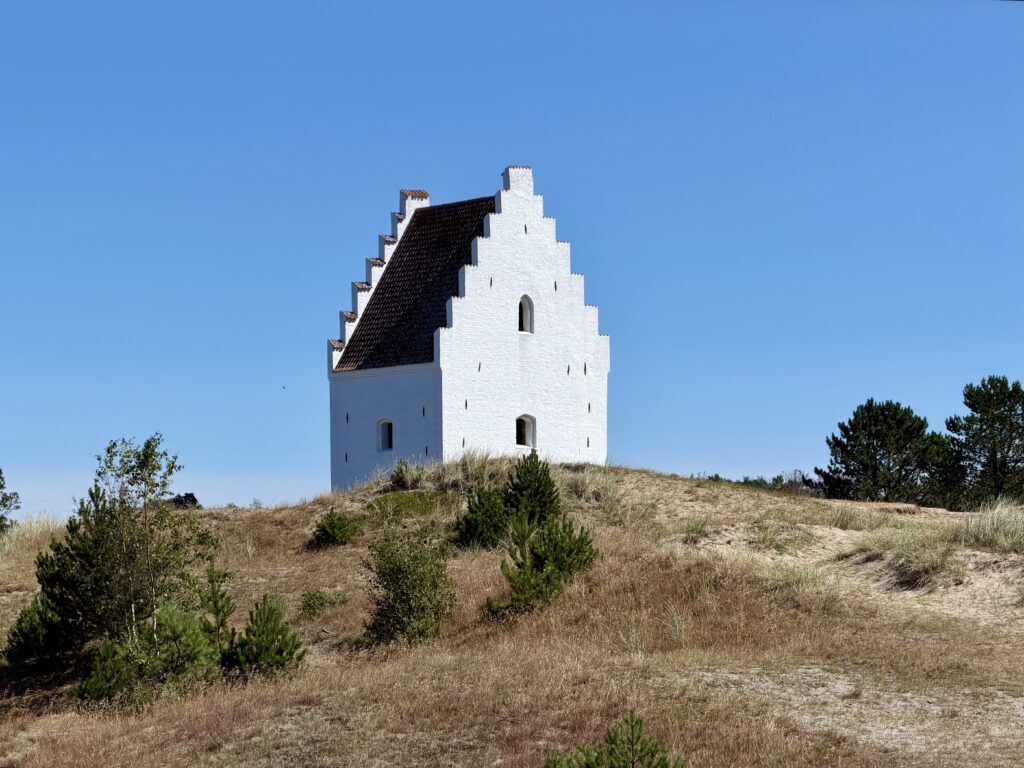
From there, we continued to the Buried Church. This 14th-century landmark was slowly swallowed by drifting dunes, and today only its tower still rises above the sand.
Måløy, Norway
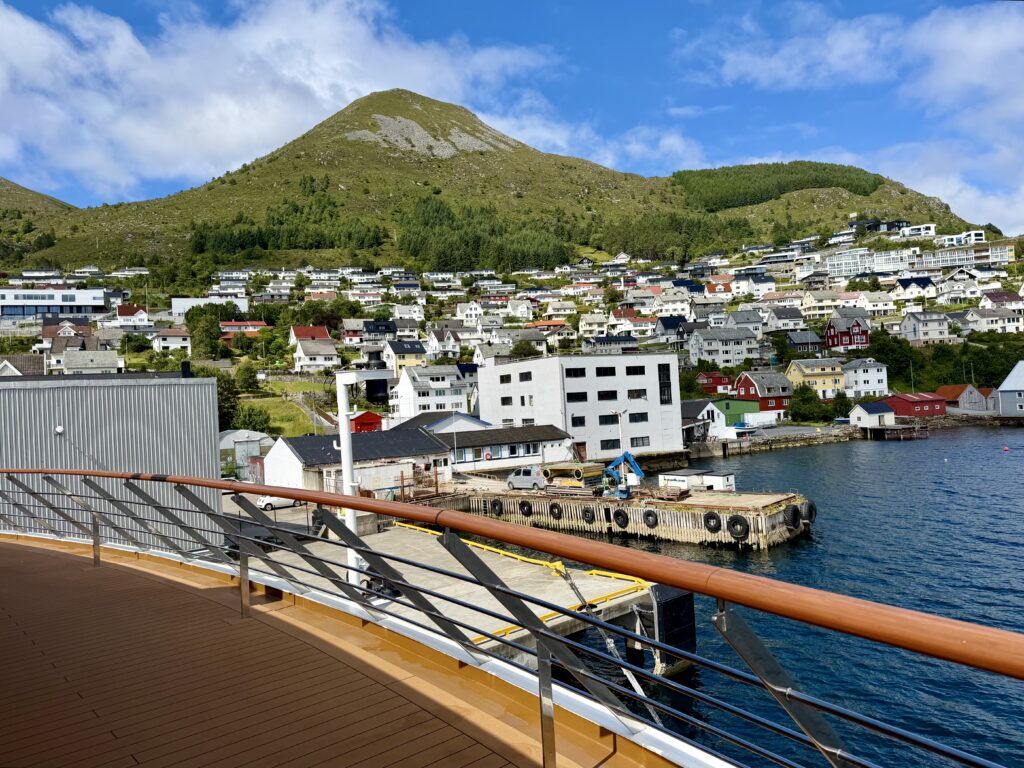
Given Heidi isn’t a wing-it kind of person, we booked a tour at every port. That’s exactly why we joined the Discover Måløy on Foot tour. Måløy is a small fishing town that carries a heavy past. During World War II, German forces seized Måløy and turned it into a coastal fortress.
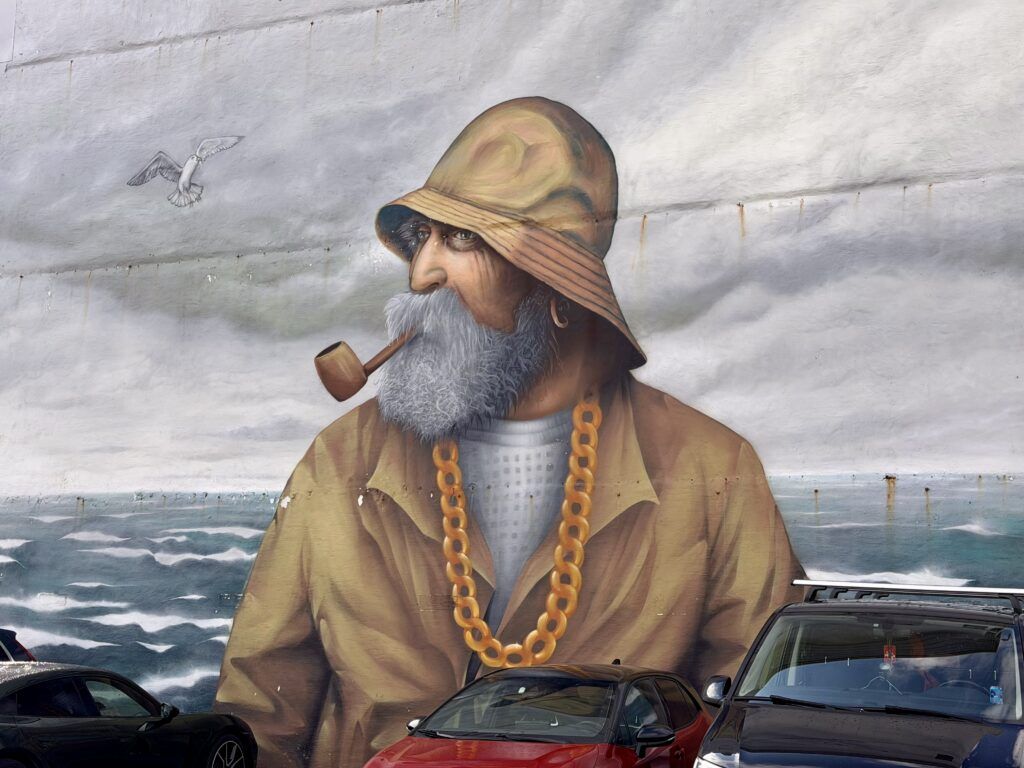
We strolled along the coast and down the main street, passing colorful murals painted across the buildings. Along the way, our guide shared the town’s history, from its fishing roots to its WWII past. We then continued out to the war monument, then back past the WWII museum.
Honestly, we could have done most of it on our own. During the previous evening’s port talk, Melany had already pointed out the WWII museum and the murals as easy things to see on our own.
Crossing the Arctic Circle
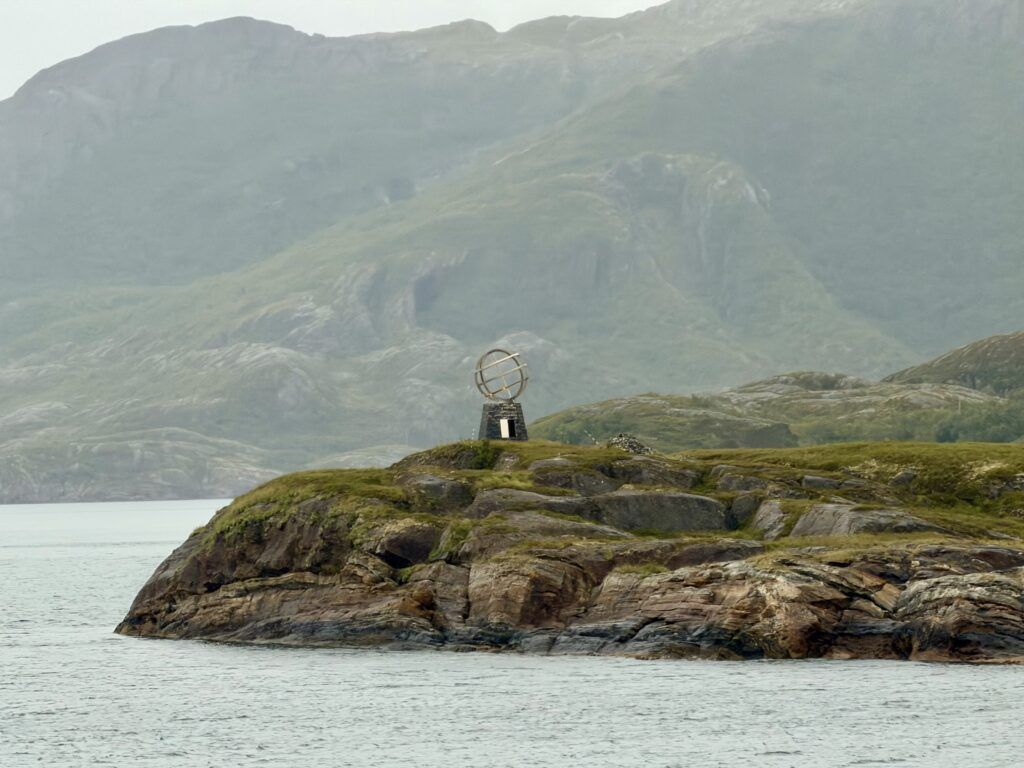
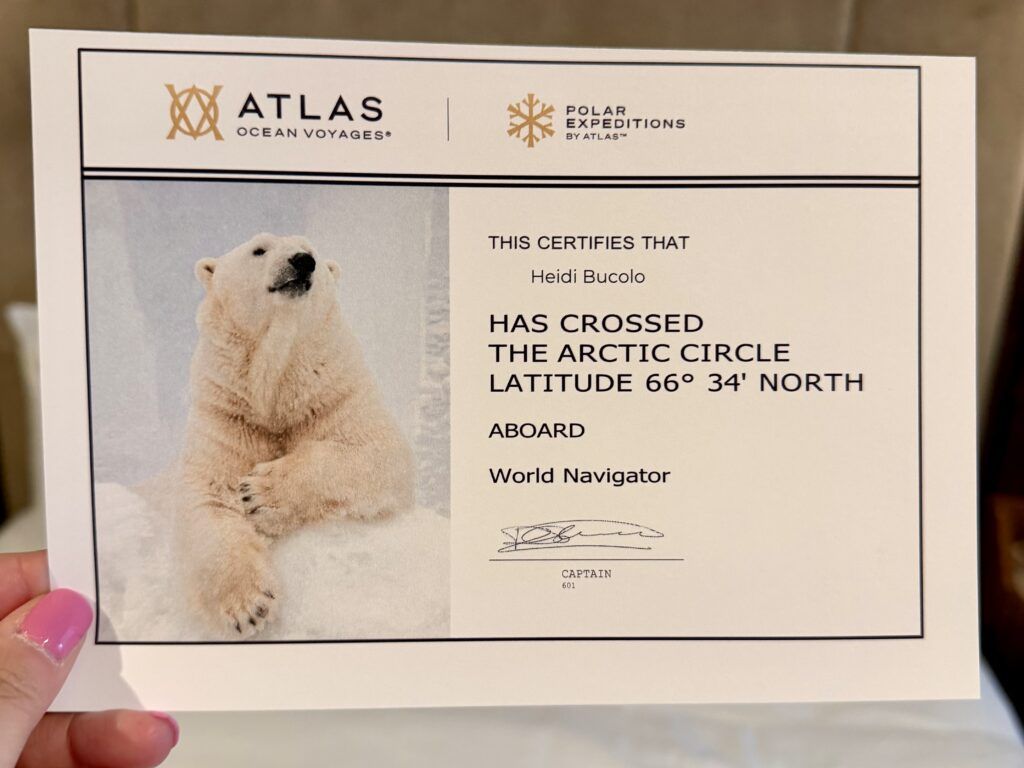
Somewhere between Måløy and the Lofoten Islands, we crossed one of travel’s great milestones: the Arctic Circle.
On the itinerary, this day is simply labeled “Captain’s Choice,” which is a little misleading. It was really just a sea day with some scenic cruising through fjords. The actual crossing happened sometime between 9 and 10 that evening.
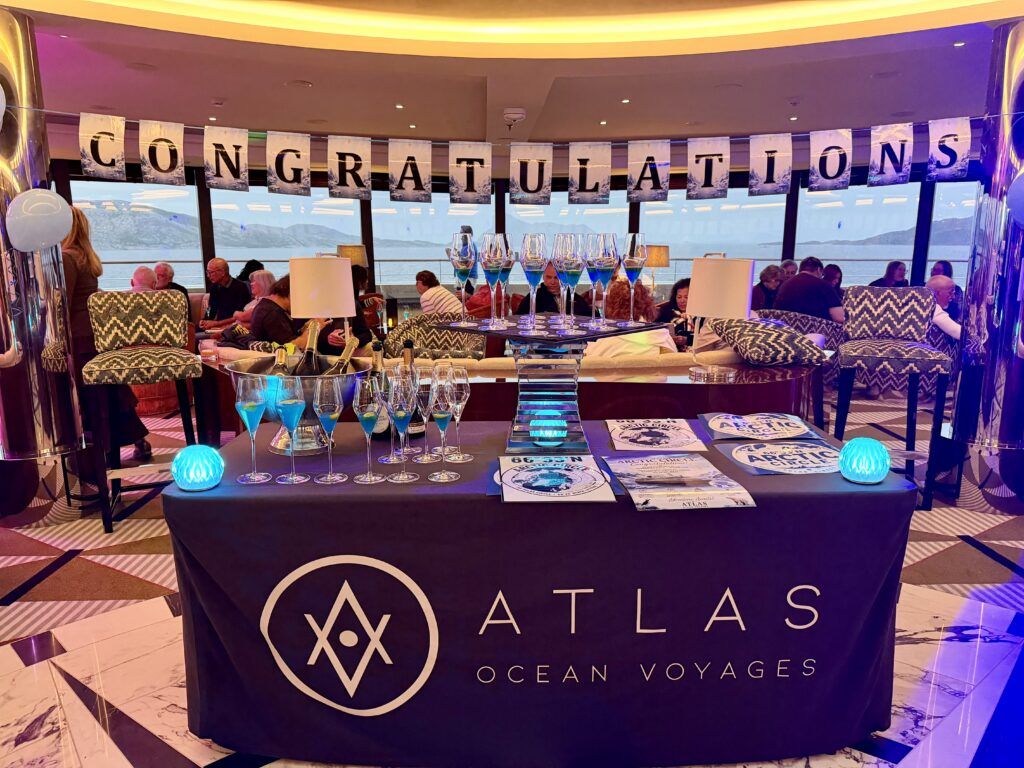
To mark it, Atlas hosted an Arctic Circle Crossing Celebration in the Dome. We raised a glass to the moment while the Java Duo played. We were surprised that the cruise line did not perform the typical “blue-nose ceremony”, as on our previous Arctic cruise. However, they did have blue cocktails!
Leknes (Lofoten Islands), Norway
The day after crossing the Arctic Circle, we arrived in Leknes, in the Lofoten Islands. We’d actually been here before on a Viking sailing. Our tour on that trip included a sightseeing exploration by land and sea. That trip took us past the historic red houses, dramatic ridges, and towering mountains, and it was excellent.
The same could not be said about the Panoramic Lofoten Vistas tour we booked this time. On paper, it strings together a few of the area’s prettiest spots. Unfortunately, the weather had other plans.
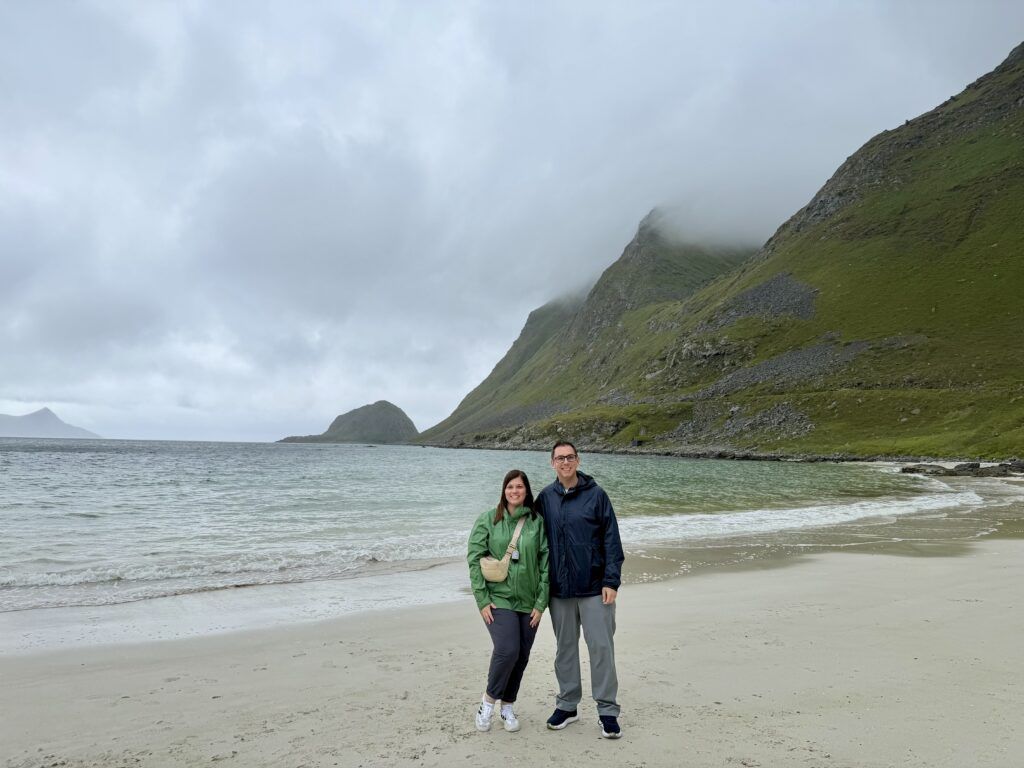
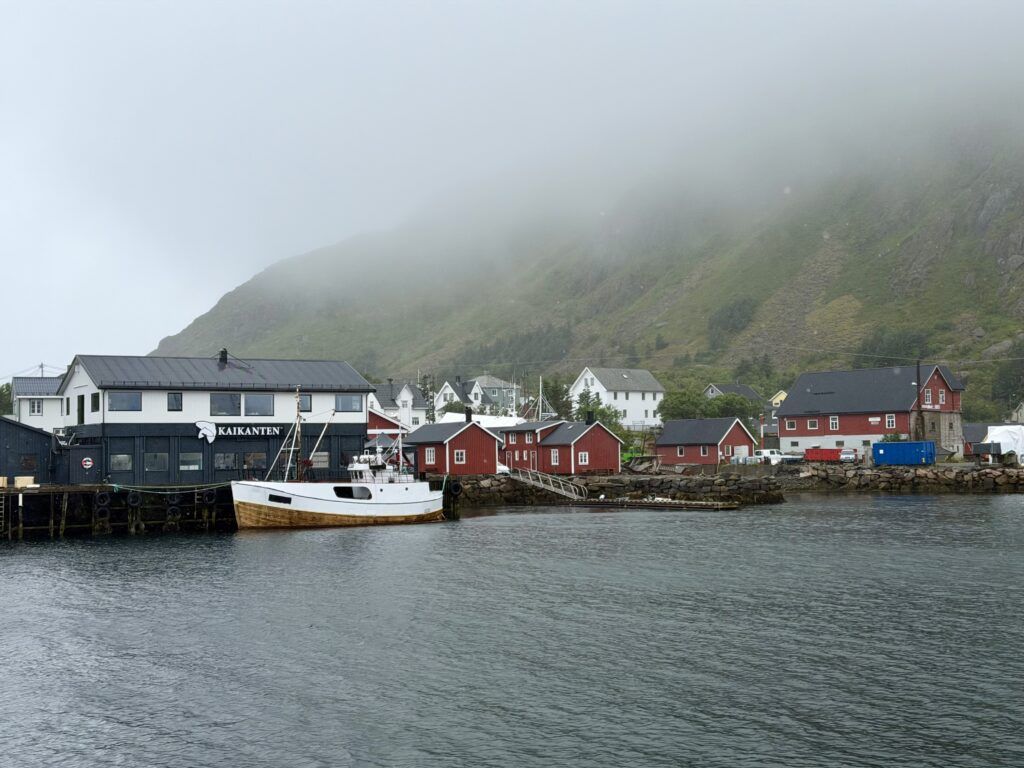
We started at Haukland Beach, a popular stop that is now even more visited because it was featured in the movie Dune. From there, we drove up to the Hagskarveien Viewpoint. This was meant to be the highlight, with sweeping views of the rugged coastline, but we couldn’t see a thing. The final stop, a small fishing village, didn’t do much to turn things around. There simply wasn’t a lot to see.
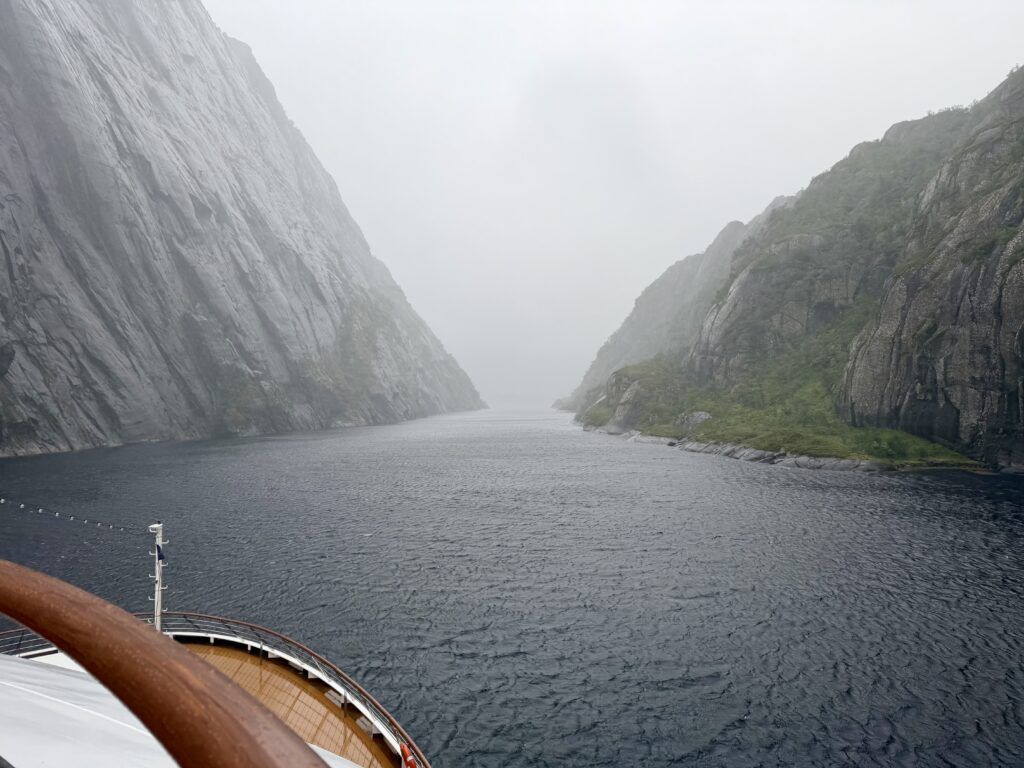
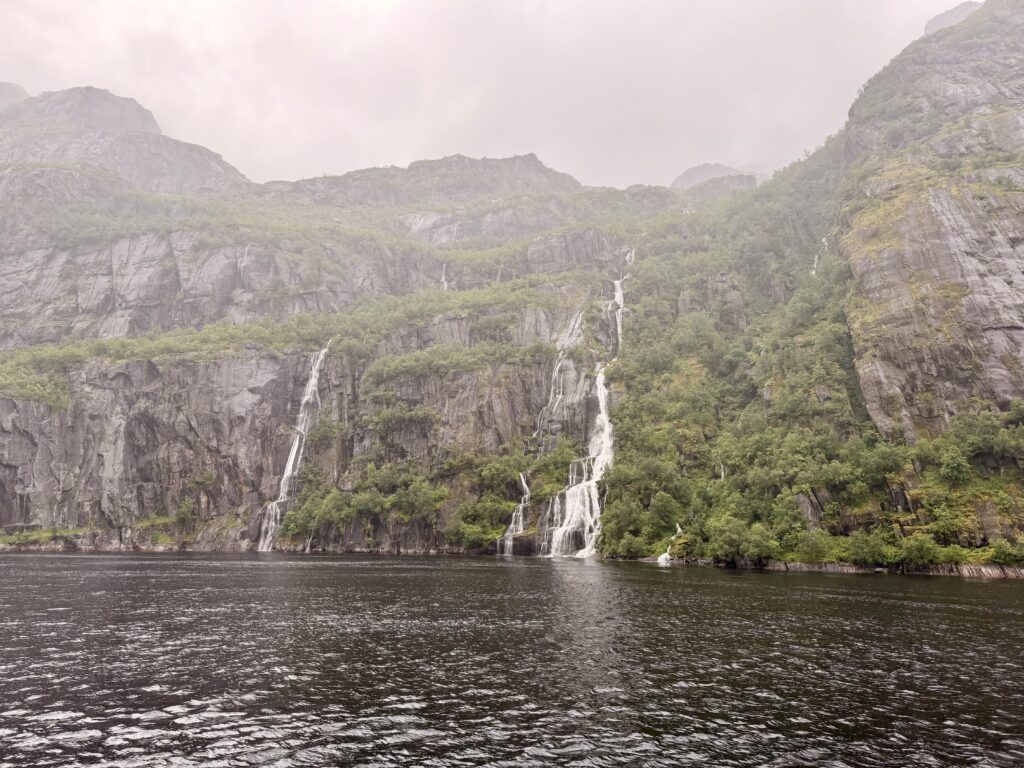
However, during dinner we were surprised by the Captain with a scenic sail through Trollfjord. This dramatic and narrow fjord is famous for its 100-meter-wide entrance and towering mountain walls. Because it was so rainy, we were also treated to some beautiful waterfalls.
Finnsnes (Senja Island), Norway
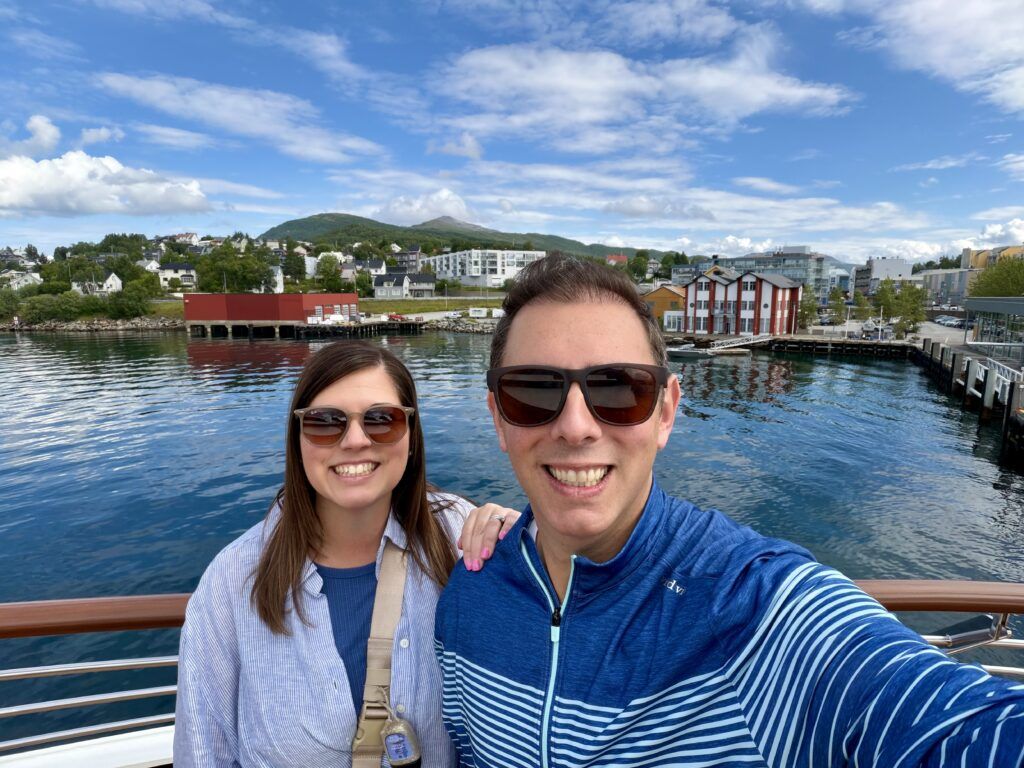
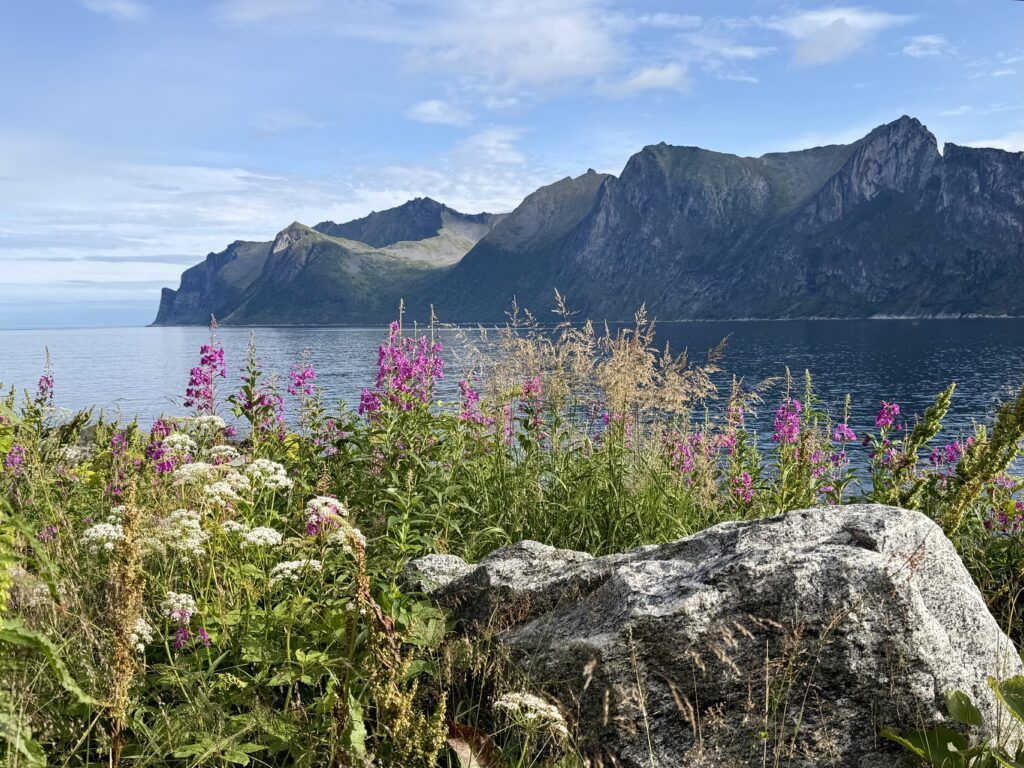
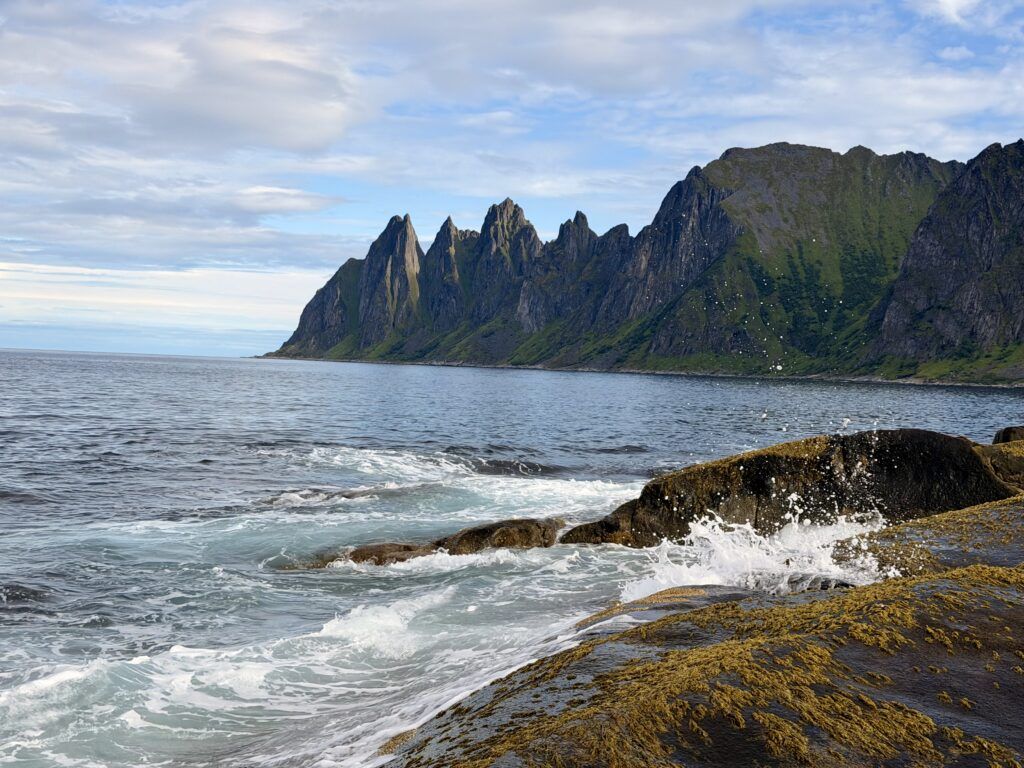
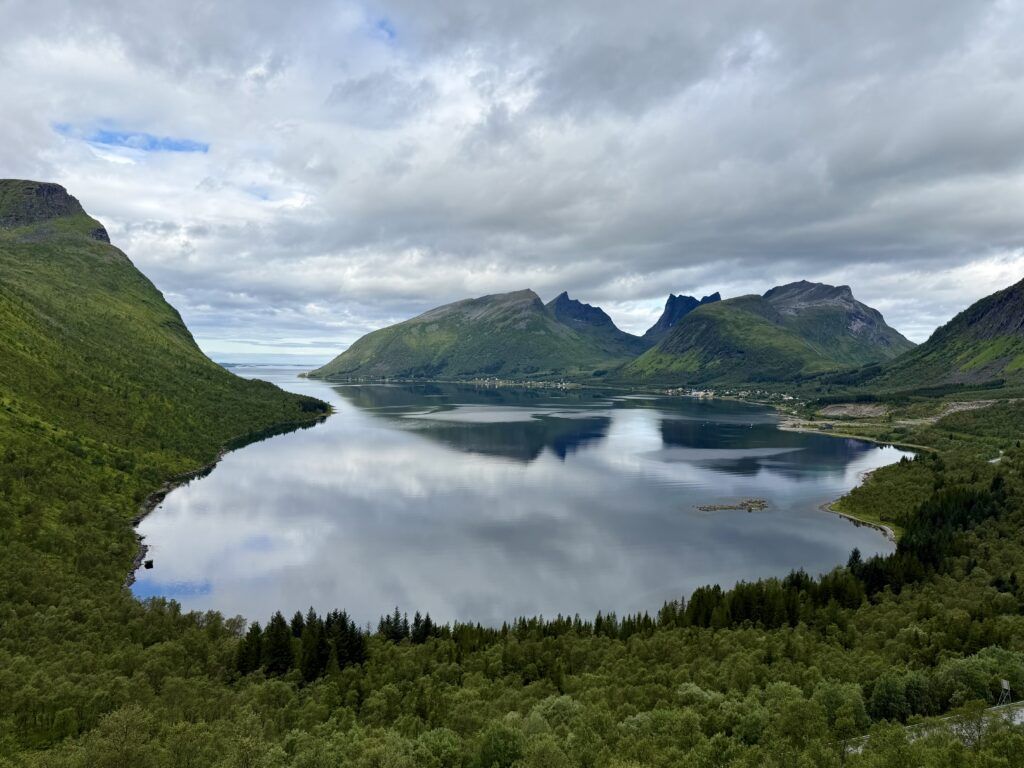
After the letdown in Lofoten, Senja was a welcome rebound. Our ship docked in Finnsnes, a small mainland town linked by a bridge to Senja, Norway’s second-largest island. And Senja delivers exactly the kind of scenery you picture up here. Think jagged peaks, quaint fishing villages, and deep fjords around nearly every bend.
To see it, we booked the Spectacular Senja Scenic Route tour. As the name suggests, this one is all about the views. Over close to three hours, we wound our way around the island with multiple stops along the way. First up was Ersfjordstranda, a white-sand Arctic beach set at the head of Ersfjord. Ringed by mountains on three sides, it looks almost tropical.
Next came Tungeneset, a rocky coastal viewpoint reached by a wooden boardwalk that runs out over sea-smoothed boulders. From there, you face the open Norwegian Sea on one side and the jagged Okshornan peaks on the other. Our guide called them the Devil’s Teeth.
Our final stop was Bergsbotn. Here, a cantilevered platform above the village of Skaland juts out over Bergsfjord, opening up a full panorama of the fjord and surrounding peaks.
Skarsvåg (North Cape), Norway
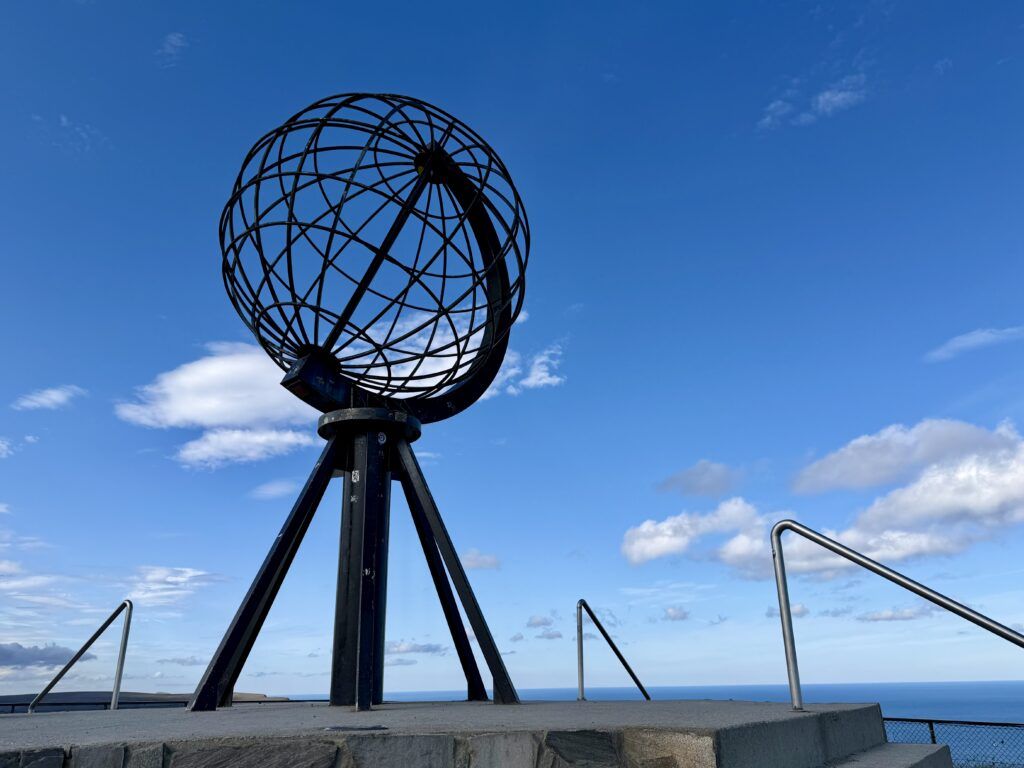
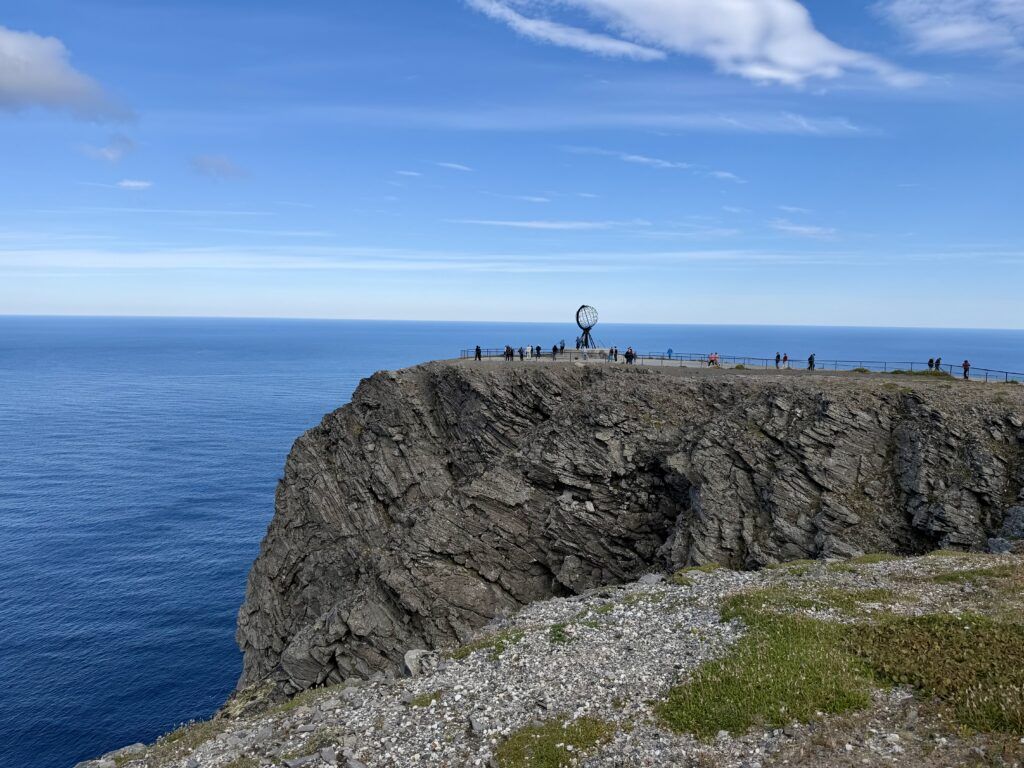
Our final mainland stop was North Cape, another stop we’d visited on our previous Into the Midnight Sun sailing. Perched atop the island of Magerøya, it’s widely billed as the northernmost point of continental Europe. Here, a dramatic cliff rises more than 1,000 feet straight out of the Arctic Ocean.
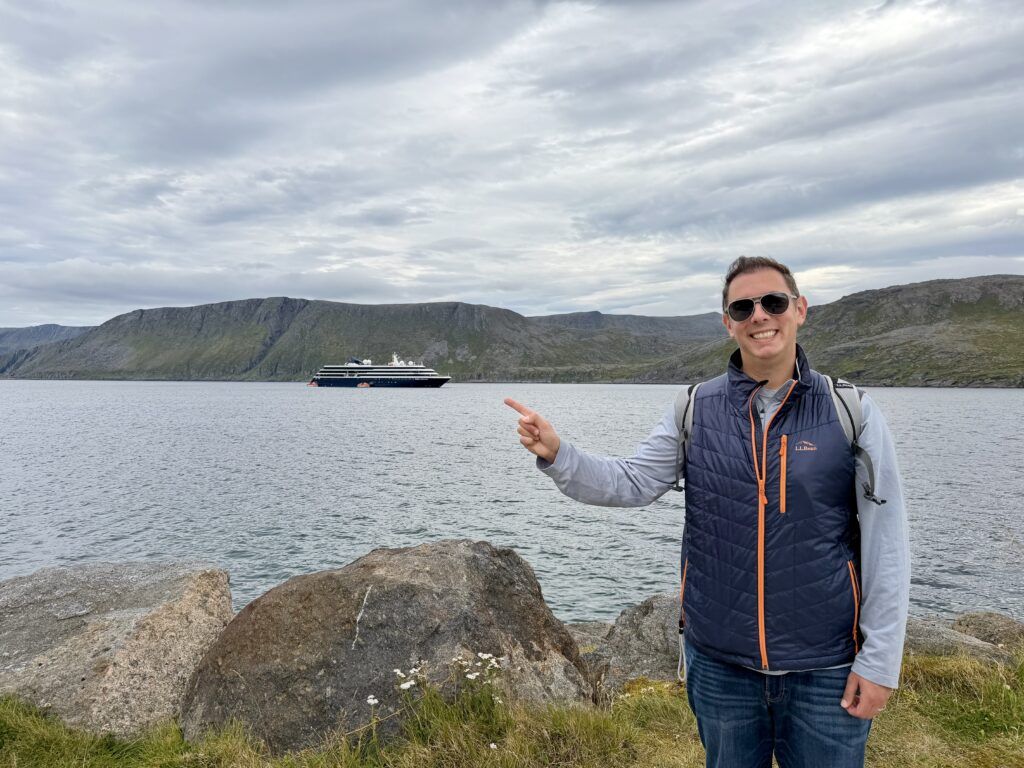
Last time we stopped in Honningsvåg, but we tendered into Skarsvåg this time around. Actually closer to North Cape, it’s the world’s northernmost fishing village.
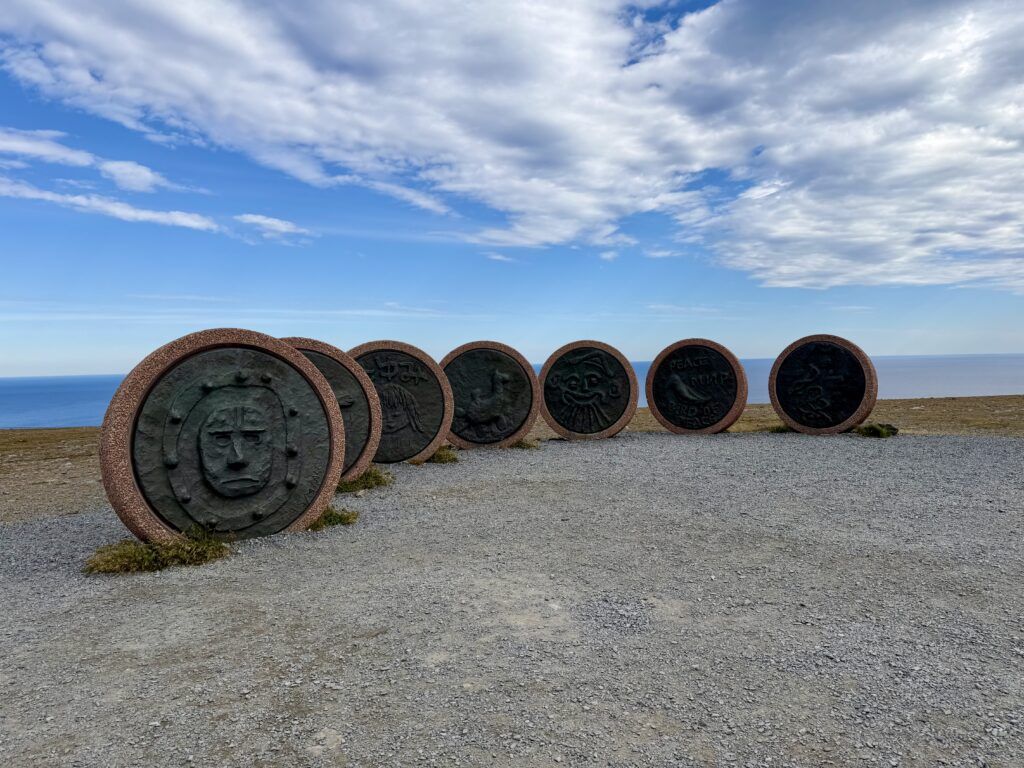
The North Cape Discovery tour is an unguided tour that basically just consists of round-trip bus transportation to and from the pier. You do need a ticket to enter the hall, which was included in our tour as well. Inside, there’s a cinema, gift shop, chapel, post office, and other exhibits.
The real draw, though, is outside. We walked out to the iconic Globe monument, perched right on the cliff’s edge. From there, we grabbed our photos and videos, with the vast Arctic Ocean stretching to the horizon.
Atlas Cultural Immersion – Our Northernmost Life
The day’s real highlight came later, back onboard the ship. Our Atlas cultural immersion (an included experience) was a live show performed by four young local artists from the Perleporten Kulturhus, titled “Our Northernmost Life”. Normally, it takes place at their theater, which doubles as a brewery.
Through storytelling, music, dance, and song, the quartet shared the history of their small town at 71 degrees north. It was a warm, funny, and often tongue-in-cheek look at life at the edge of the world.
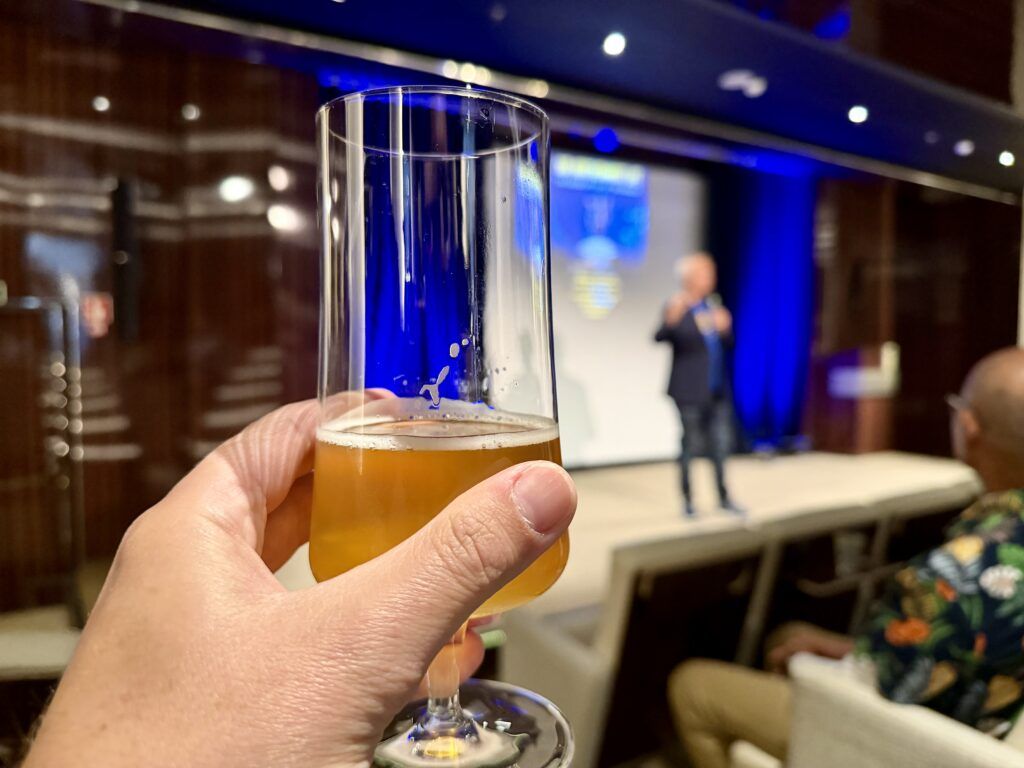
The experience wrapped with a tasting of locally brewed craft beer and traditional aquavit. It was the perfect send-off for the expedition ahead.

Bear Island (Bjørnøya)
After a week of coastal cruising, the real adventure was about to begin. In short, the vibe on the ship had shifted into full expedition mode.
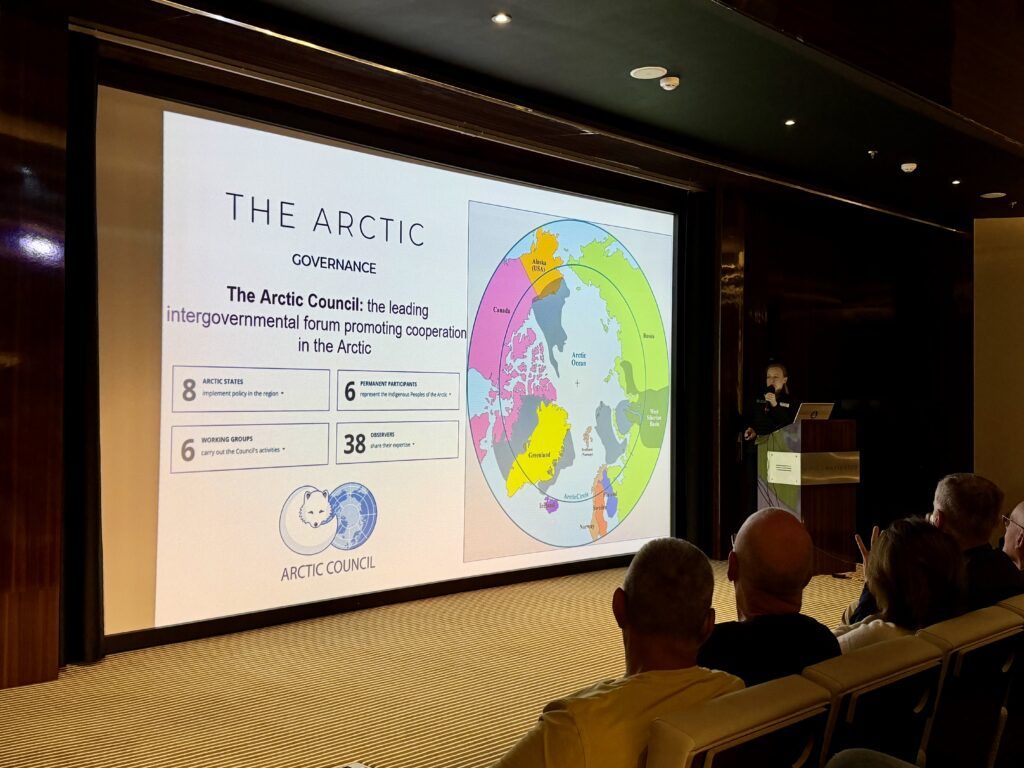
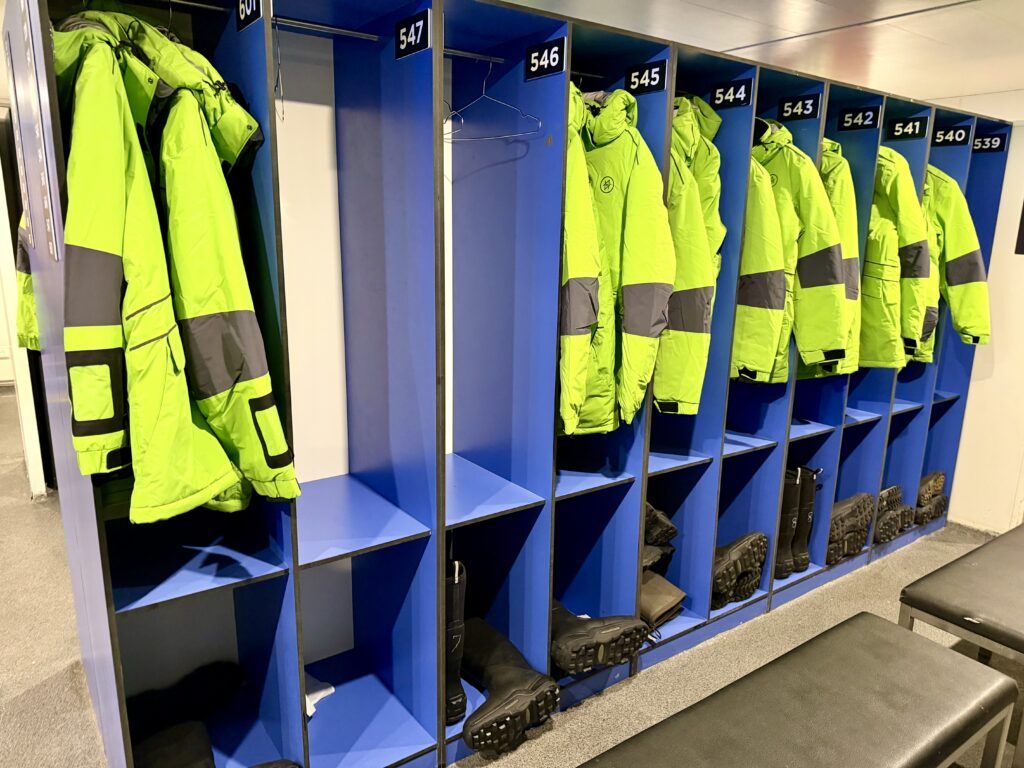
First came our mandatory AECO briefing, which covers the rules for traveling responsibly in the Arctic, and a Zodiac safety briefing. We also picked up our expedition gear, including our parkas and boots, and passed through a biosecurity check.
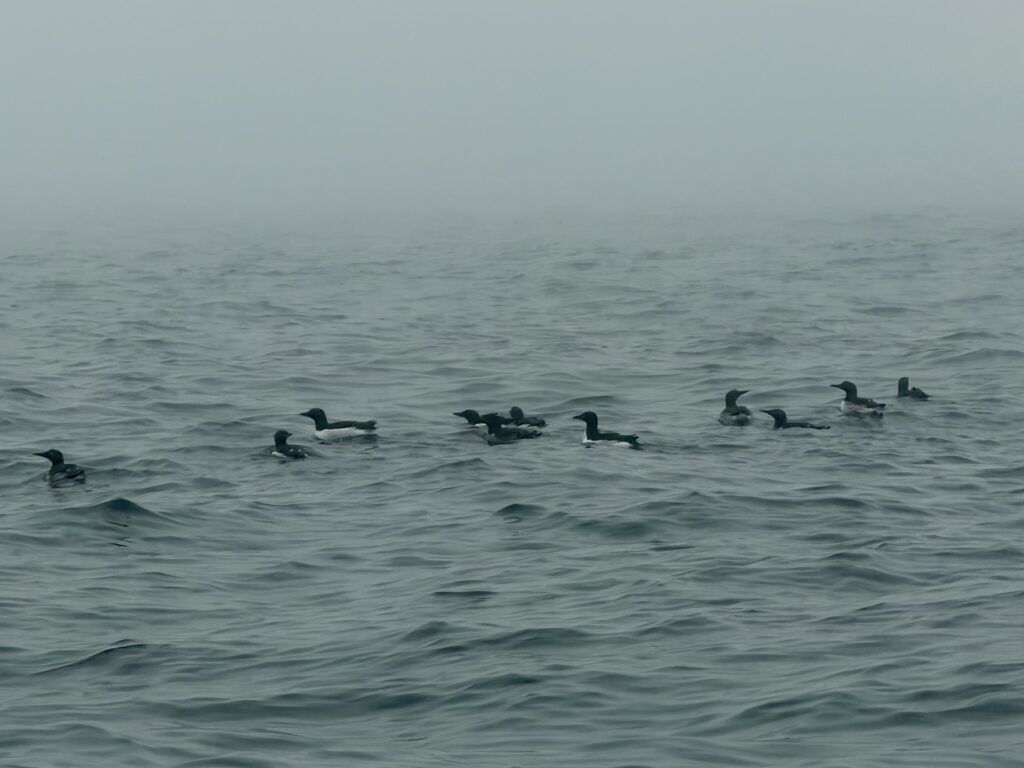
Our first stop was Bear Island, or Bjørnøya. It’s the southernmost island in the Svalbard archipelago, sitting alone halfway between the mainland and Spitsbergen. Despite the name, though, it’s home to birds not bears.
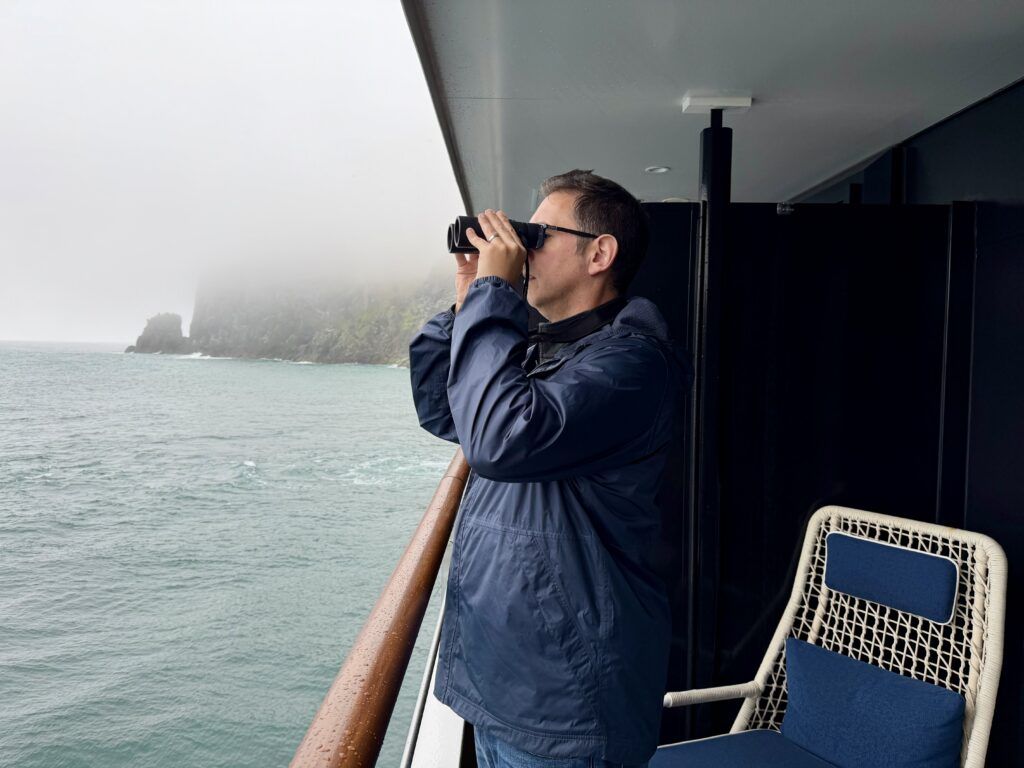
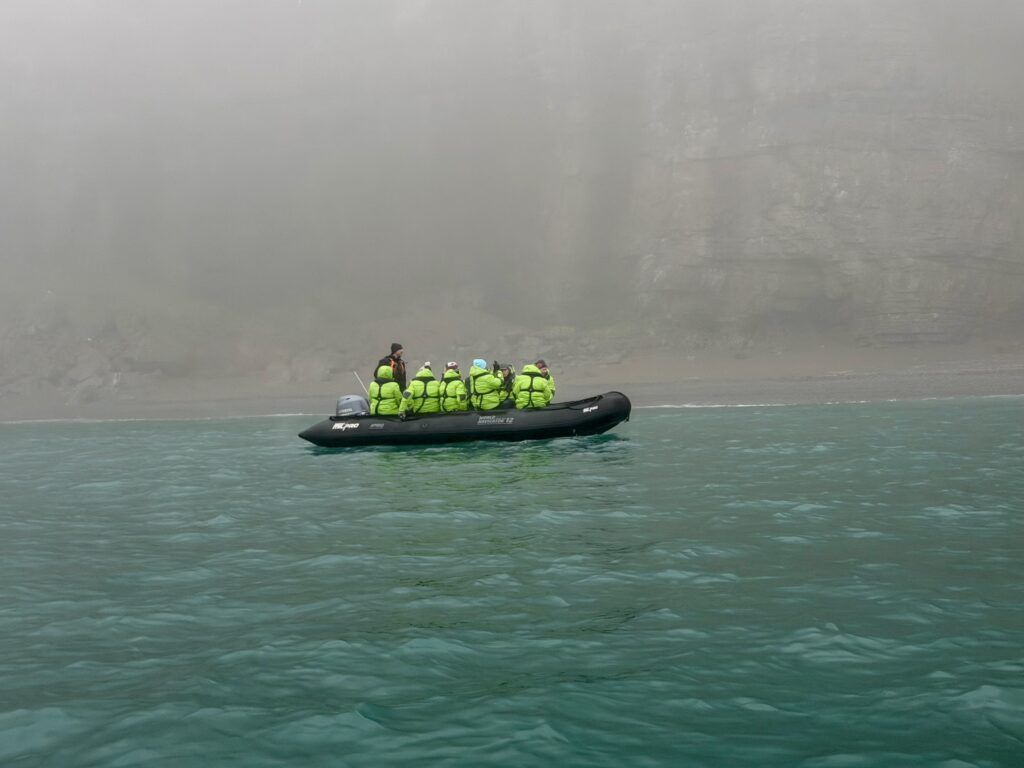
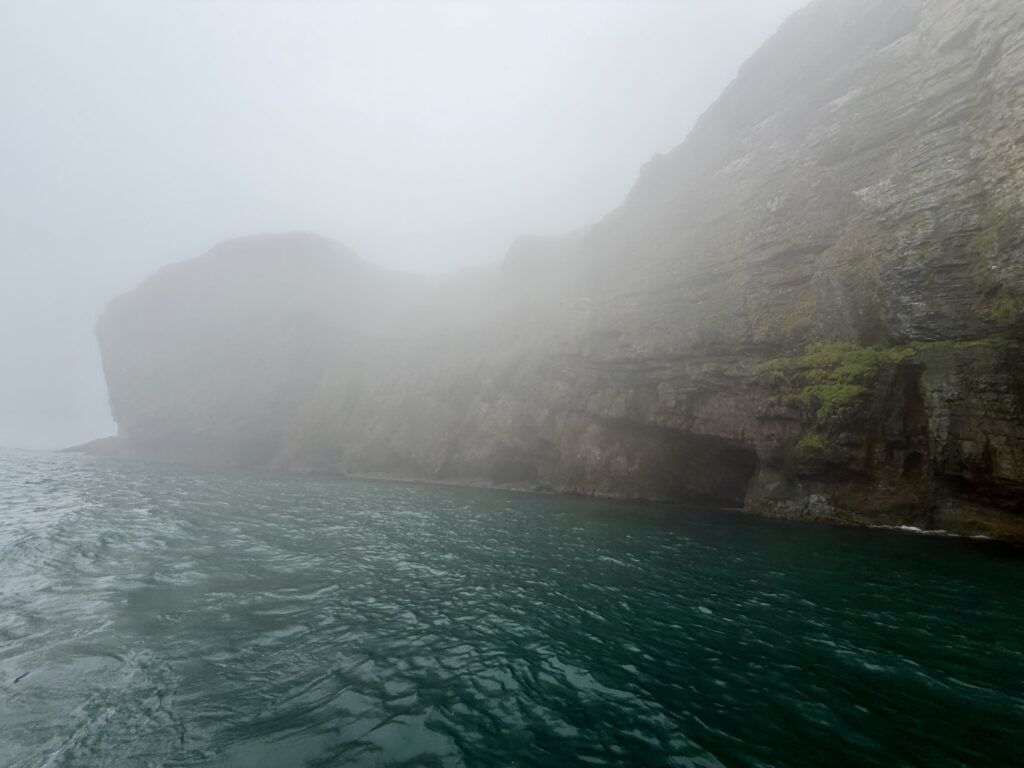
We explored by Zodiac, cruising the coast at Sørhamna. Our Group D drew one of the last departure slots, and unfortunately, the fog rolled in by the time it was our turn. Our Zodiac driver did his best in the conditions, pointing out puffins, guillemots, skuas, and other seabirds in the water and dotting the cliffs.
Ytre Norskøya
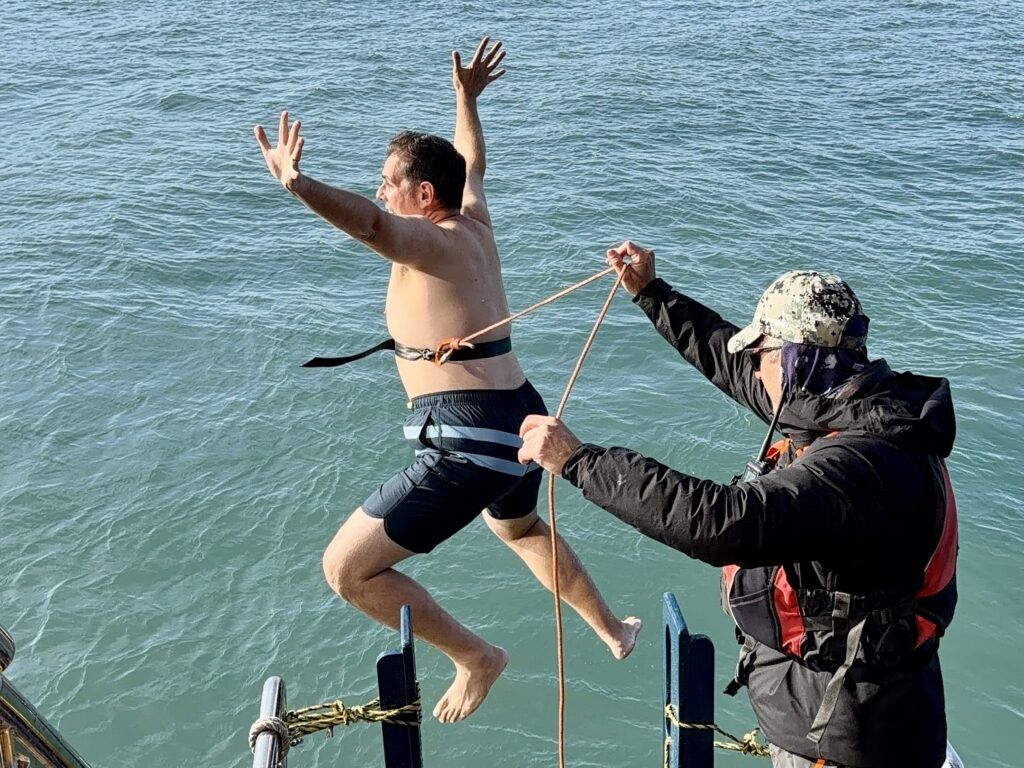
After another full sea day, our first full expedition day was a landing at Ytre Norskøya. But before, polar plunge!
Our uneventful sea day en route to this next stop was unexpectedly interrupted in the late afternoon with an announcement that guests who wanted to partake in the polar plunge should get ready and make their way to the Atlas Lounge. Of course, I obliged. Now, I can officially say that I took the plunge in both poles!
On the morning of our arrival into Ytre Norskøya, we were awakened at 6:30 am for a polar bear sighting.
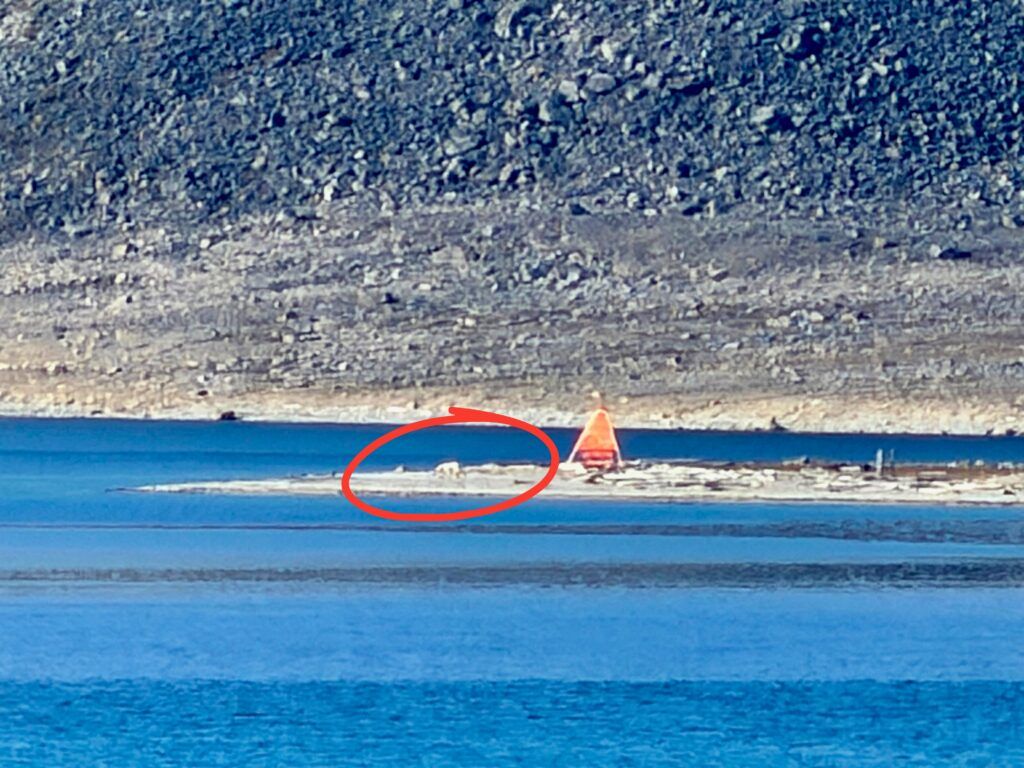
I scrambled up to the open decks as fast as I could. But by the time I got to The Dome, all I could make out were two tiny white dots bobbing in the water. Still, the captain lingered a while so everyone could get a glimpse. Honestly, it was both exciting and frustrating.
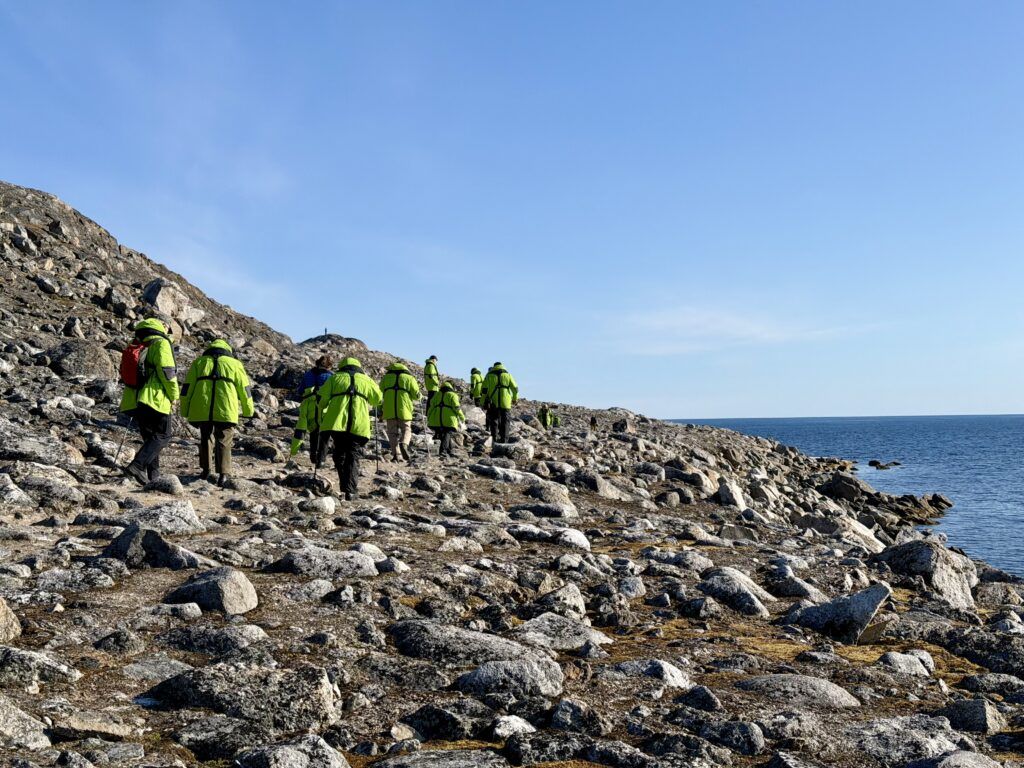
Ytre Norskøya itself is a tiny island. Centuries ago, it was a busy Dutch whaling station. Back in the 1600s, lookouts would climb the high ground here to spot whales offshore. This morning, we retraced some of those footsteps on an unguided walk.
The walk was moderately difficult, over uneven, rocky terrain. Just like in Antarctica, the expedition team went ashore first to scout and mark a safe path for us to follow. There wasn’t much on the ground itself, just lichen and rock. Even so, the walk was worth it. We soaked in the views of the glaciers and our ship anchored out in the cove.
On our sail back through the same area, we spotted two polar bears walking along the shore. Once again, our phone’s zoom could barely make out a few blurry white masses moving across the land.
Gullybukta
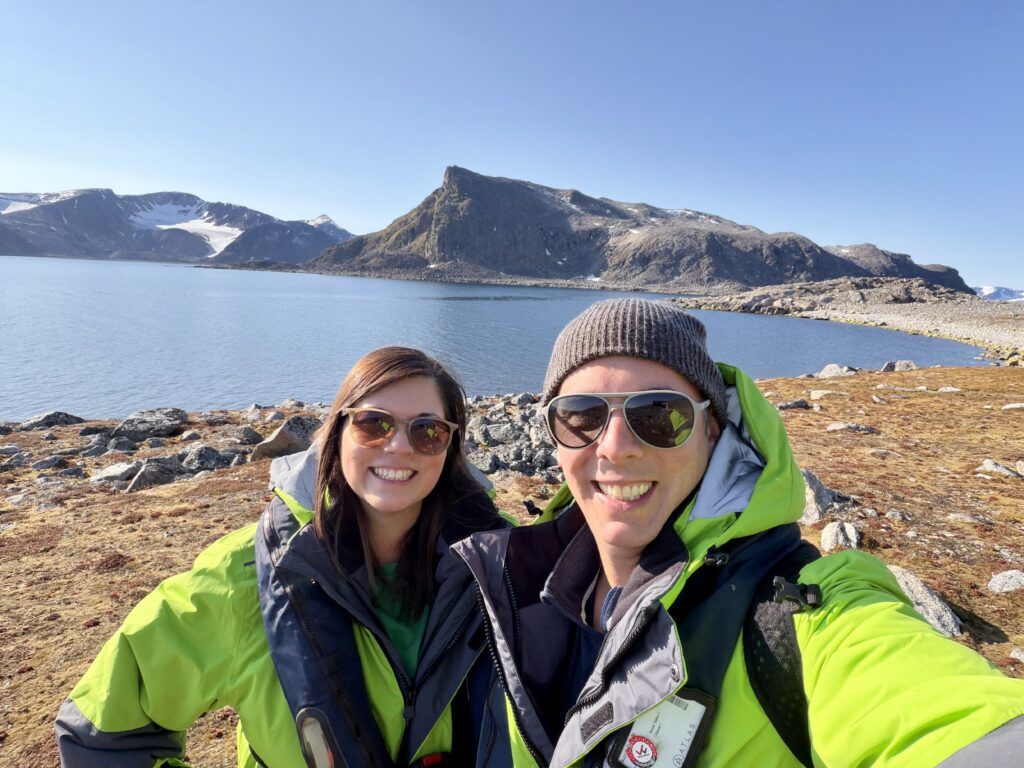
In the afternoon, we repositioned to Gullybukta, a small bay off Magdalenefjorden. At first, we simply cruised the ship along the coast, taking in the glaciers and dramatic scenery while scanning for wildlife. Guests with binoculars picked out sea lions, walruses, and a few minke whales that passed close by the ship.
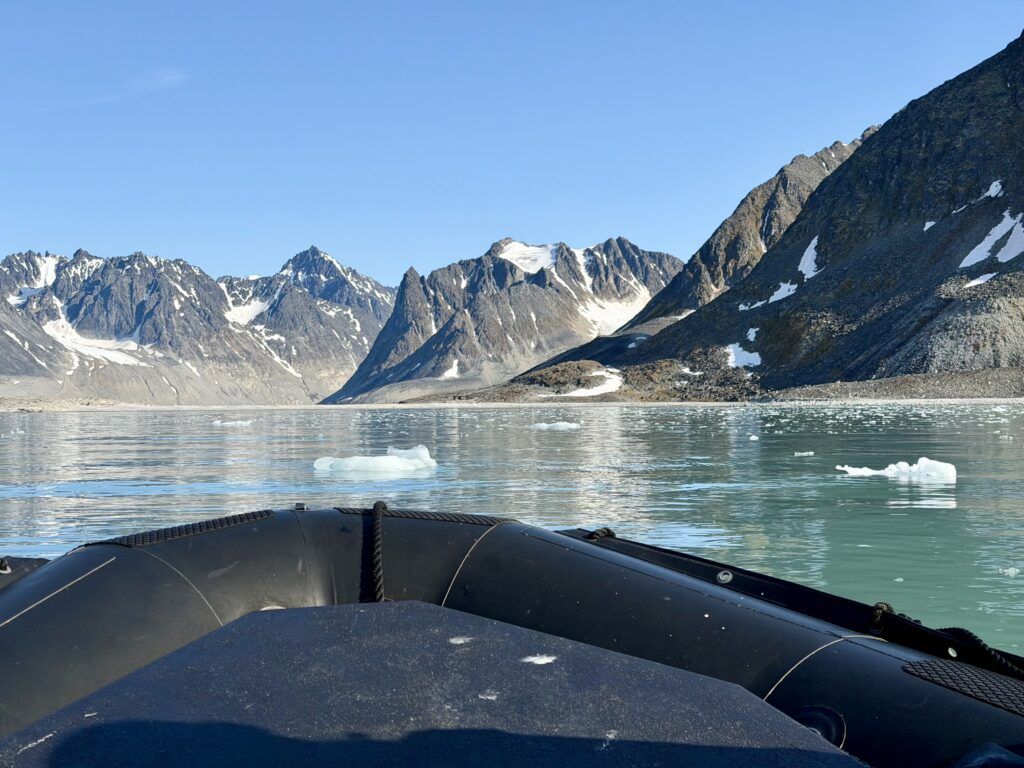
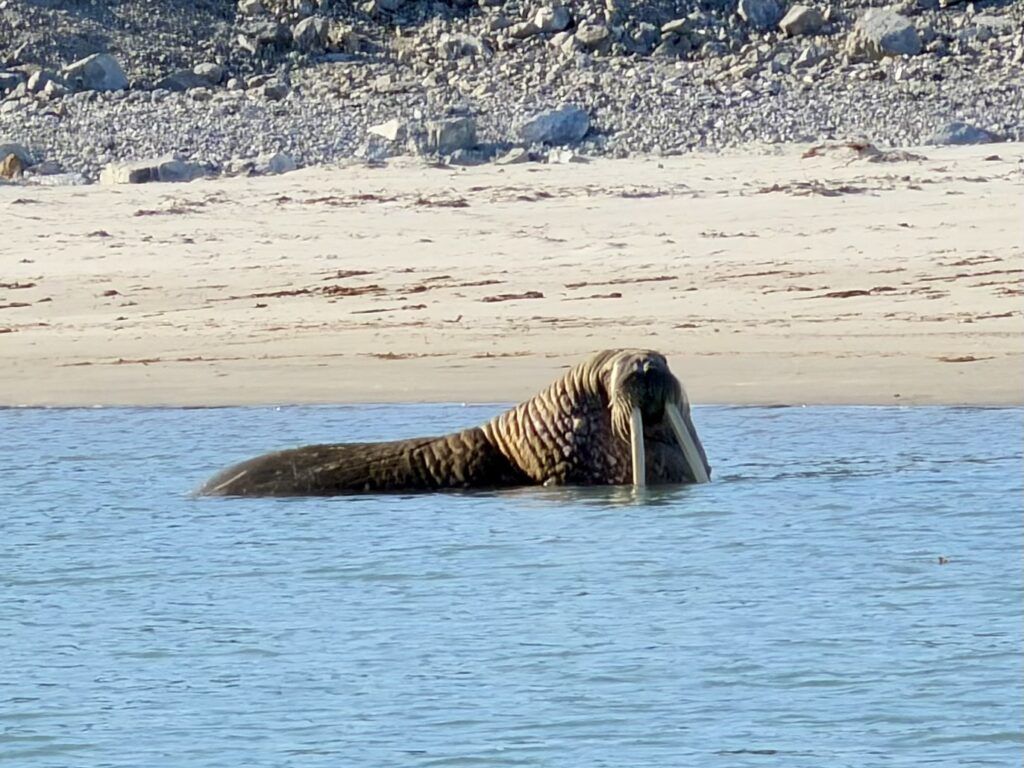
Once we arrived, we could see from our anchored position a herd of walrus on the other side of a jetty. This time, once we boarded the Zodiacs, we were able to sail across the ice and get up close. It was the kind of moment we’d come all this way for.
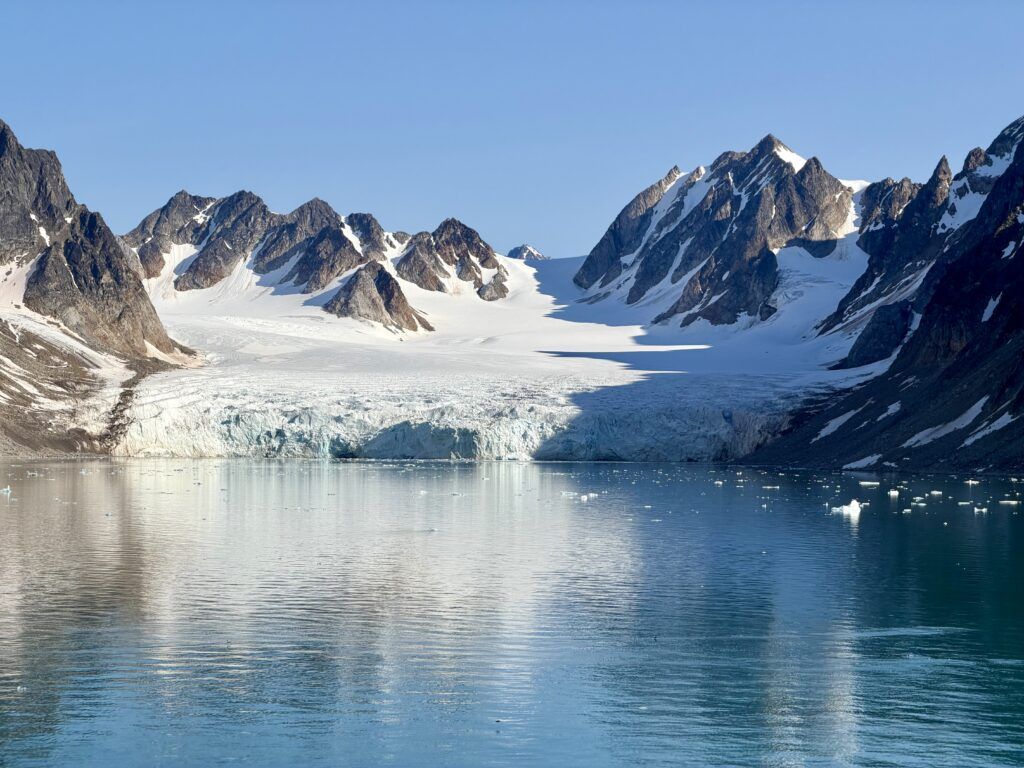
The glacier too was impressive. Gullybreen spills right down into the bay, creating a massive wall of ice as a backdrop. We also drifted past Gravneset, a spot that once held a whaler grave site, though we couldn’t go ashore. The one letdown was that our Zodiac driver for this outing wasn’t very knowledgeable.
Ny-Ålesund
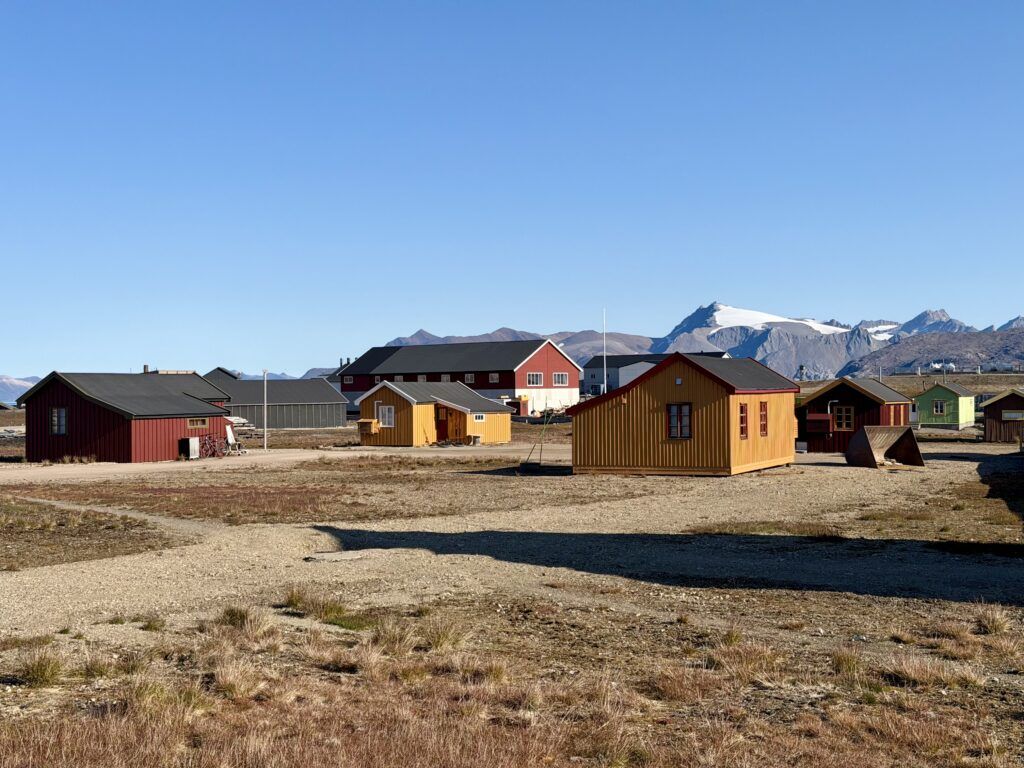
Our final expedition day began at Ny-Ålesund, one of the northernmost settlements on Earth. It’s not a typical town, though. Instead, it’s a working research station, run by 10 institutions from 11 different countries. Scientists here study the Arctic climate, and their instruments are so sensitive that visiting ships must go silent. In fact, from 5 am to 2 pm, the whole yacht observed a mandatory radio silence. That means no WiFi, no television, and no Bluetooth.
We spent the morning walking around the settlement. While we did spot one reindeer not far from the main road, that was the only wildlife sighting of the morning.
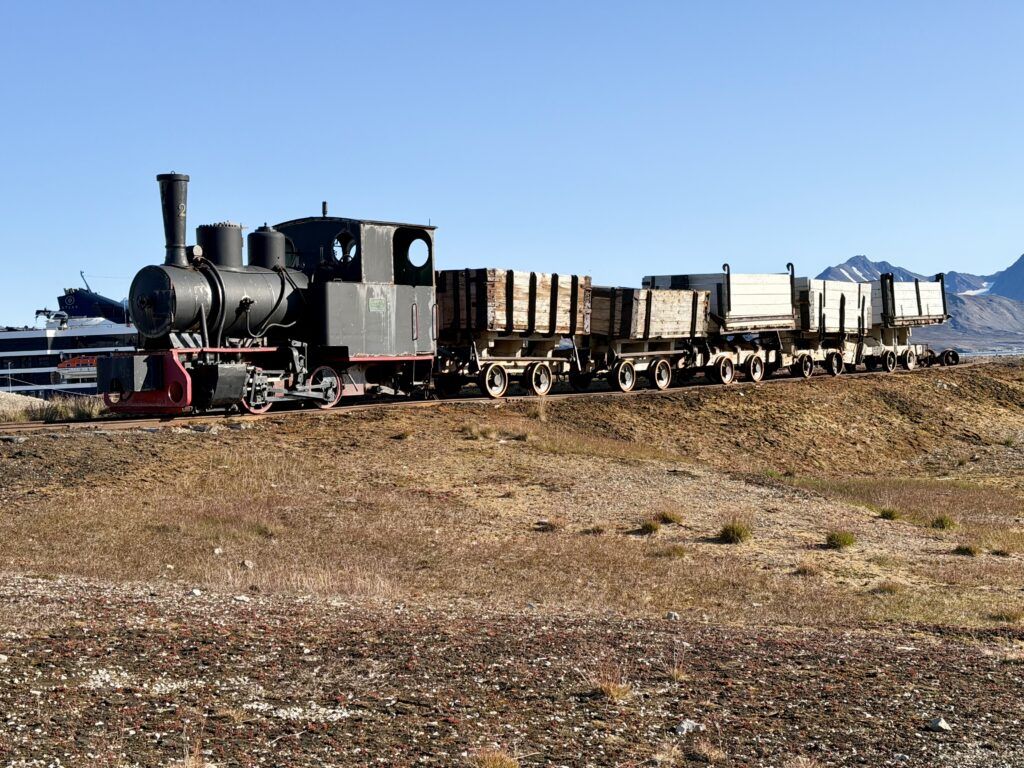
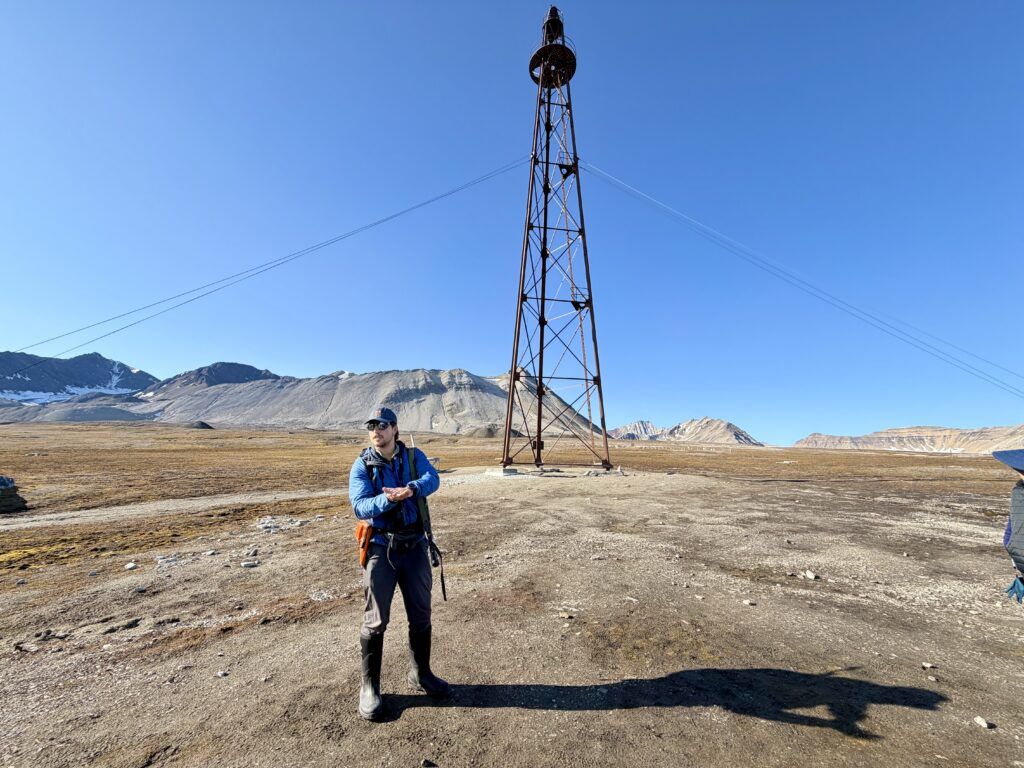
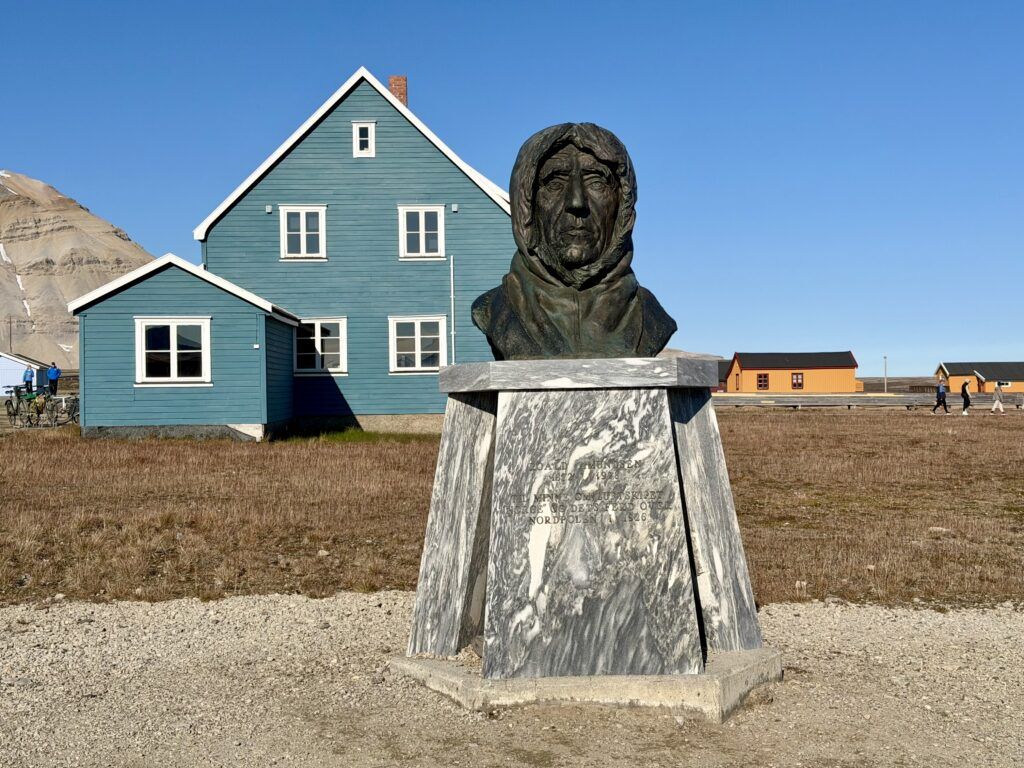
During our couple hours ashore, we visited the small museum, browsed the shop for a souvenir, and stopped by the historic airship mast. Back in 1926, Roald Amundsen’s airship Norge departed from here on its flight across the North Pole. Honestly, beyond those few sights, there wasn’t much to see or do.
Given the limited time we had in Svalbard, we would have preferred another expedition.
Lilliehöökbreen
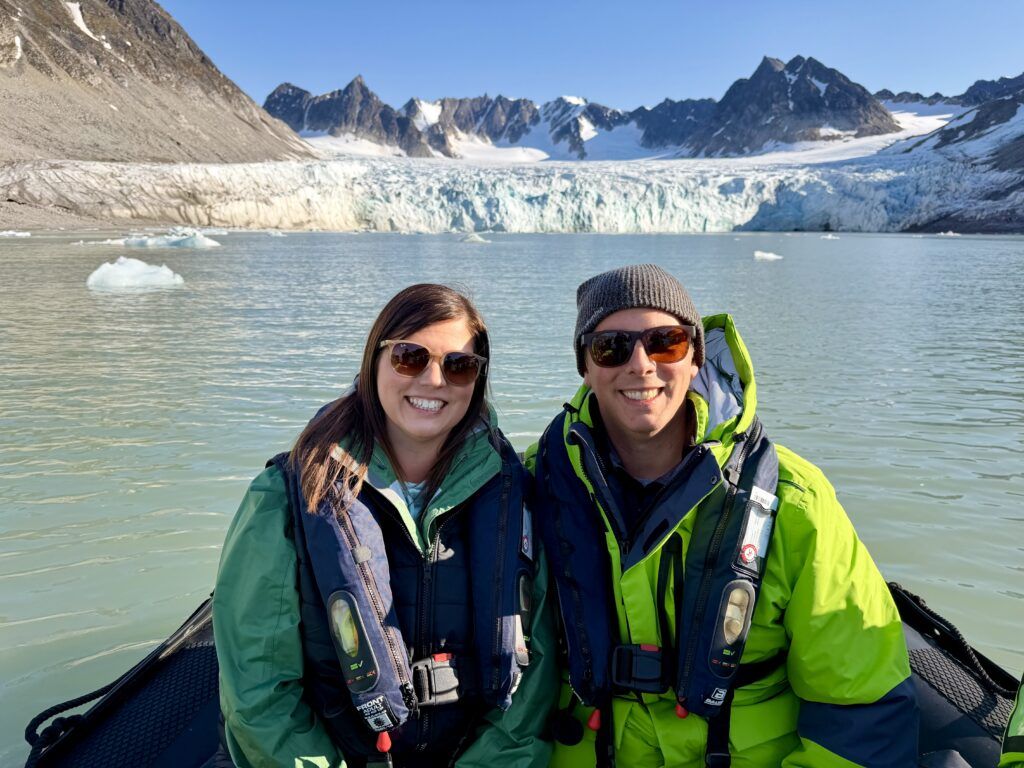
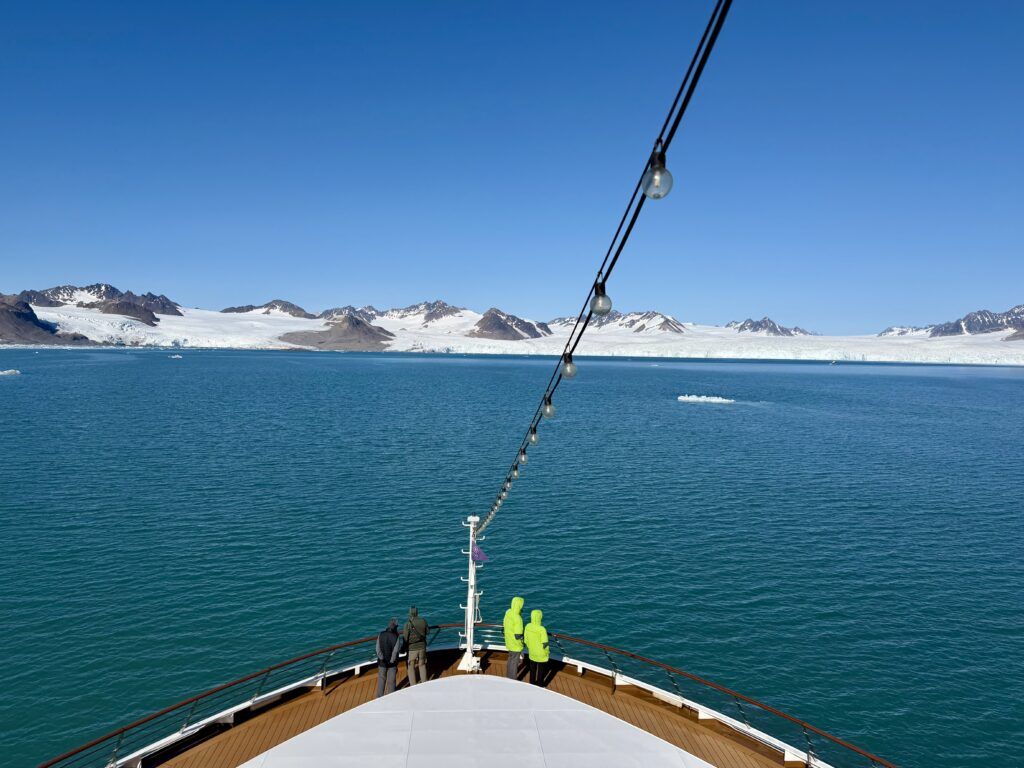
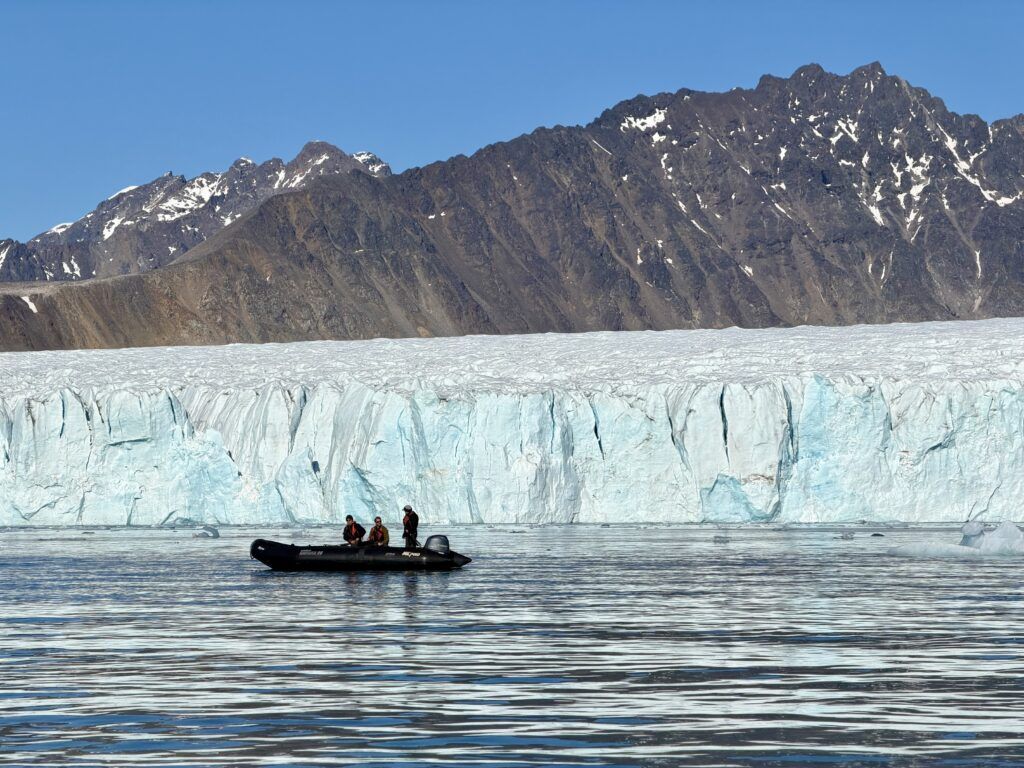
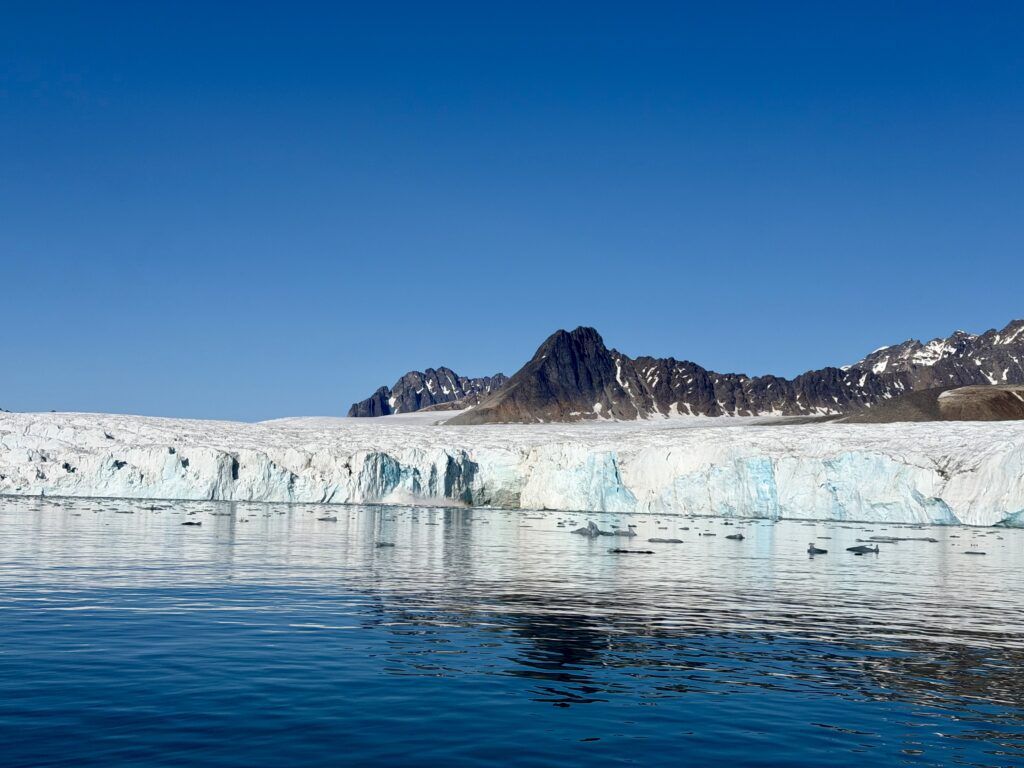
In the afternoon, World Navigator repositioned to Lilliehöökbreen. At 14 miles long and 5-7 miles wide, this massive glacier complex flows into the dramatic Lilliehöökfjorden. The wall of ice was staggering, easily one of the most impressive Arctic landscapes we’d seen all trip. The sunny weather made it a picture-perfect day, too.
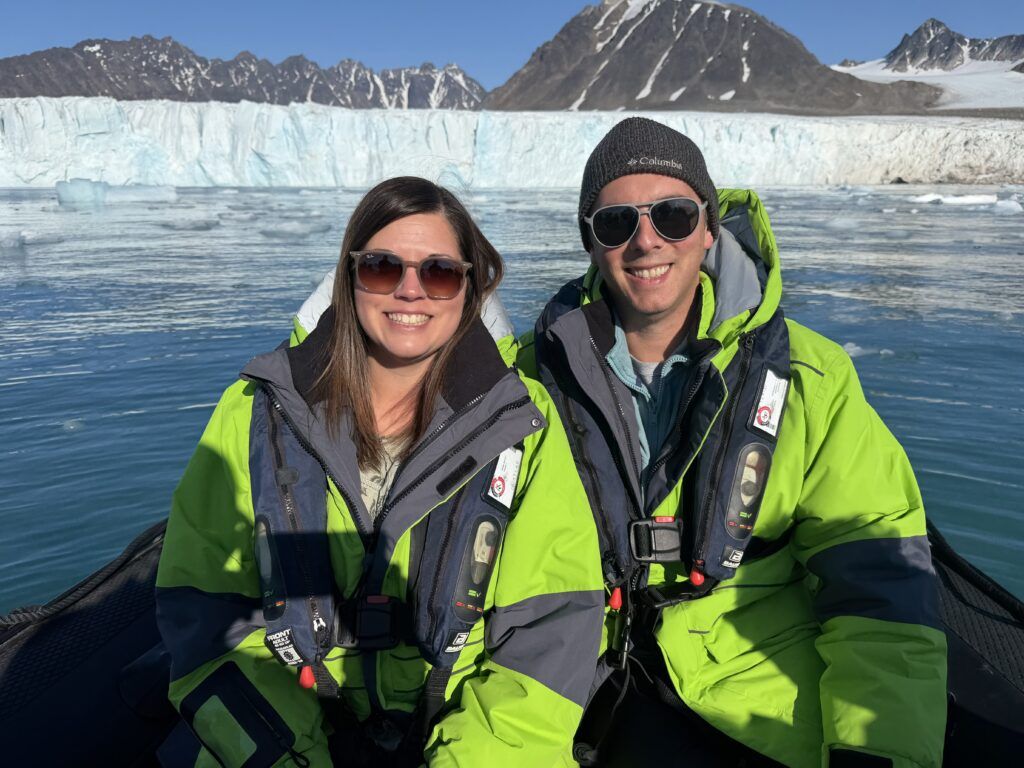
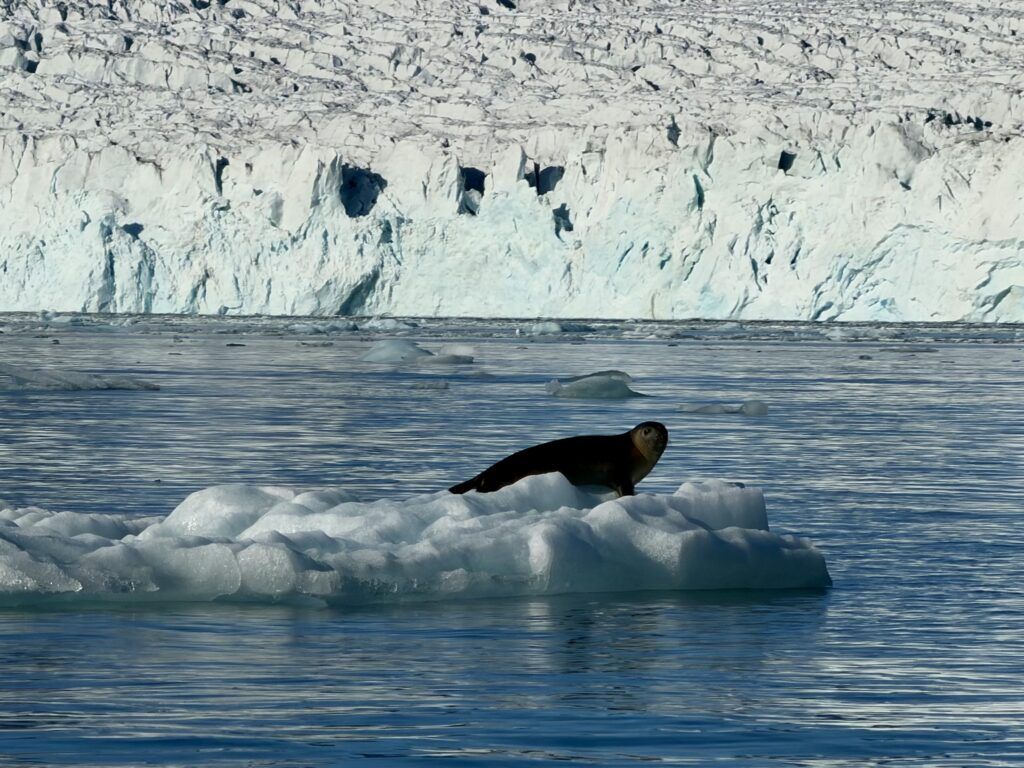
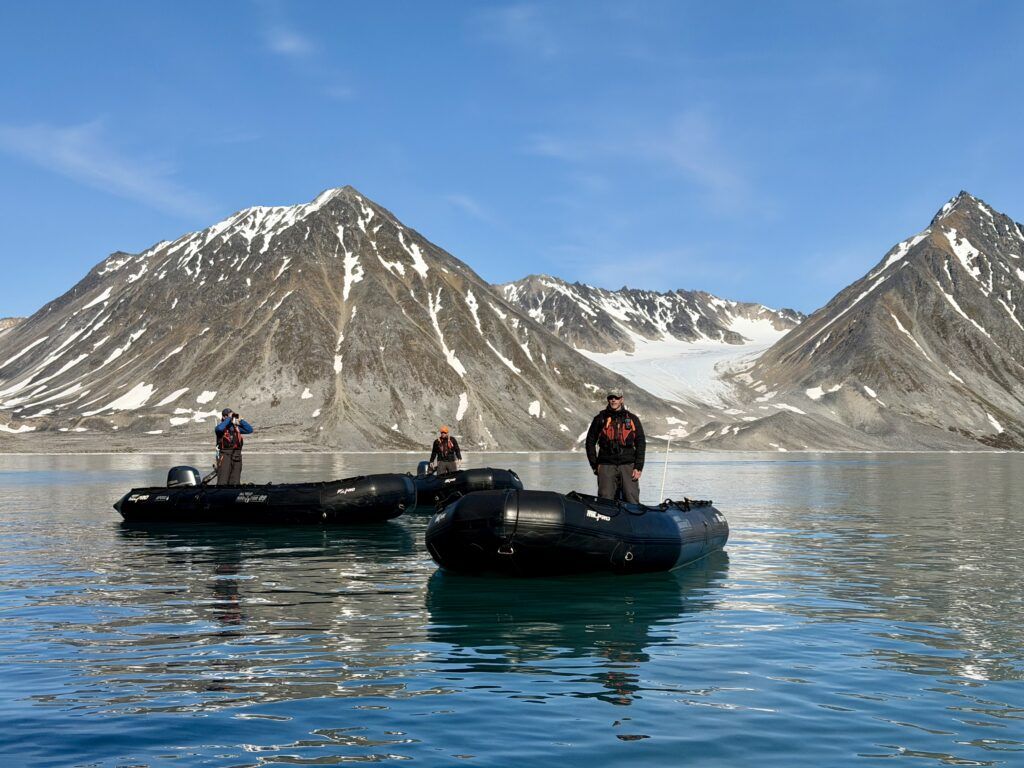
We explored by Zodiac once again. Unfortunately, we drew the same guide as the day before who couldn’t answer some of our basic questions. Out on the ice, we spotted a seal playing around for a bit before slipping back into the water. While admiring the deep blue wall of ice, we witnessed a small glacier calving. Sadly, I wasn’t quick enough to capture any video.
A Morning in Longyearbyen
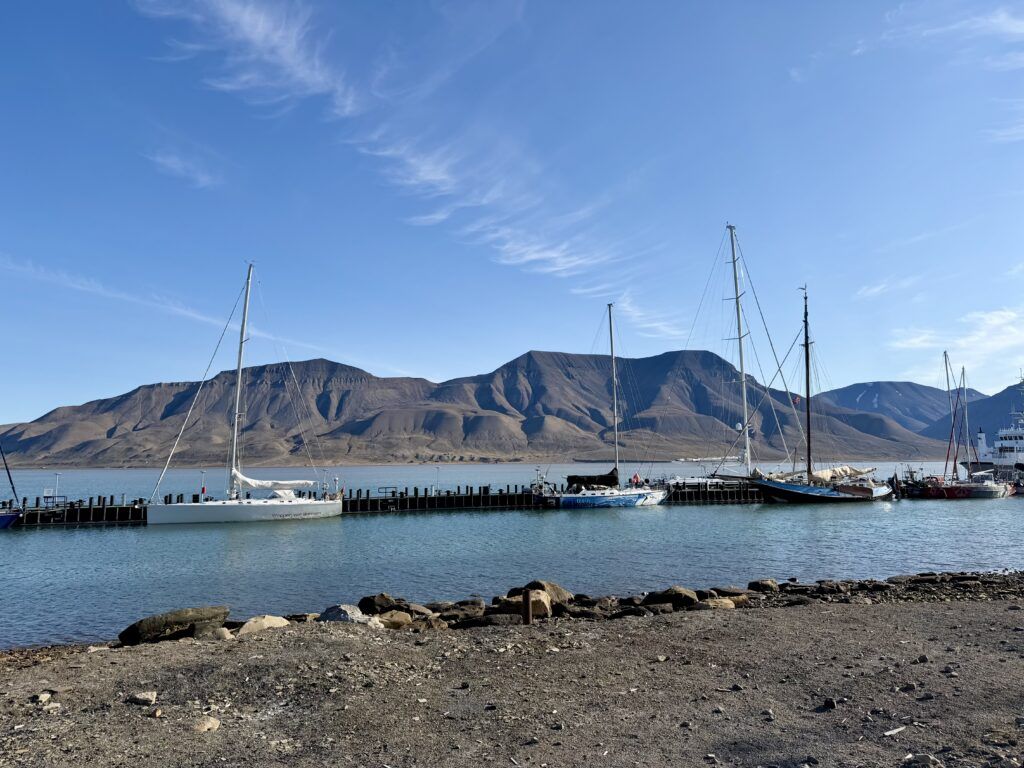
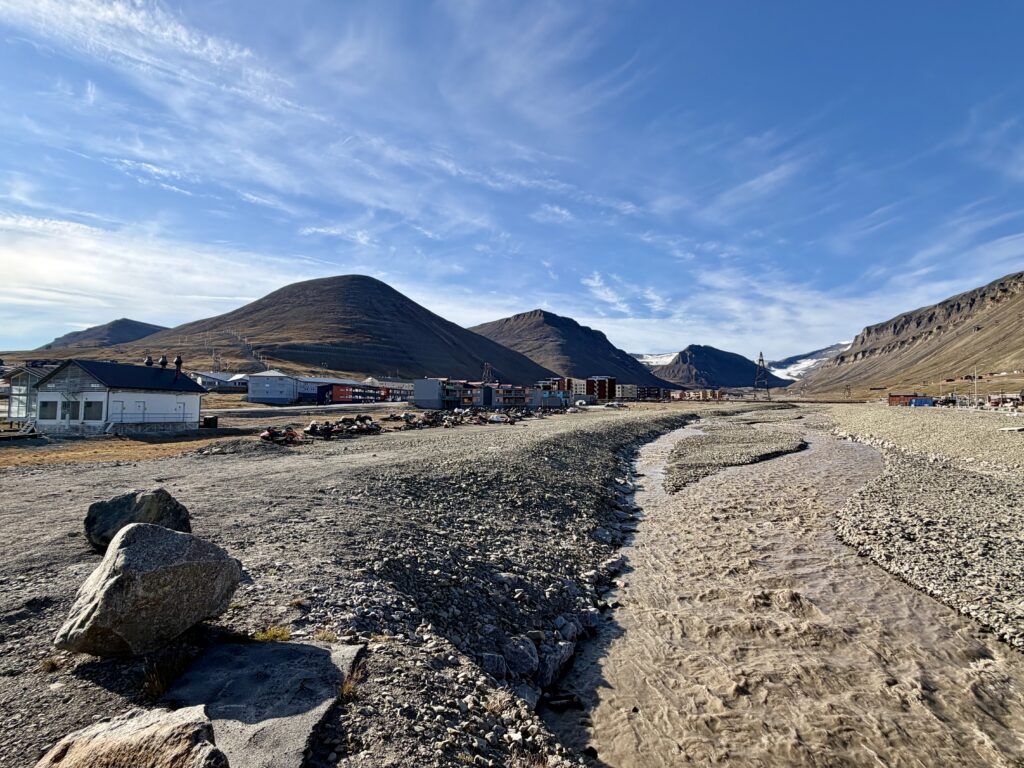
After the expedition, our journey ended in Longyearbyen, one of the world’s northernmost towns.
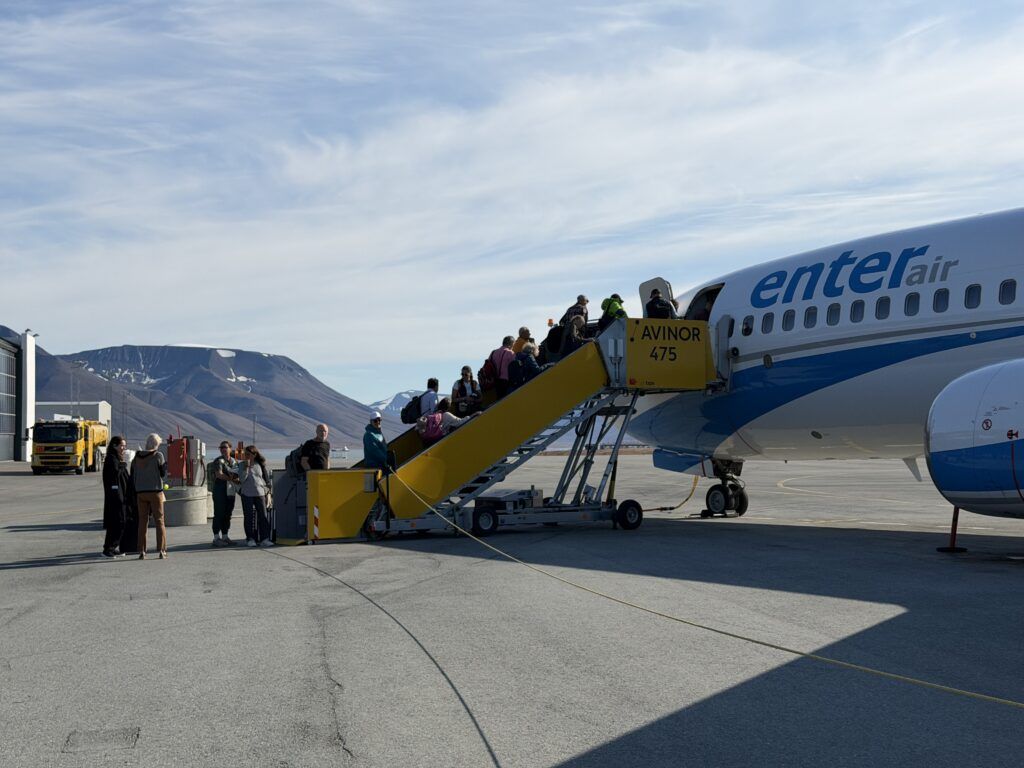
Getting home from here is an adventure in itself, since Atlas flies guests out by private charter to Oslo. Our charter didn’t leave until 12:45 pm and the airport transfers didn’t start until 10 am. That left us about two hours to explore on foot.
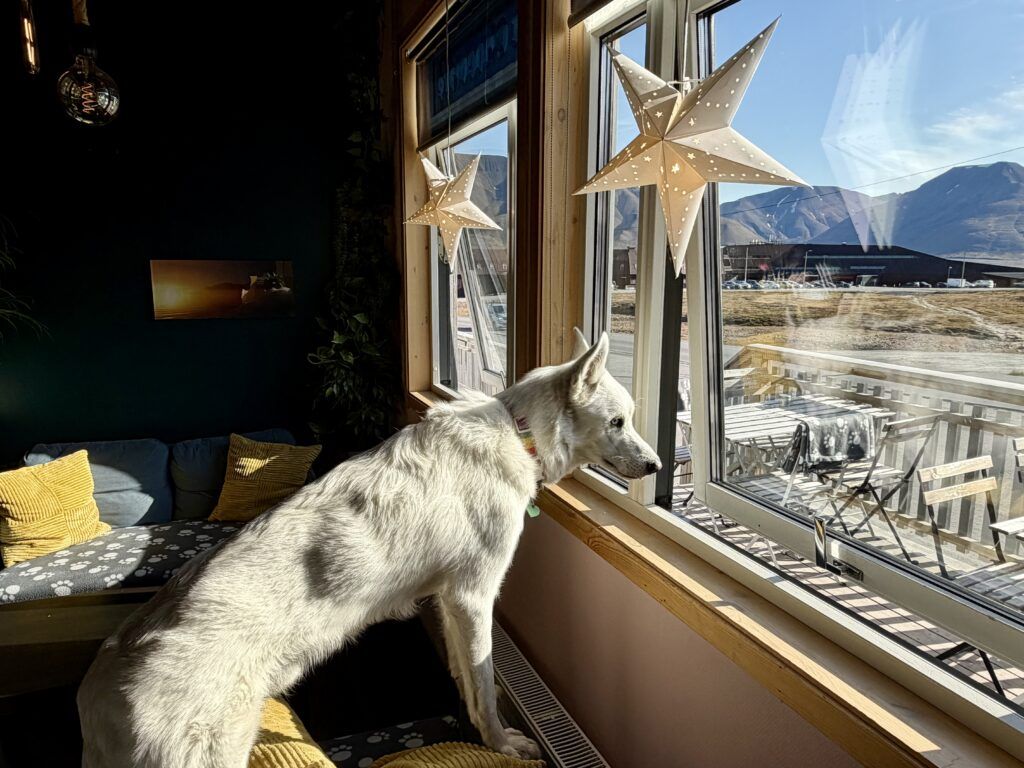
But we quickly realized that much like the rest of Norway, nothing opens early. At 9 am, the town was still asleep. The only place we found open was a small coffee shop, complete with a few adorable huskies and a wall of souvenirs.
Eventually, we caught the last transfer to the very nearby airport.
As we waited at the gate, we watched the next wave of eager expeditioners arrive. Their adventure was just beginning. Meanwhile, ours had come to an end.
What’s Included on an Atlas Ocean Voyages Arctic Cruise
Like other luxury lines, Atlas Ocean Voyages offers an all-inclusive fare for its Polar Expeditions.
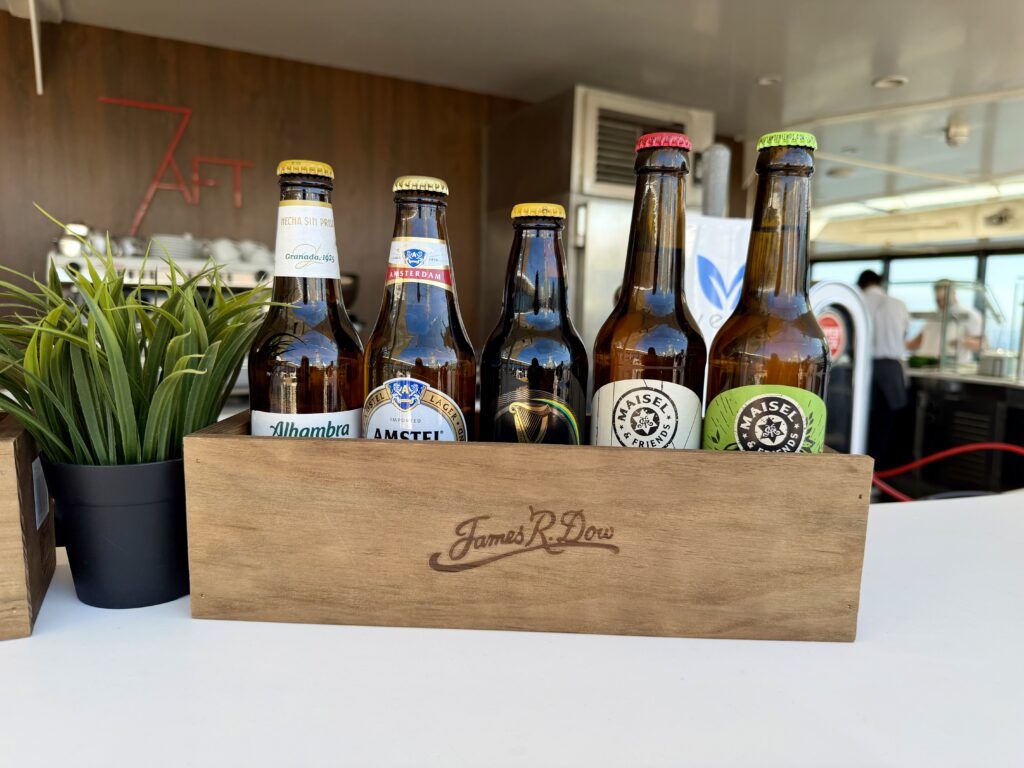
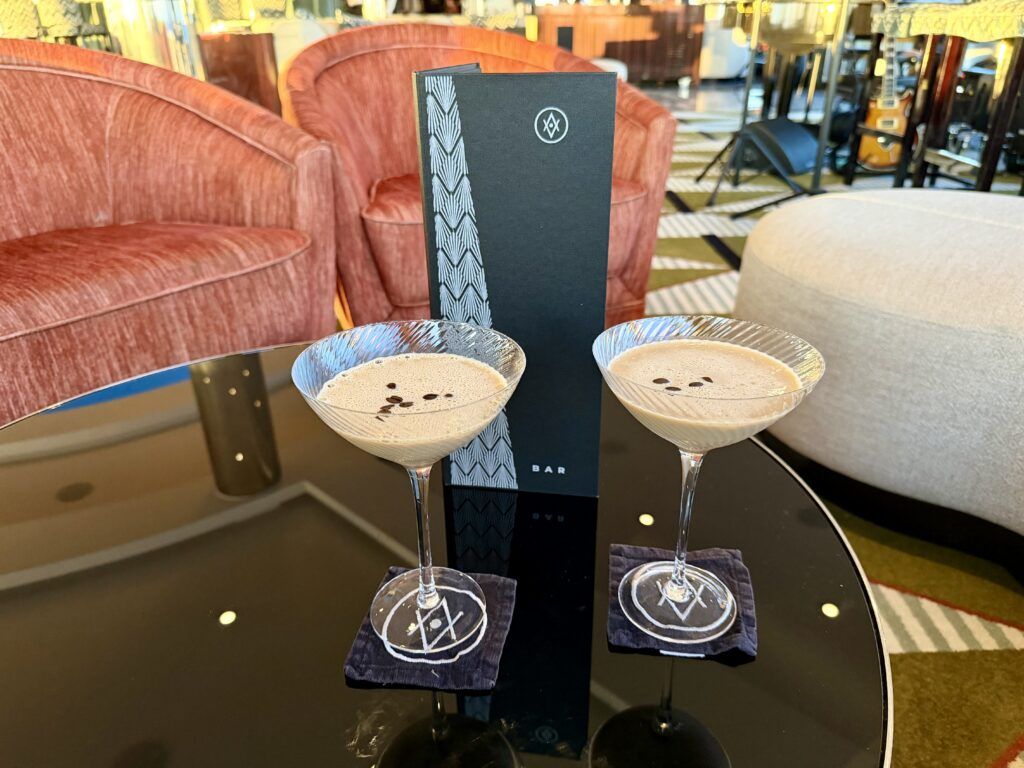
All dining is included, along with 24-hour room service. Beer, house wines, and cocktails are complimentary, as are premium non-alcoholic drinks. Your suite even comes stocked with L’Occitane products, a mini-fridge set to your preferences, and a Nespresso coffee machine.
Atlas folds in prepaid gratuities and a cultural immersion experience as well, such as the “Our Northernmost Life” show.
All guests get 1 GB of internet. But we exhausted that quickly and purchased a streaming plan, which cost about $25 per person, per day.
Once you get to the expedition portion of the journey, Atlas provides a warm parka to keep, plus loaner boots for landings. Every Zodiac safari, shore landing, and guided hike is included, all led by the full expedition team.
Best of all, the private charter jet that flew us from remote Longyearbyen back to Oslo is also included. And emergency medical evacuation coverage rounds out the package.
Naturally, a few things cost extra like premium spirits, the specialty chef’s table, and spa treatments.
On a hybrid cruise like this one, traditional shore excursions are an additional charge as well. Pricing ranged from about $49 to $179 per person depending on the tour. Of course, you don’t need to purchase tours at these ports. Several of them were easily accessible by foot. Or you can opt for taxis or book private tours.
Is an Atlas Ocean Voyages Arctic Cruise Worth It?
So, was this Atlas Ocean Voyages Arctic cruise worth it? Honestly, the answer depends on what you expect going into the trip.
Having sailed with Atlas in Antarctica, and not paying enough attention to the itinerary, we were surprised by the hybrid nature. For roughly the first eight days, it didn’t resemble a polar expedition at all. The true expedition didn’t arrive until the very end when we reached Svalbard. This caught us, and many of our fellow travelers, off guard.
If you’re expecting daily Zodiac safaris, hikes, and constant wildlife, part of the voyage may let you down. We’ll admit we wanted the adventure to start sooner, and the lack of enrichment early on didn’t help either. However, when the expedition finally did arrive, it delivered. Standing before the face of Lilliehöökbreen, sailing up to a herd of walrus, and scanning the horizon for polar bears, these were unforgettable moments.
The truth is that this particular itinerary is a Norwegian cruise with a taste of expedition. If you understand that going in, you’ll likely love it. In fact, we did talk to a few older passengers who booked specifically for this reason.
Who Is This Atlas Arctic Expedition Cruise Right For?
This cruise isn’t for everyone, and that’s okay. If you want the best of both worlds, look no further. This itinerary blends a comfortable, scenic cruise in Norway with a genuine, albeit brief, expedition component in majestic Svalbard. So it suits travelers who want a real taste of the high Arctic without committing to a more active voyage.
It’s also ideal if you value small-ship luxury. With under 200 guests and an all-inclusive fare, the ship itself is more than just a backdrop to this bucket list destination.
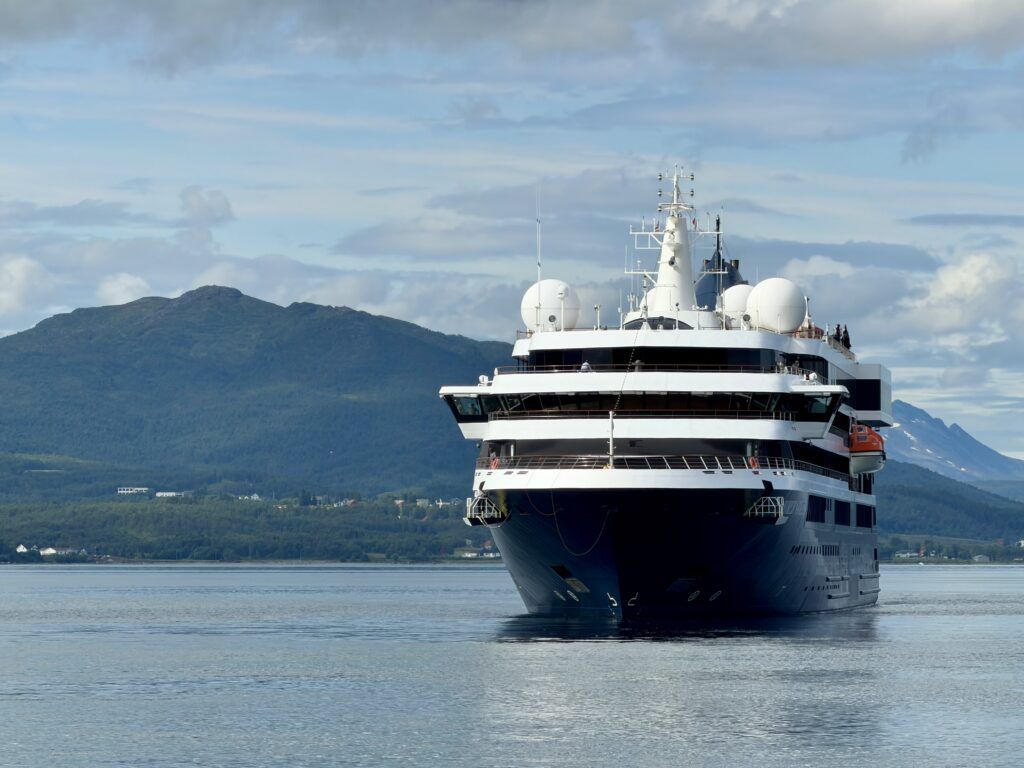
On the other hand, those who have done previous expedition cruises or active travelers may find this specific itinerary a bit boring. This is a taste of the high Arctic, not a deep dive. Travelers who want to be in a Zodiac or outside hiking every day may grow restless on the quieter sea days. So, we’d suggest looking for an itinerary that spends more time in Svalbard or one that features more expedition days in other areas of the Arctic.
Finally, budget-focused cruisers should know this is a premium product at a premium price. While it’s certainly not the most expensive Arctic cruise, it’s also not the cheapest.
With Atlas Ocean Voyages offering a variety of Polar Expeditions in the Arctic — at various lengths, to various destinations, and with varying levels of expedition — we suspect you can find one that matches your appetite for exploration. After our short time in Svalbard, we are eager to return and discover more of what the Arctic has to offer.
Comments
Are you planning an Atlas Ocean Voyages Arctic Cruise? Would you sail this far north? Drop us an anchor below with your Arctic expedition cruise reviews.